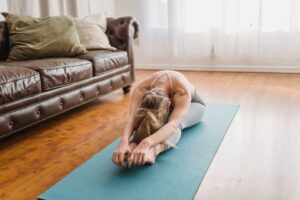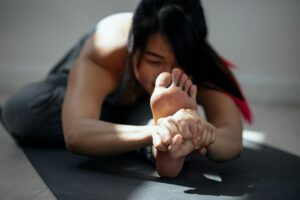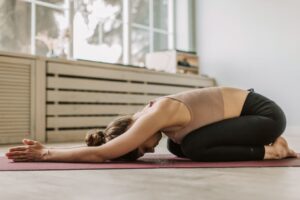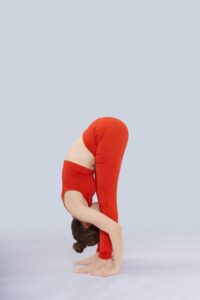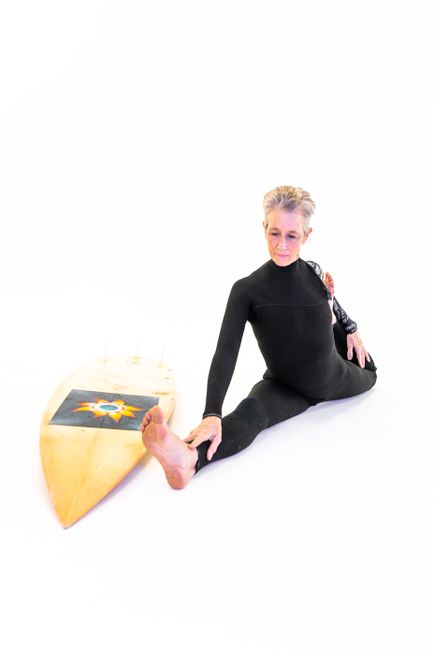
In short: half butterfly is a seated yin fold with one leg stretched out and the other foot drawn in toward the inner thigh. You round forward, relax and stay for a few minutes on each side. It is simple, adaptable and a good way to feel the difference between folding actively and letting a fold happen.
Below: how it relates to head-to-knee pose, the props that make it comfortable, the two common fold directions and how to come out.
The name and the related asana
Half butterfly is an English yin name with no Sanskrit of its own. The legs look like head-to-knee pose (Jānu Śīrṣāsana), and Bernie Clark points to that pose as its yang relative. The difference is in the intention: in the yin version the back is allowed to round, the legs and arms stay soft and the hold lasts minutes. Sarah Powers teaches a very similar shape under the name half dragonfly; we list it as another name for the same family of folds.
Setting up with props
Sit on a cushion so the pelvis can tip forward; with sciatica, Clark suggests sitting high enough that the knees are below the hips. If the bent knee hovers, put something under the thigh. If the straight leg’s hamstrings are tight, a blanket or block under that knee lets the leg relax. A bolster along the straight leg gives the chest and head a place to rest.
The cushion has a second job. Clark warns against letting the hips roll backward while you sit; you want the pelvis to tip forward so the fold starts low in the back. If you sit on the floor and feel the lower back slump behind you, sit higher. If the bent knee is uncomfortable, slide that foot farther away from the groin instead of keeping it tight against the thigh. Clark also describes tucking the bent leg’s foot back beside the hip, as in hero pose, but only if the knee does not complain; Paul Grilley calls that version half frog. Clark adds that the open-leg shape leaves room for the belly, so many pregnant students can use it with a high seat and a small fold.
The long hold
There are two common directions. Clark folds down the middle between the legs and, after about three minutes, moves over the straight leg; Yoga Journal’s full-body yin sequence turns the chest toward the straight leg from the start, and Janice Quirt folds straight forward for four minutes. Choose the one where you feel a clear but bearable stretch, then stay still. Clark suggests about five minutes per side in total, and you can add a gentle twist by resting an elbow inside the straight leg.
Go only as far as the first clear resistance. Sarah Powers, quoted in Yoga Journal, says the body often releases after thirty seconds or a minute, and sometimes it does not; listen and respect what you feel. Let the arms hang or rest the head in the hands if it comes close to the floor. In Yoga Journal’s full-body yin sequence, the teacher rests her palms facing up, as a reminder not to push or pull herself deeper. Breathe slowly and let gravity do the folding.
Clark gives two more options for later in the hold. Reach the opposite hand toward the foot of the straight leg and lower that shoulder to feel more along the side of the spine. Or, with the elbow resting on the straight leg’s thigh and the head in that hand, turn the chest up toward the ceiling for a side-body twist.
Common mistakes
- Pulling yourself down with the hands. In yin the muscles stay soft, so the fold is smaller and slower than in head-to-knee pose.
- Sitting flat on the floor with the pelvis tipped back. Sit on a cushion instead.
- Locking the straight knee while the hamstrings complain. Bend it and put a blanket under it.
- Fidgeting. Pick a depth you can stay with, then keep still.
Coming out and the rebound
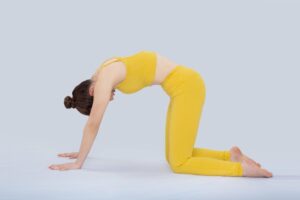
Push the floor away and roll up slowly. Lean back on the hands to free the hips before you straighten the bent leg; Clark stresses doing this slowly. Rest for a few breaths with both legs long before the second side. Tabletop or a small seated backbend makes a good counterpose, and Clark also suggests windshield wipers: lying on your back with the knees bent, let them sway slowly from side to side. Coming up after a long fold can feel stiff, so use your arms to walk the hands back and lift the chest a little at a time. Then sit for a moment and notice how the back and legs feel before you change sides.
Precautions in plain words
With sciatica or a back that should not round, sit high, keep the fold small or skip it. If the inner knee of the bent leg complains, support the thigh; if the straight knee aches, bend it a little. Support the head if the neck is sensitive. Clark adds a few specifics: if a lower back condition means the spine should not round, keep the back as straight as you can or practice the reclining version; after whiplash, or with a reversed neck curve, do not let the head drop down; and with sharp knee pain, firm the top of the thigh (engage the quadriceps) or bring the legs closer together. Any sharp or tingling feeling is a reason to come out. This page is general information, not individual advice.
Before, after and where it is taught
Butterfly and caterpillar are natural neighbours, and dragonfly often follows. You will meet it in yin yoga classes, which hold mostly floor poses for several minutes with the muscles relaxed, and in some gentle and restorative classes.