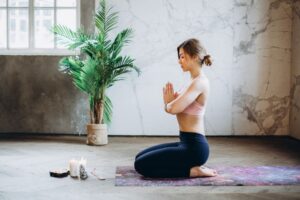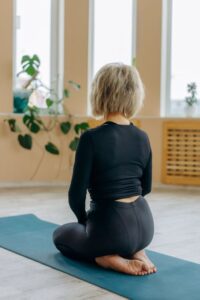
In short: toe squat is a short, strong yin pose for the feet. You kneel, tuck all the toes under and sit back on the heels so the weight rests on the balls of the feet, then stay for two or three minutes. It often comes just before ankle stretch, which stretches the feet the other way.
Below: how it relates to thunderbolt pose, the props that make it bearable, and the cautions for knees and feet.
The name and the related asana
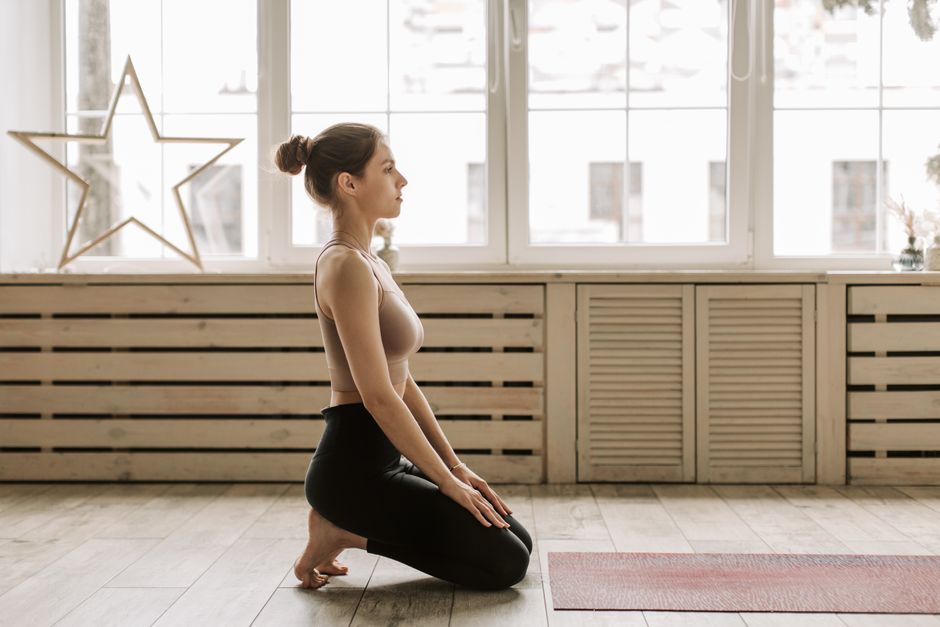
Toe squat is an English yin name, sometimes shortened to toes pose; it has no Sanskrit of its own. Bernie Clark relates it to kneeling seats such as Japanese seiza and Vajrāsana (thunderbolt) with the toes tucked. In thunderbolt the tops of the feet rest on the floor; here the toes are tucked and the soles stretch.
Setting up with props
Sit on the heels with the feet together, then tuck the toes, all of them; Janice Quirt (Yoga International) reminds you to check the little toes. Clark wants you on the balls of the feet, not the tips of the toes. Pad the knees with a blanket, and if they complain, place a cushion or two blocks between the hips and the heels, or a rolled towel behind the knees. Quirt also rests the hands on blocks in front of the knees to take weight off the toes.
The hold
This is a short hold by yin standards: Clark gives two to three minutes, Quirt two. If it becomes too intense, lift into high kneeling until you can ease back, and if you are in pain, come out. Quirt puts it plainly: whoever coined “no pain, no gain” was not a yin teacher.
Expect the sensation to build quickly. Clark notes that the pose becomes quite intense for most people fairly fast, so keep checking in with it. You will usually feel it along the soles, in the joints at the base of the toes and, as the heels take your weight, at the front of the ankles. A strong, spreading stretch is normal. Sharp pain in one toe, or cramping in the arch, means it is time to lift into high kneeling or come out. On your first tries, a single minute is plenty; you can build toward the two to three minutes over a few weeks.
The details of the setup explain much of this. With the feet together, both feet share the weight evenly and the heels support the hips. With the weight on the balls of the feet, all ten toes bend back at their base rather than at the tips. That is why Clark and Quirt both take the time to tuck the little toes under by hand: if they curl under, the weight goes onto their tops instead.
Using the hold for the shoulders
Because the upper body is free, Clark suggests pairing toe squat with a shoulder stretch, such as the arm position of eagle pose or of cow face pose. Do one side, then take a break for the feet: come out into ankle stretch for a short while, return to toe squat and do the shoulder work on the other side. It is an efficient way to use a short practice, and the arms give the mind something to do while the feet work.
Coming out and the rebound
Come out slowly, as Clark advises. Lean forward onto the hands, lift the hips and release the feet, then point the feet back and sit on the heels. Clark’s suggested counterposes are ankle stretch, child’s pose or saddle; Quirt flows straight into ankle stretch.
Precautions in plain words
Clark warns that sitting on the heels may strain the knees and that very tight toe or ankle joints should not be held long. With bunions, foot injuries or knee problems, keep it short, use props or skip it. This page is general information, not individual advice.
Before, after and where it is taught
Toe squat and ankle stretch are a common pair at the start or end of a yin class; garland pose (squat) is another foot and ankle shape. You will meet it in yin yoga classes, which hold mostly floor poses for several minutes with the muscles relaxed, and in some gentle and restorative classes.