Pawanmuktasana Part 3, the Bihar School shakti bandha (energy block) postures: nine rhythmic seated and squatting practices in source order, with sides and precautions.
Origin and source
Asana Pranayama Mudra Bandha (Swami Satyananda Saraswati), Pawanmuktasana Part 3, Shakti Bandha Asanas.
Who it is for
Comfortable sitting with legs apart and squatting (or adapt the squats with a chair).
The steps in order
Version shown: Asana Pranayama Mudra Bandha, 4th revised edition (2008): 9 practices
| # | Step | Breath | Side | Hold | Cues and options |
|---|
| 1 | 1. Rajju Karshanasana (pulling the rope) | Free breathing | Each side | 10 rounds
Asana Pranayama Mudra Bandha, 4th revised edition (2008) | Transition: Sit, legs straight and together; inhale and reach up with one straight arm, exhale and pull the imaginary rope down; then the other arm. Easier option: On a chair. |
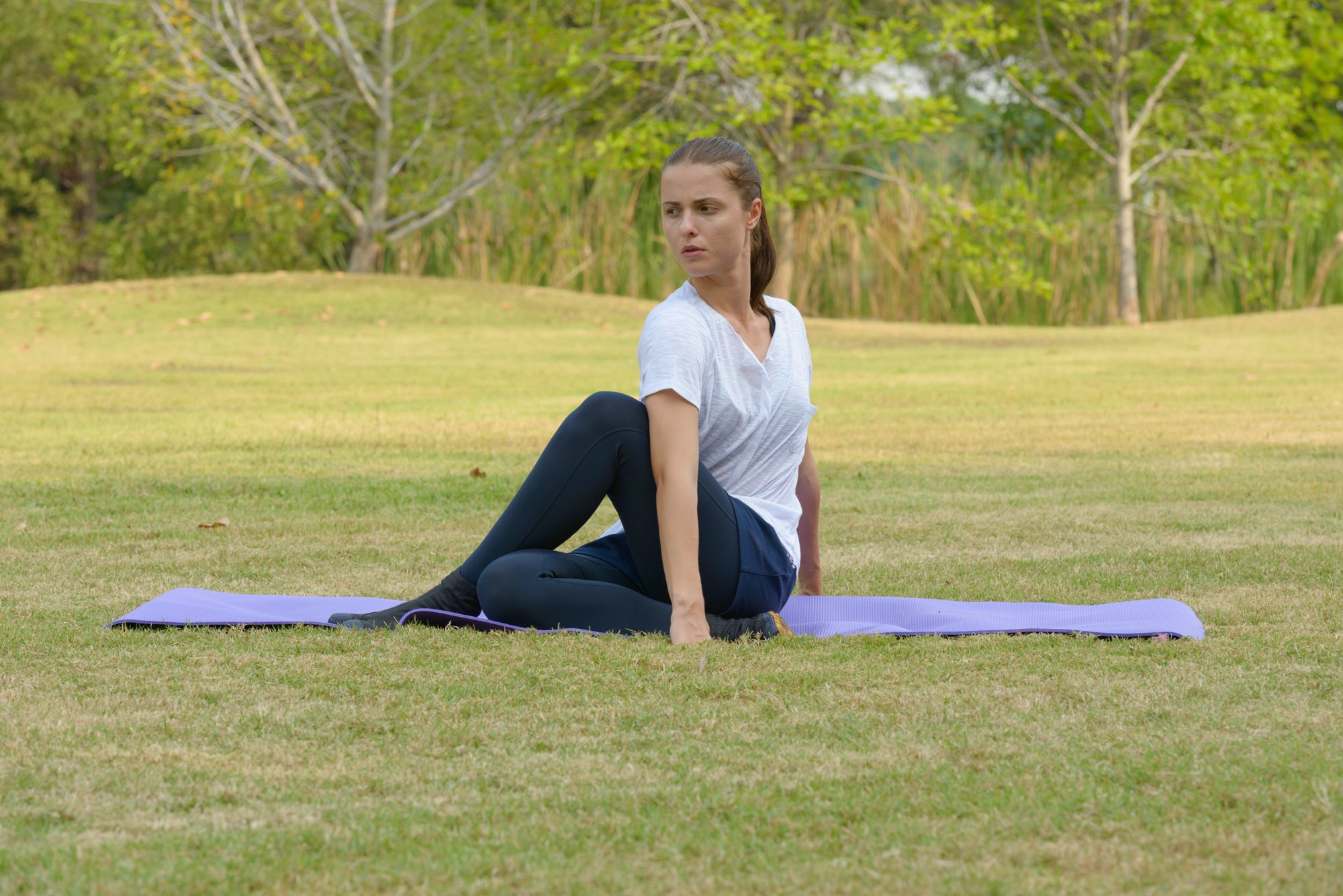
| 2 | 2. Gatyatmak Meru Vakrasana (dynamic spinal twist) | Free breathing | Each side | 10 rounds
Asana Pranayama Mudra Bandha, 4th revised edition (2008) | Transition: Legs wide and straight, arms out; exhale and twist, one hand towards the opposite big toe, other arm back, gaze at the back hand; inhale to centre. Start slowly. Easier option: Stay slow; smaller range. Not with back conditions (APMB). Related: revolved seated wide angle. |
| 3 | 3. Chakki Chalanasana (churning the mill) | Free breathing | | 5 to 10 each direction
Asana Pranayama Mudra Bandha, 4th revised edition (2008) | Transition: Legs wide, fingers interlocked, arms straight; circle the trunk from the waist as if turning a grinding stone, exhaling forward, inhaling back. Easier option: Bent knees; smaller circles. |
| 4 | 4. Nauka Sanchalanasana (rowing the boat) | Free breathing | | 5 to 10 each direction
Asana Pranayama Mudra Bandha, 4th revised edition (2008) | Transition: Legs straight, hands as if holding oars; exhale and bend forward, inhale and lean back drawing the hands to the shoulders; then row the other way. Easier option: Bent knees. |
| 5 | 5. Kashtha Takshanasana (chopping wood) | Exhale | | 5 to 10 rounds
Asana Pranayama Mudra Bandha, 4th revised edition (2008) | Transition: Squat, feet about 45 cm apart, hands clasped, arms straight; inhale and raise the arms overhead, exhale with a "Ha!" and bring them down as if chopping wood. Easier option: Standing (the book allows it if squatting is too hard). Not with knee problems or sciatica (APMB). |
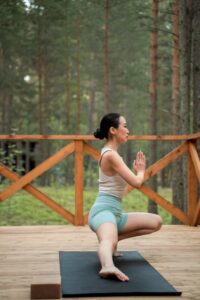
| 6 | 6. Namaskarasana (salutation pose) | Free breathing | | 3 seconds with the breath held, each position; 5 to 10 rounds
Asana Pranayama Mudra Bandha, 4th revised edition (2008) | Transition: Squat, hands in prayer, elbows press the knees apart as the head goes back; then arms straight forward, knees press in, chin to chest. Easier option: Heels on a blanket; sit on a block. Related pose: garland pose. |
| 7 | 7. Vayu Nishkasana (wind-releasing pose) | Free breathing | | 3 seconds with the breath held, each position; 5 to 10 rounds
Asana Pranayama Mudra Bandha, 4th revised edition (2008) | Transition: Squat holding the insteps, head back; exhaling, straighten the knees and bring the head towards the knees; inhaling, return. Easier option: Hands on the shins; partial straightening. |
| 8 | 8. Kauva Chalasana (crow walking) | Free breathing | Each side | up to 50 steps
Asana Pranayama Mudra Bandha, 4th revised edition (2008) | Transition: Walk forward in a full squat, hands on the knees. Easier option: Skip with knee, ankle or toe problems (APMB). |
| 9 | 9. Udarakarshanasana (abdominal stretch pose) | Free breathing | Each side | 3 to 5 seconds with the breath out; 5 to 10 rounds
Asana Pranayama Mudra Bandha, 4th revised edition (2008) | Transition: Squat, hands on the knees; exhaling, bring one knee to the floor near the other foot and twist towards the raised knee, looking over that shoulder; inhale back. Easier option: Hold a chair. |
Left and right
Pulling, twisting and walking movements alternate right and left; circles both directions.
Repetitions and counting
Per APMB: rope and dynamic twist 10 rounds; churning and rowing 5-10 each direction; chopping, salutation, wind-releasing and abdominal stretch 5-10 rounds; crow walking up to 50 steps.
Props and adaptations
Bent knees in seated movements; chair for the arm movements; blanket under the heels and a block to sit on in squats; leave out crow walking.
Precautions
- APMB: squatting practices not with knee problems or sciatica; crow walking not with knee, ankle or toe problems; dynamic twist not with back conditions.
- Wind-releasing pose: not with very high blood pressure or hardening of the arteries (APMB).
- Hip problems: leave out or support the full squats. Pregnancy: ask your midwife or doctor first.
- "Shakti bandha" (energy block) is the source group name, not a claim.
Learn it with a teacher: A teacher can show the rhythm and breath of each movement and adapt the squats.
General information, not medical advice. Poses do not cure illness. If you are pregnant, injured or have a health condition, check with your doctor and tell your teacher before you practise.
Pawanmuktasana Part 3 (Shakti Bandha) around the world
Share your Pawanmuktasana Part 3 (Shakti Bandha), wherever you are
Pawanmuktasana Part 3 is the third group of the Bihar School’s Pawanmuktasana series. Swami Satyananda Saraswati’s Asana Pranayama Mudra Bandha calls these the shakti bandha asanas, usually translated “energy block postures”: a group of rhythmic seated and squatting movements named after everyday actions such as pulling a rope, churning a mill, rowing and chopping wood. The group name reflects the tradition’s energetic language; we report it as a name, not as a claim.
The order
The book lists nine practices: Rajju Karshanasana (pulling the rope), Gatyatmak Meru Vakrasana (dynamic spinal twist), Chakki Chalanasana (churning the mill), Nauka Sanchalanasana (rowing the boat), Kashtha Takshanasana (chopping wood), Namaskarasana (salutation pose, a squat with the hands in prayer), Vayu Nishkasana (wind-releasing pose, a squat that straightens into a forward bend), Kauva Chalasana (crow walking, walking in a full squat) and Udarakarshanasana (abdominal stretch pose, a squatting twist). None of these has a separate pose page yet; the steps describe each one.
The nine practices in plain words
The group falls into two halves. The first four are done sitting on the floor with the legs straight. In pulling the rope you reach up with one straight arm as you breathe in and pull an imaginary rope down as you breathe out, one arm at a time, with the eyes following the hand. In the dynamic spinal twist the legs are wide and the arms straight out to the sides; you twist to bring one hand toward the opposite big toe while the other arm stretches behind, breathing out as you twist. Churning the mill is a slow circle of the trunk from the waist, arms straight and fingers interlocked, as if turning an old stone grinder: breathe out moving forward, in leaning back. Rowing the boat is the same idea with the legs together and the hands drawing full circles, as though pulling oars.
The last five are done in a squat, and this is where the group becomes demanding. Chopping wood swings the clasped hands overhead and down. Salutation pose and wind-releasing pose move between two positions with a short pause in each. Crow walking is walking forward in a full squat, and the abdominal stretch lowers one knee toward the floor and twists toward the other. The book’s awareness notes are a good guide to what you should feel: the stretch of the upper back and shoulders in the rope, the spine in the twist, the lower back and hips in churning and rowing, and the groin and neck in the salutation squat.
Asana Pranayama Mudra Bandha says the group may be started straight away if you are in good health and fit; with any serious condition, consult a therapist first, and observe the cautions given for each practice. It also notes that right-handed people will find the practices easiest to learn with the right side leading, and should then do them with the left side leading as well, so both sides develop evenly.
How the counting and sides work
The counts are the book’s: pulling the rope and the dynamic twist 10 rounds (the twist starts slowly and gradually speeds up); churning the mill and rowing 5 to 10 rounds in each direction; chopping wood, salutation pose, wind-releasing pose and the abdominal stretch 5 to 10 rounds; crow walking as many steps as is comfortable, up to 50. Pulling, twisting and the abdominal stretch alternate right and left. Several practices include a short breath hold of about 3 seconds (salutation and wind-releasing pose) or 3 to 5 seconds with the breath out (abdominal stretch); in chopping wood the breath goes out with a “Ha!” on the downward stroke. The squatting practices at the end are the most demanding for the knees and ankles: take them slowly, and if the squat is too difficult the book allows chopping wood standing. Rest sitting or lying down between practices.
Precautions and alternatives
The book says the squatting practices (chopping wood, salutation pose, wind-releasing pose, abdominal stretch) are not for people with knee problems or sciatica, crow walking not with knee, ankle or toe problems, and the dynamic twist not with back conditions. The wind-releasing pose brings the head below the hips, so the book also rules it out with very high blood pressure or hardening of the arteries. With hip problems, leave the full squats out or do them holding a chair. During pregnancy, ask your midwife or doctor before this group. A gentler squat with support is garland pose on a block. If squatting is not possible at all, do only the four seated practices; sitting on a folded blanket makes the straight-leg positions easier if the hamstrings are tight. The book also asks you not to overstretch the back in the abdominal stretch as the body begins to feel lighter and more flexible. This page has not yet been reviewed by a qualified teacher.