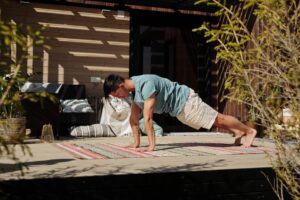
In short: hot yoga is any yoga class taught in a deliberately heated room, so it is a format rather than one method. Room temperatures vary by studio: researchers count anything from about 25°C (77°F) upward as “hot,” and the best-known version, Bikram’s fixed 90-minute series, runs at about 40°C (104°F) with around 40 percent humidity. The heat raises your heart rate and body temperature, so go easy at first, drink water and leave the room if you feel unwell.

Hot yoga is one of the most searched styles on the web, and the name causes a lot of confusion. Some studios use it for a vinyasa flow class with the thermostat turned up; others use it for a set sequence that comes straight from Bikram yoga; others again run slow, held postures in a warm room. This guide explains what all of these share, how warm the rooms really get, what the research says (and doesn’t say) about practicing in heat, and who should check with a doctor before booking. If you are still choosing between styles, start with our overview of types of yoga.
What is hot yoga?
Hot yoga is a collective term for yoga practiced in warm to hot conditions. A 2025 systematic review of 43 studies used a threshold of 25°C (77°F) or warmer and found that the sessions it examined took place at 30 to 52°C, at 20 to 60 percent relative humidity, and lasted 20 to 90 minutes. That is a wide spread: a warm vinyasa class and a Bikram class at 40°C are both “hot yoga.”
What makes it a format rather than a style is that the heat can be added to almost any method. The same review found that most research had been done on Bikram yoga (74 percent of studies), followed by general hot yoga classes, hatha and vinyasa. In everyday studio language you will meet three broad kinds:
- Fixed-sequence hot classes: the 26-posture, two-breathing-exercise series made famous by Bikram Choudhury, sometimes taught under another name. See our full guide to Bikram yoga.
- Heated flow: a vinyasa or power yoga class in a warm room, with poses chosen by the teacher and often music.
- Warm slow classes: held postures in a gently heated room, closer to a hatha class.
Hot yoga vs Bikram: the difference
All Bikram classes are hot yoga, but most hot yoga is not Bikram. Bikram yoga is a specific method: a series of 26 postures and two breathing exercises in a fixed order, taught over about 90 minutes in a room held at about 40°C (104°F) and 40 percent humidity, according to the 2025 review. Other heated classes let the teacher choose the poses and are usually shorter.
The line between the two blurred after a court case. Bikram Choudhury tried to claim copyright over his sequence, and in 2015 the U.S. Court of Appeals for the Ninth Circuit ruled that the sequence was not protected by copyright, because a series of exercises meant to produce health benefits is a system or process rather than creative expression. The studio sued in that case described its own “hot yoga” class as 26 postures and two breathing exercises for 90 minutes at about 105°F, which shows how often the general label is used for the Bikram-style series. If you want to know exactly what a class contains, read the studio’s class description or ask: “Is this a set sequence or a flow? How warm is the room?”
| Hot yoga (general) | Bikram yoga | |
|---|---|---|
| What it is | A format: any style in a heated room | One specific method |
| Poses | Chosen by the teacher; varies class to class | The same 26 postures and 2 breathing exercises every class |
| Room | Varies by studio, from warm to about 40°C (104°F) | About 40°C (104°F), about 40 percent humidity |
| Length | Often shorter than 90 minutes | About 90 minutes |
| Pace | Anything from flowing to slow | Each posture held, with short rests between floor postures |
Origins: why heat a yoga room?
Practicing in a deliberately heated room is a modern idea, not a classical one. The 2025 review dates Bikram Choudhury’s fixed hot sequence to the early 1970s; heated classes in other styles, from flow to slow held postures, are now taught under the same broad name. Teachers give different reasons for the heat, such as feeling warm and loose sooner or making a familiar practice more demanding. Those are teaching rationales, not established facts: the research below shows what heat measurably does to the body, which is not the same as proving that the heat makes yoga better.
Hot yoga’s postures come from the wider tradition of modern postural yoga. For the long story of how physical practice developed, read our history of yoga.
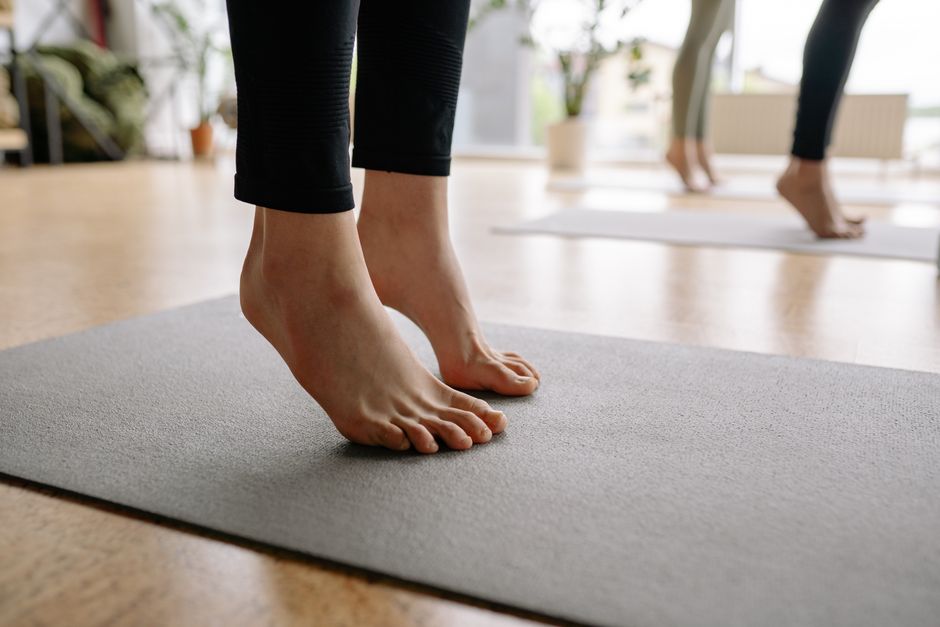
What happens in a typical class
Classes differ a lot, but this is a fair picture of a first visit to a heated studio:
- Arrive early. Many studios ask newcomers to come 10 to 15 minutes before class to fill in a health form and settle in. The room may already be warm.
- Set up near the door if you are new. It is usually a little cooler and makes it easy to step out.
- Warm-up and breathing. Many classes start standing, with slow breathing or a few gentle movements.
- The main sequence. In a flow class, expect sun salutations with downward-facing dog, chaturanga and cobra, then standing poses such as triangle and balances such as tree pose. In a fixed-sequence class, you will repeat the same postures in the same order each time.
- Floor work and rest. Backbends such as camel pose may appear late in class, and every class ends lying still in corpse pose (savasana).
You will sweat far more than in an unheated class. Some people find that unpleasant at first and enjoyable once they are used to it; others never warm to it. Both reactions are normal.
How intense is hot yoga?
It depends on the class you choose, and heat adds a load that is easy to underestimate. The 2025 review found that a single hot session raised body temperature and heart rate, but did not raise the energy cost compared with similar yoga in a normal room. In a laboratory study of a standard 90-minute Bikram class, the postures counted as light to moderate exercise by American College of Sports Medicine standards, and participants burned an average of about 286 calories, far below the 1,000-calorie claims the researchers set out to test. A small study of 16 regular Bikram practitioners recorded an average heart rate of about 127 beats per minute across a class, with peaks near 168.
In plain terms: the muscles may not be working much harder than in a normal class, but your heart and your cooling system are. That is why we list hot yoga as vigorous in our style chooser, even when the poses themselves are simple.
Benefits: what the research says
Hot yoga research is growing but still limited. The 2025 review concluded that regular practice appeared to bring some cardiometabolic and functional changes (for example in flexibility, balance and some markers of heart and blood vessel health), and that results for mood and stress were promising but inconclusive. It also noted that some studies were small or not rigorously designed. A six-week randomized trial with 290 healthy beginners found improvements in self-reported well-being compared with a wait-list group; a wait-list comparison cannot separate the effect of the heat from the effect of simply going to classes.
So far there is no good evidence that heat “detoxifies” the body. Sweat is how you cool down. Hot yoga is a way to practice that some people enjoy, not a treatment for any condition.
Heat cautions: who should be careful
The U.S. National Center for Complementary and Integrative Health (NCCIH) notes that hot yoga carries particular risks of overheating and dehydration, and the 2025 review records individual case reports of people becoming ill during or after hot classes, including heat stroke. Talk to your doctor before trying hot yoga if any of these apply:
- You are pregnant. Both NCCIH and the American College of Obstetricians and Gynecologists (ACOG) advise avoiding hot yoga during pregnancy because of the risk of overheating. See our guide to prenatal yoga for safer options.
- You have a heart condition, high or low blood pressure, or a history of fainting.
- You have had heat illness before, or take medicines that affect sweating, heart rate, fluid balance or blood pressure.
- You have diabetes, kidney disease, multiple sclerosis or another condition affected by heat.
- You are an older adult or new to exercise in general (start with an unheated class).
Know the warning signs. MedlinePlus, the U.S. National Library of Medicine’s health site, lists dizziness, nausea, confusion and a rapid, strong pulse among the symptoms of heat stroke, and heavy sweating and rapid breathing among those of heat exhaustion. If you feel dizzy, sick, confused, unusually tired or stop sweating, stop at once, lie down or sit, sip water and leave the room. Tell the teacher; that is part of their job. Heat stroke is a medical emergency.
Practical rules of thumb: drink water during the day before class, not only during it; eat lightly a couple of hours before; skip class if you are unwell, hungover or short of sleep; rest in child’s pose or savasana whenever you need to. The 2025 review notes that resting in savasana when the heat feels too much can let people stay in the room with less strain.

Breathing and philosophy in a heated room
Steady breathing matters more in heat. Many flow teachers use Ujjayi breathing, a soft, audible breath through the nose. If you are new, simple diaphragmatic breathing is enough: slow, low breaths that you can keep up without strain. If you can’t breathe through your nose comfortably, slow down or rest.
Yoga’s ethical teachings are a good guide here. The first of the yamas, ahimsa, is usually translated as non-harming, and in a hot room it can be as simple as not pushing past what your body is telling you.
What to bring
- A grippy mat. Sweat makes some mats slippery; our yoga mat guide explains which materials hold up in heat.
- A large towel to lay over the mat, plus a small one for your face.
- Water, ideally in an insulated bottle; some people add electrolytes after long classes.
- Light, close-fitting, quick-drying clothes. Our guide to yoga clothing covers fabrics for hot classes.
- A change of clothes for afterward.
Is hot yoga right for you?
Hot yoga can suit healthy people who enjoy heat and want a demanding class. It is not the best first step for everyone. If you are new to yoga, a normal-temperature beginner class is the easiest way to learn the poses before adding heat; our guide to yoga for beginners explains how to start. If you want stillness rather than sweat, look at yin yoga; if you want flowing movement without the heat, try vinyasa.
Hot yoga on retreat and vacation
Some retreat centers and studios in warm destinations offer heated classes, but many retreats in warm places practice in open-air or lightly sheltered spaces where the climate does the warming. If you are planning a trip, our guide on how to choose a yoga retreat explains what to ask about class style and conditions, and our destinations section covers places such as Costa Rica and Bali, where heat and humidity are part of every class, heated studio or not.