Reclining Hand-to-Big-Toe Pose (Supta Padangusthasana): the strap hamstring stretch, I to III

Reclining hand-to-big-toe pose (Supta Padangusthasana) is the lying-down hamstring stretch with a strap. Steps for I, II (leg to the side) and III (leg across), cues for the floor leg, and precautions.

Not yet reviewed by a qualified teacher Names and shape checked against 6 sources

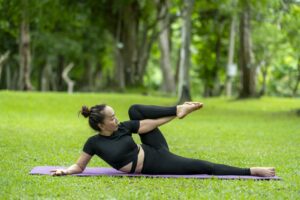
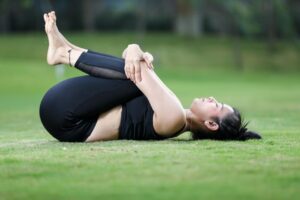
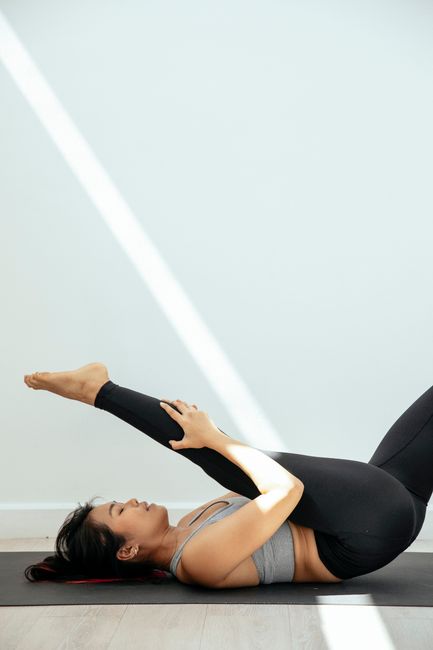
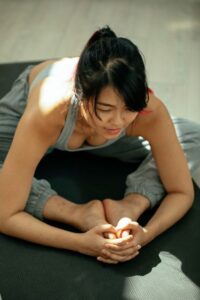
Side view of young Asian fit female with closed eyes and in sportswear performing Supine hand to big toe pose during yoga session on mat against white wall
Sanskrit name
Supta Pādāṅguṣṭhāsana सुप्त पादाङ्गुष्ठासन (source)
Pronunciation
soup-TAH pod-ang-goosh-TAHS-anna (source)
Also called
Reclining Big Toe Pose, Supine Hamstring Stretch with Strap, Reclining Hand-to-Big-Toe Pose II, Reclining Hand-to-Big-Toe Pose III, Supta Padangusthasana III (numbering varies)
Other spellings
Supta Padangusthasana, Supta Padangusthasana I, Supta Padangusthasana II, Parsva Supta Padangusthasana, Parivrtta Supta Padangusthasana
Pose family
Forward bend, Resting and restorative, Supine
Starting position
Reclining (on the back)
Movement
Forward fold, Hip external rotation, Twist
Taught in
Hatha Yoga: The Historical Term and the Modern Class, Vinyasa Yoga: Flow, Breath and What to Expect
Difficulty
Beginner
Prerequisite skills
Lying on the back comfortably; a strap. No hamstring flexibility required for the strap version.
Body areas
Hamstrings, Hips, Legs
Props
Blanket, Block, Strap, Wall
Practised
Solo

Names in different traditions

TraditionName usedNote
Iyengar (Light on Yoga)Supta PādāṅguṣṭhāsanaAsana 108, plates 284–287: one asana in three movements (leg up, chin to knee; leg toward the opposite shoulder, head under the arm; leg out to the side to the floor); about 20 seconds in each.
Iyengar Yoga (UK) syllabusSupta Padangusthasana I (284) and II (287)Level 1; III described as a further stage at a later level.
Iyengar Yoga Association of CanadaI (leg vertical), Parsva II (leg lateral), III (plate 286), Parivrtta IV (no plate)Syllabi for Candidates 2018: the cross-body version is called Parivrtta Supta Padangusthasana.
Yoga JournalReclining Hand-to-Big-Toe Pose I and IIStrap and chair variations; II with the leg to the side, block under the thigh.
Yoga Chicago (Iyengar-trained teacher)Supta Hasta Padangusthasana 1-2-31 up, 2 to the side, 3 across the midline into a twist.

Step by step

Coming into the pose

  1. Lie on your back with both legs long, feet flexed. Keep the natural curve of the lower back. If you like, press the left heel against a wall.
  2. Bend the right knee toward the chest and loop a strap around the ball of the right foot (or hold the big toe with the first two fingers and thumb of the right hand).

In the pose

  1. Straighten the right leg toward the ceiling. Press the left thigh down and extend through the left heel. Raise the right leg only as far as the left leg stays down.
  2. Keep the shoulders and head relaxed on the floor. Stay about five breaths.
  3. II: hold the strap in the right hand, left hand on the left hip, and exhale the right leg out to the side; keep the left hip down; rest the thigh on a block if needed. Inhale back up.
  4. III: change to the left hand and take the right leg across the midline; reach the right hip away from the right shoulder; right arm out at shoulder height. Inhale back to centre.

Coming out

  1. Bend the right knee, release the strap and lower the leg. Rest a breath, then repeat on the left.

Breathing

Breathe freely through the nose. Use the exhalation to lower the leg to the side or across, the inhalation to bring it back up. Do not hold the breath to pull the leg closer.

Alignment cues

  • The floor leg is the key: thigh pressing down, heel extending, toes pointing up.
  • Both buttocks stay on the floor; lower the lifted leg if one side lifts.
  • Lifted leg straight before it comes closer; stretch in the middle of the hamstrings.
  • In II and III, keep the opposite hip anchored and the waist long on the moving side.

Common alignment errors

  • Pulling the leg close with a bent knee and a lifting floor leg.
  • Gripping the strap with hunched shoulders and a lifted head.
  • Letting the pelvis roll with the leg in version II.
  • Yanking the leg back up from version III instead of rolling back slowly.

Modifications and easier variations

  • Bend the floor leg with the foot flat to take strain off the lower back. none

Advanced variations

Props and chair adaptations

  • Strap around the ball of the foot: the standard way to learn the pose. strap
  • Floor-leg heel pressed against a wall to keep it active (Yoga Journal). wall
  • Block under the outer thigh in II, or under the foot in III. block
  • Folded blanket under the head if the chin tips up. blanket
  • Chair version (Yoga Journal): sit tall, loop the strap around one foot and extend the leg forward, supporting it with the strap. chair

Precautions

  • Recent hamstring tear: avoid or ask a physiotherapist.
  • Pain behind the knee: lower the leg or bend the knee slightly.
  • Lower-back or sacroiliac pain: keep version III small and slow.
  • Pregnancy after the first trimester: short holds only on the back; follow your health care provider's advice.

Learn it with a teacher: The strap versions are safe to learn on your own. Learn Light on Yoga's full three-movement form, with the head lifted, from a teacher.

General information, not medical advice. Poses do not cure illness. If you are pregnant, injured or have a health condition, check with your doctor and tell your teacher before you practise.

In short: reclining hand-to-big-toe pose is a hamstring stretch done lying on your back. One leg stays long on the floor, the other lifts toward the ceiling, held by the big toe or, for most people, by a strap around the foot. Because the floor supports the back, it is one of the safest ways to stretch the backs of the legs. The same setup continues with the leg opened to the side (II) and taken across the body (III).

If standing and seated forward bends round your back before you feel the hamstrings, this is the pose to learn first. Lying down takes balance and back strain out of the picture, so you can feel what the legs are doing. Below we explain the name, the strap version step by step, the side and cross-body versions, precautions and where it is taught.

About the name

The Sanskrit name is Supta Pādāṅguṣṭhāsana: supta, lying down, pāda, foot, aṅguṣṭha, big toe, and āsana, posture (see what asana means and our Sanskrit pose-name glossary). In Light on Yoga, B.K.S. Iyengar teaches it as one asana done in three movements: the leg up with the chin to the knee, the leg drawn toward the opposite shoulder with the head passing under the arm, and the leg out to the side. Modern classes, including Iyengar teaching syllabi, usually number the simpler versions separately, and the numbers do not always match from school to school. On this page, I is the leg straight up, II is the leg out to the side and III is the leg across the body.

Making it work: the strap version

Begin with the strap; holding the big toe is only useful once the leg can stay straight. Lie with both legs long, bend the right knee toward the chest and loop a strap around the ball of the right foot. Hold one end in each hand and straighten the leg toward the ceiling. Yoga Journal’s main cue is the leg on the floor: press its thigh down and extend through the heel, and keep the natural curve of the lower back rather than flattening it. Raise the lifted leg only as far as the floor leg stays down and the lifted-side buttock stays on the mat; a 60-degree angle is fine to start. Feel the stretch in the belly of the hamstrings, not behind the knee. Yoga Journal suggests about five breaths per side; Light on Yoga holds the head-to-knee stage about 20 seconds.

If the floor leg keeps lifting, press its heel against a wall, as Yoga Journal suggests. If the lifted leg will not straighten, keep a small bend in the knee; a straight leg at 45 degrees teaches more than a bent leg pulled close. The advanced form in Light on Yoga lifts the head and chest to bring the chin to the knee; leave that stage until the basic shape is easy.

Reclining Hand-to-Big-Toe Pose II (leg to the side)

From the leg-up position, hold the strap in the right hand only, put the left hand on the left hip, and on an exhalation lower the right leg out to the right. The important part is the opposite hip: keep the left thigh and the left hip pressed down so the pelvis does not roll with the leg. Stop where that happens, or rest the outer right thigh on a block, which Yoga Journal recommends for stiff hips. This version moves the stretch to the inner thigh. Both Yoga Journal and the Iyengar Yoga (UK) syllabus call it Supta Padangusthasana II; Light on Yoga shows it as the third movement of the full pose (plate 287), with the leg resting on the floor. Inhale to bring the leg back up.

Reclining Hand-to-Big-Toe Pose III (leg across the body)

Change hands so the left hand holds the strap and take the right leg across the midline to the left, a few inches at first. Keep the right side of the waist long by reaching the right hip away from the right shoulder, and keep the right shoulder down; stretch the right arm out at shoulder height. Taking the leg further rolls you onto the left hip and becomes a reclining twist that stretches the outer hip and the side of the leg; a block under the foot helps. Come back slowly, rolling onto the lower back first and letting the leg follow. The numbering here is not settled: Yoga Chicago calls this version III, while the Iyengar Yoga Association of Canada lists it as Parivrtta Supta Padangusthasana (IV) and uses III for a different movement. Ask your teacher which they mean.

Precautions in plain words

Skip or greatly reduce the pose with a recent hamstring tear, which Yoga Journal lists as a contraindication. If you feel pain behind the knee, lower the leg or bend the knee slightly. With a stiff upper back or if the chin tips up, put a folded blanket under the head. Twisting version III asks more of the lower back and sacroiliac joints: move slowly and keep it small if you have back pain. Lying on the back for long is not recommended after the first trimester of pregnancy; keep holds short and follow your health care provider’s advice. This page is general information, not individual advice.

Preparation, what comes next and where it is taught

Yoga Journal lists downward-facing dog, bound angle and standing forward bend as preparation, and standing poses and forward bends as follow-ups. The pose is excellent preparation for seated forward bend, extended hand-to-big-toe pose (the standing version) and side-reclining leg lift. Afterwards, wind-relieving pose or reclining spinal twist settle the back. It is a core pose in Iyengar introductory courses and common in hatha and vinyasa classes, often near the end of the session.
Preparatory poses

Follow-up poses and transitions

Counterposes

Related poses

More forward bend poses

Frequently asked questions

Do I need to hold my big toe?

No. Use a strap around the ball of the foot until you can keep the lifted leg straight and the floor leg down. Holding the toe is the classical form, not a requirement.

What is the difference between Supta Padangusthasana I, II and III?

I lifts the leg straight up (hamstrings), II opens it out to the side (inner thigh) and III, in many classes, takes it across the body into a twist (outer hip). Schools number the later versions differently, so check with your teacher.

How high should the leg go?

Only as high as the floor leg stays pressed down and both buttocks stay on the mat. Around 60 degrees is a good start; 90 degrees is plenty for most people.

Sources

  1. B.K.S. Iyengar, Light on Yoga (Yoga Dipika), asana 108 Supta Padangusthasana, plates 284–287, Digital Library of India (Internet Archive) (accessed October 6, 2026)
  2. Reclining Hand-to-Big-Toe Pose I (Supta Padangusthasana I), Yoga Journal (accessed October 6, 2026)
  3. Back in Traction: Reclining Hand-to-Big-Toe Pose (variations 1 and 2), Yoga Journal (accessed October 6, 2026)
  4. I8 Teaching Syllabi: Supta Padangusthasana I (284), II (287), III, Iyengar Yoga (UK) (accessed October 6, 2026)
  5. IYAC/ACYI Syllabi for Candidates (2018): Supta Padangusthasana I–III, Parsva, Parivrtta, Iyengar Yoga Association of Canada (accessed October 6, 2026)
  6. Supta Hasta Padangusthasana 1-2-3 (Cara Chang Mutert), Yoga Chicago (accessed October 6, 2026)

Facts checked on October 6, 2026