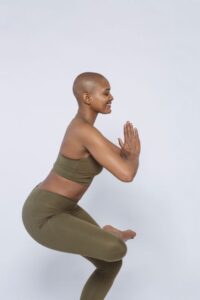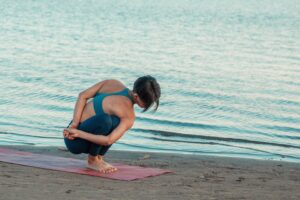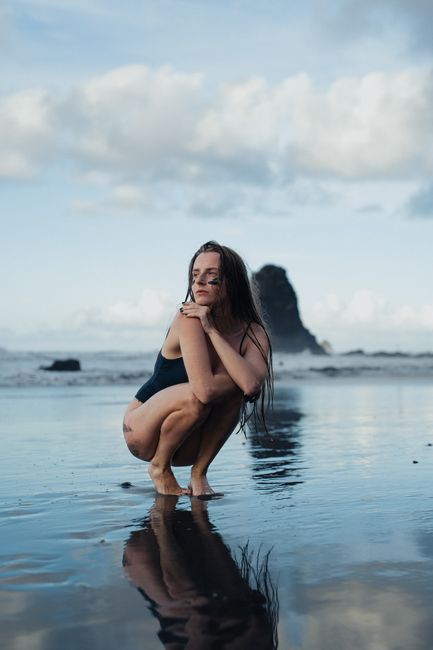
In short: garland pose, or yogic squat, is a deep squat with the heels down, the knees wide, the elbows pressing against the inner knees and the palms together at the chest. It works the ankles, hips and groin and lengthens the back. If the heels lift, put a rolled blanket under them; if the squat is too deep, sit on a block.
Squatting is a natural resting position for small children and in many cultures, but adults who sit in chairs often lose the range. Garland pose is a gentle way to rebuild it. The name has a twist in its history, so we explain that first.
The name: Malasana then and now
The Sanskrit name is Mālāsana, from mālā, a garland. Yoga Journal and Yoga International both use Malasana for the squat with the palms together that most classes teach today. In Light on Yoga, however, Mālāsana I and II are deeper forward-bending squats with the feet together: in I, the arms wrap around the bent legs and the hands clasp behind the back before the head goes to the floor (rated Eight*); in II, the hands hold the backs of the ankles and the forehead rests on the toes (Two*). B.K.S. Iyengar explains the name by the arms hanging from the neck like a garland. So “Malasana” names a family of squats, and the modern prayer-hands version is one of them. We record the Sanskrit as varying by tradition.
Making the squat work
Foot position varies. Yoga Journal starts with the feet as close together as possible; Yoga International sets them slightly wider than the hips and turned out about 45 degrees. Choose the setup that lets your heels stay down and your knees point the same way as your toes. Squat down, let the thighs open a little wider than the torso, and bring the trunk forward between them.
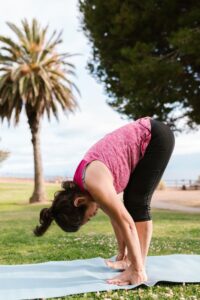
Press the elbows against the inner knees and the palms together in front of the chest, and use the gentle resistance of knees against elbows to lengthen the front of the body and lift the chest toward the thumbs. Yoga Journal suggests 30 seconds to a minute; if you cannot get low, go as far as the hips and knees allow and hold five breaths. To come out, put the hands down, straighten the legs into standing forward fold and roll up.
Props that make the squat possible
Most adults need some help at first, and Yoga Journal lists several ways to give it. If the heels will not reach the floor, stand with the heels on the edge of a folded blanket or on a rolled blanket, then squat. For more support, sit on a block, or on a block plus folded blankets, and let the feet and knees turn out as much as you need. A wall helps with balance: stand with your heels a few inches from it and slide your buttocks down the wall as you squat.
If a floor squat is not possible yet, sit on the front edge of a chair with the heels on the floor slightly ahead of the knees, and lean the torso forward between the thighs. You can also hold the back of a chair as you lower down. The aim is not big leg strength. It is a balance of effort and ease while the hips and ankles slowly gain range. Yoga Journal’s advice for anyone who cannot get low is simple: go as far as the hips and knees allow, hold for five breaths, and do it once a day.
Going a little further
Once the upright squat feels settled, Yoga Journal describes a deeper version: press the inner thighs against the sides of the torso, reach the arms forward, swing them out and tuck the shins into the armpits, then press the fingertips to the floor or hold the backs of the heels. Some teachers then prepare a bind, one arm wrapping in front of the shin and around the back, which leads toward the forward-bending Malasana of Light on Yoga.
Precautions in plain words
Deep squatting loads the knees: with a knee injury or pain on deep bending, sit on one or more blocks, or practise the chair version. With ankle stiffness, support the heels on a rolled or folded blanket rather than forcing them down. If balance is a problem, slide down a wall with your back against it. Pregnant practitioners often find a supported squat comfortable; follow your midwife’s or doctor’s advice, especially later in pregnancy.
Preparation and what comes next
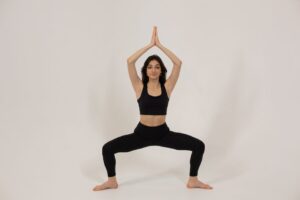
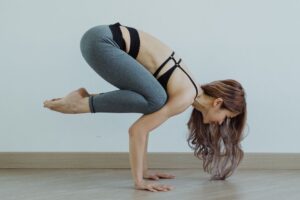
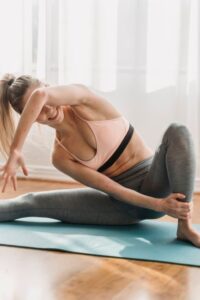
Prepare with chair pose, goddess pose and hip openers such as bound angle. Garland pose leads naturally to crow pose, which starts from a squat, and to the deeper squats of Light on Yoga such as noose pose. Yoga International notes it works well as a counterpose after forward folds.
Where it is taught
The modern garland squat is common in vinyasa, hatha and yin classes (yin teachers hold a similar squat for longer). The forward-bending Malasana I and II belong to Iyengar yoga.