Eight-Angle Pose (Astavakrasana): steps, the sage’s story and precautions

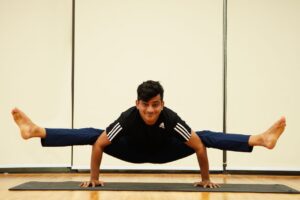
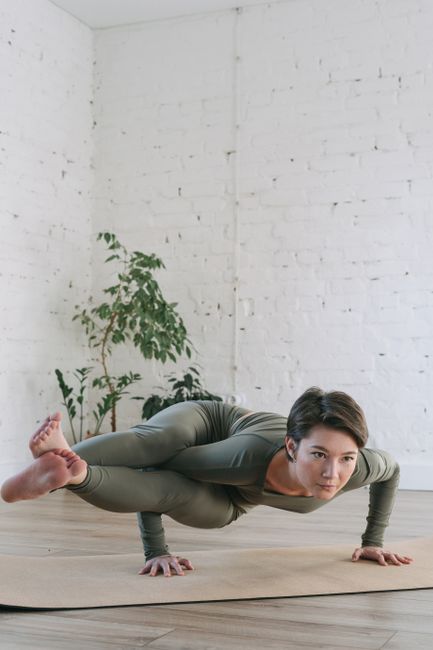
Eight-angle pose (Astavakrasana) is a twisting arm balance with one leg hooked over the arm, ankles crossed and both legs extended to the side. Also called Sage Astavakra pose; an advanced pose.

Not yet reviewed by a qualified teacher Names and shape checked against 3 sources

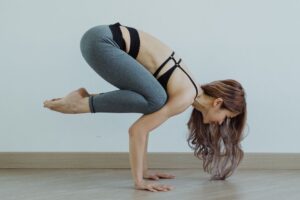
Woman performing an advanced yoga pose indoors with a serene, minimalist backdrop.
Sanskrit name
Aṣṭāvakrāsana अष्टावक्रासन (source)
Also called
Sage Astavakra Pose, Pose Dedicated to the Sage Astavakra, Eight-Crooked Pose
Other spellings
Astavakrasana, Ashtavakrasana
Pose family
Arm balance, Twist
Starting position
Hands-supported
Movement
Balance, Twist
Taught in
Vinyasa Yoga: Flow, Breath and What to Expect
Difficulty
Advanced
Prerequisite skills
Strong, well-aligned chaturanga; open hamstrings and hips; comfort with twists and with full weight on bent arms.
Body areas
Arms and wrists, Core, Hamstrings, Hips, Shoulders
Props
Block, Bolster, Mat
Practised
Solo

Names in different traditions

TraditionName usedNote
Iyengar (Light on Yoga)AṣṭāvakrāsanaPlates 342–343, per the Iyengar Yoga (UK) I8 Teaching Syllabi.
Ashtanga vinyasa (Pattabhi Jois lineage)Aṣṭāvakrāsana A and BThird series (Sthira Bhaga); entered from tripod headstand, five breaths (AshtangaYoga.info).

Step by step

Coming into the pose

  1. Sit in staff pose. Bend the right knee, draw the thigh out to the right and bring the right knee over the right shoulder; press the leg firmly into the arm. If it will not reach the shoulder, hold the leg as high as is comfortable.
  2. Place the hands on the floor beside the hips, about shoulder-width apart, keeping the right calf and inner thigh gripping the right shoulder.
  3. Press into the hands and use the abdominals to lift the hips and the left leg. Hook the left ankle over the right ankle and press the ankles together.

In the pose

  1. Draw the inner thighs toward the arm, bring the chest forward and bend the elbows while the legs swing to the right. Press through the heels to straighten the legs, upper arms toward horizontal. Breathe for a few breaths; Ashtanga holds five.

Coming out

  1. Inhale to lift the chest and swing the legs back to centre; exhale, uncross the ankles and return to staff pose. Repeat on the other side.

Breathing

Exhale as you lift and as you lean forward; keep the breath slow in the pose. The twist and core work make the breath shorter, so do not force it.

Alignment cues

  • Squeeze the thighs together around the arm; the bottom leg presses up.
  • Elbows bent toward 90 degrees, forearms vertical.
  • Draw the shoulders back so the weight of the legs does not drag them down.
  • Reach strongly through the heels.

Common alignment errors

  • Letting the bottom leg drop instead of pressing it into the arm.
  • Dumping the weight into the shoulders, elbows and wrists without core support.
  • Trying the pose cold, without warming hips and hamstrings.

Modifications and easier variations

  • Keep the torso upright and the legs lifted without leaning forward. none
  • Tight hamstrings: practise side crow to build the same arm strength. none

Advanced variations

Props and chair adaptations

  • Blocks on the lowest height under the hands for more room to lift. block
  • Rest the bottom hip and leg on a bolster if balancing is hard (Yoga Journal). bolster

Precautions

  • Wrist, elbow or shoulder injury: avoid (Yoga Journal).
  • Recent hamstring or lower back injury: avoid.
  • Pregnancy: avoid deep twisting arm balances unless your provider agrees.

Learn it with a teacher: Learn eight-angle pose with a teacher once side crow and chaturanga are steady; the Ashtanga entry from headstand needs direct supervision.

General information, not medical advice. Poses do not cure illness. If you are pregnant, injured or have a health condition, check with your doctor and tell your teacher before you practise.

In short: eight-angle pose is an arm balance with a twist. One leg hooks over the upper arm near the shoulder, the other ankle crosses over it, and with the elbows bent the body tilts forward while both legs extend out to one side, squeezing the arm between the thighs. It is an advanced pose that needs core strength, open hamstrings and hips, and steady wrists.

The pose has one record on this site. You may also see it called Sage Astavakra’s pose or the pose dedicated to the sage Aṣṭāvakra; those names point here rather than to a separate page.

The name and the sage

Aṣṭāvakra means “eight bends”: aṣṭa is eight and vakra crooked or bent. AshtangaYoga.info retells the story from the Mahābhārata’s Book of the Forest: the unborn Aṣṭāvakra corrected his father’s Vedic recitation from the womb, and the angry father cursed him to be born with eight bends in his body. He became a celebrated sage, and the Aṣṭāvakra Gītā, a dialogue between Aṣṭāvakra and King Janaka, carries his name. The English “eight-angle pose” is a free rendering of the name, not a count of angles in the shape.

The Iyengar Yoga (UK) syllabus lists Aṣṭāvakrāsana at plates 342 and 343 of Light on Yoga. In Ashtanga it belongs to the third series as Aṣṭāvakrāsana A and B, entered from a tripod headstand and held for five breaths. Yoga Journal teaches a seated entry from staff pose, which is the version described in the steps here.

Making the pose work

The legs do the stabilising. Yoga Journal’s steps press the hooked leg firmly into the arm, cross the ankles and then squeeze the thighs together as the legs straighten; AshtangaYoga.info makes the same point, saying that the harder the legs press from above and below on the upper arm, the less strength the balance needs. Keep the elbows bent toward 90 degrees as in chaturanga, so the forearms stay vertical under the body. The bottom leg tends to sag, so squeeze it up against the arm. While learning, keep the torso more upright and lean forward only as the legs lift.

Yoga Journal recommends weeks or months of chaturanga with good alignment before attempting the pose, so that the upper back and core can carry the load instead of the shoulders, elbows and wrists. Blocks under the hands give more room to lift.
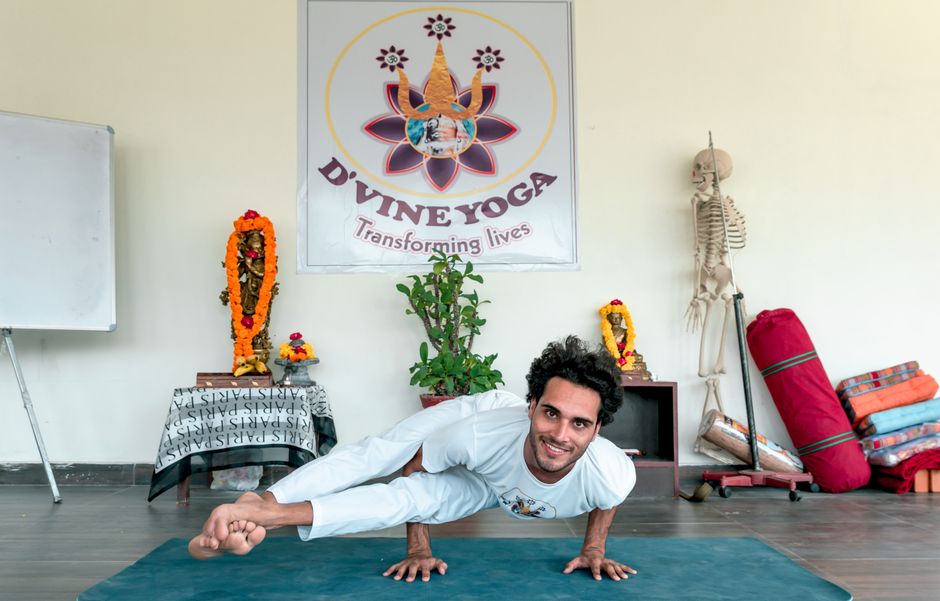
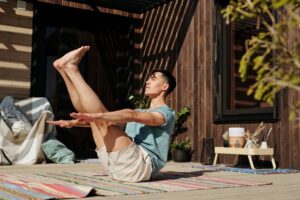
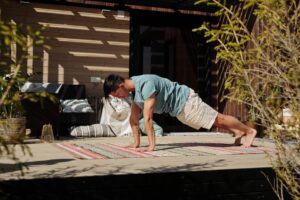
Man practicing eight angle yoga pose with a smile in a serene studio setting.

Precautions in plain words

Avoid this pose with any wrist, elbow or shoulder injury, as Yoga Journal advises, and with a recent hamstring or lower back injury. Warm up thoroughly first: hips, hamstrings, twists and wrists. Move in and out slowly rather than flopping down. In pregnancy, skip deep twisting arm balances unless your health care provider and an experienced teacher agree. This page is general information, not individual advice.

Preparation and what comes next

Yoga Journal lists chaturanga, extended side angle, lizard, crow, side crow, boat pose and seated forward bend as preparation. If your hamstrings are tight, side crow builds the same arm strength without straight legs. Afterwards, rest in child’s pose and stretch the wrists. Related arm balances include Sage Koundinya’s pose and shoulder-pressing pose.

A simple way to practise it. Treat eight-angle pose as a sequence of small wins. First, from staff pose, practise only hooking the leg over the shoulder and holding it there with the arm, breathing calmly. Then add the hands and lift the hips with the legs bent. Then cross the ankles and lift both legs with the torso upright, as Yoga Journal recommends while learning. Only when that hold is steady do you lean forward and straighten the legs. Repeat each stage on both sides and finish before the wrists or shoulders tire.

You will find eight-angle pose in Iyengar and Ashtanga (third series) practice and as a peak pose in vinyasa and power yoga.
Preparatory poses

Follow-up poses and transitions

Counterposes

Related poses

More arm balance poses

Frequently asked questions

Why is it called eight-angle pose?

It is named after the sage Aṣṭāvakra, whose name means "eight bends"; in the Mahābhārata story he was born with eight bends in his body. "Eight-angle" is a loose English rendering, not a count of angles in the shape.

Is Sage Astavakra pose a different pose?

No. Sage Astavakra pose and eight-angle pose are names for the same posture, Astavakrasana, and share this page.

What should I learn before eight-angle pose?

A strong chaturanga, crow and side crow, plus hip and hamstring openers. If the legs will not straighten, keep working on side crow.

Sources

  1. Eight-Angle Pose: How to Practice Astavakrasana, Yoga Journal (accessed October 6, 2026)
  2. Aṣṭāvakrāsana A: Pose of the Sage Aṣṭāvakra, AshtangaYoga.info (Dr. Ronald Steiner) (accessed October 6, 2026)
  3. I8 Teaching Syllabi (asanas with Light on Yoga plate numbers), Iyengar Yoga (UK) (accessed October 6, 2026)

Facts checked on October 6, 2026