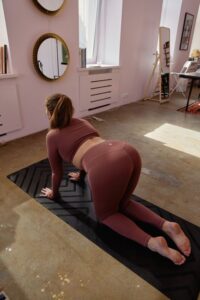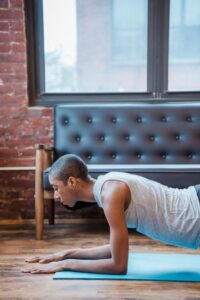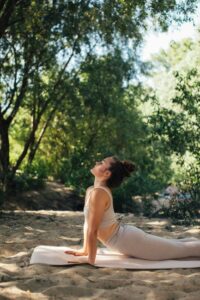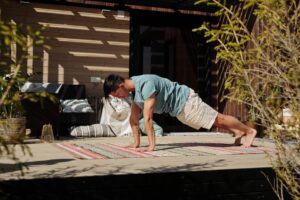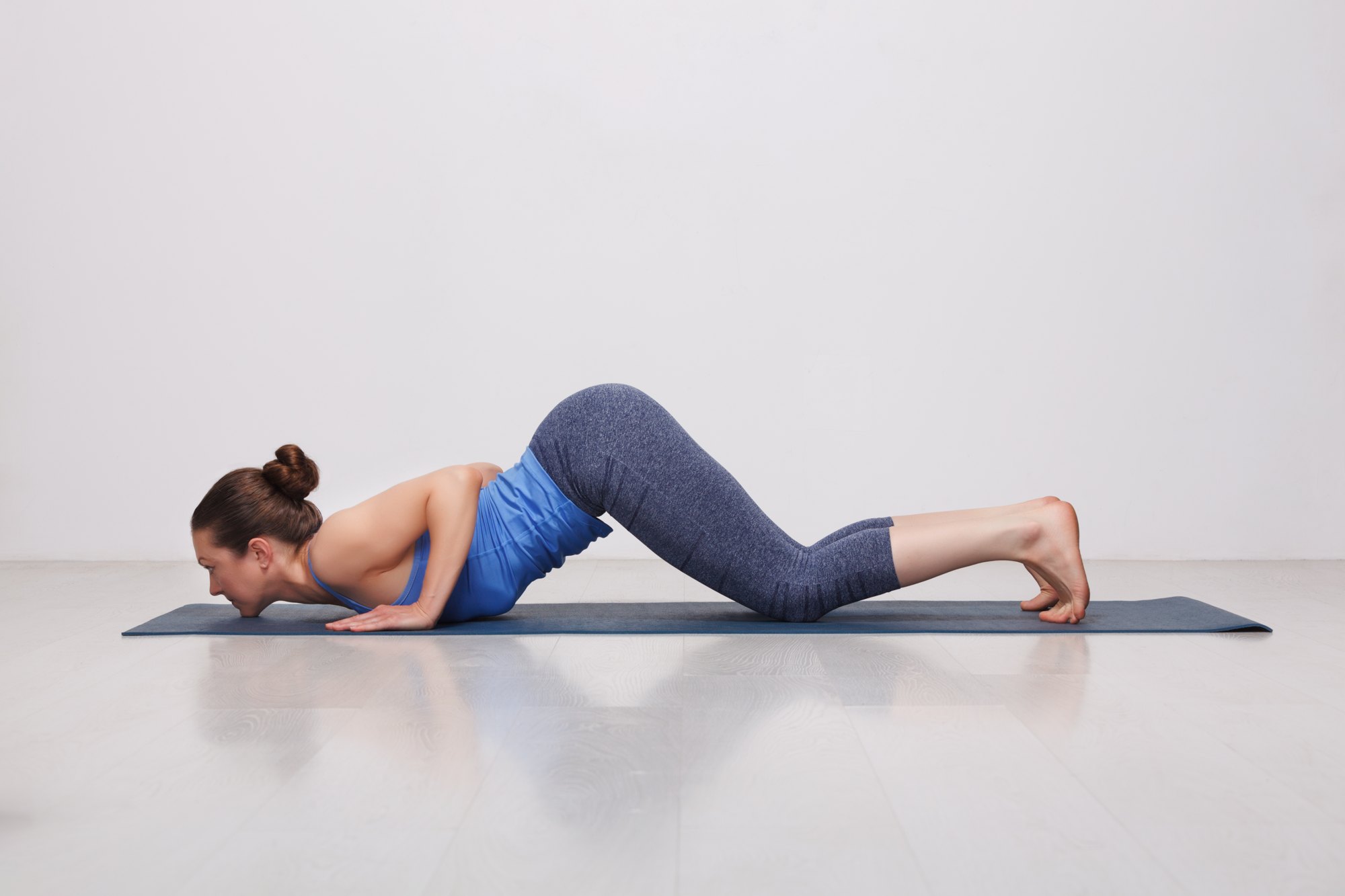
In short: the eight-point salute is the low position in the traditional 12-position sun salutation: from plank you lower the knees, then the chest and the chin (or forehead) to the floor, hips slightly raised, so that eight points touch the ground: two feet, two knees, two hands, the chest and the chin. Many classes use it as a gentler alternative to chaturanga (not every teacher agrees with that use), and it leads into cobra.
Many people first meet this position as “knees, chest, chin” in a beginners’ class, often without knowing that it is a named part of the sun salutation. It looks a little odd at first, with the hips up and the chest down, but it is an easy way to lower to the floor with control. Some teachers use it to build arm strength before chaturanga; others, for example in a Yoga International article, argue that it does not build the strength chaturanga needs and that it can load the shoulders, lower back and neck.
The name, and what it is not
Aṣṭa means eight, aṅga limb or part, and namaskāra salutation: a salute with eight parts of the body. The Bihar School’s Asana Pranayama Mudra Bandha calls position 6 of its sun salutation ashtanga namaskara, the salute with eight limbs, with the toes, knees, chest, hands and chin on the floor. In the sun salutation of the Sivananda tradition, quoted by the Sivananda centres from Swami Sivananda’s Yoga Asanas, the same step is called sastanga namaskar, the eight-curved prostration, and the forehead touches the floor instead of the chin. The name has nothing to do with the Ashtanga vinyasa method of Pattabhi Jois or with the “eight limbs” of Patanjali’s yoga; it simply counts the points of contact.
How to make it work
From plank, lower the knees to the floor first. Then bend the elbows, keeping them close to the ribs, and slide the chest down between the hands, followed by the chin or forehead, while the hips stay lifted and the toes stay curled under. Only the eight points touch; the belly and pelvis are off the floor. Do not drop the weight onto the chin or neck: the arms do the work of lowering. From here the sun salutation continues by lowering the hips, pointing the toes and lifting the chest into cobra. In the Sivananda version you lower on an exhalation; the Bihar manual holds the breath out in this position.
Its place in a round
In the Sivananda sun salutation, one round is two sequences of twelve positions, the first leading with the right foot in the lunges and the second with the left, and the hands stay in the same place from position 3 to position 10. The centres suggest starting with four rounds and building up to twelve. So the eight-point salute comes twice in every round, always between the hands-and-toes position and cobra. Keeping the hands still makes it easy to check your placement: the chest should land between the hands, not in front of them.
Precautions in plain words
Pad the knees if the floor is hard. With a neck problem, touch the forehead rather than the chin, or keep the head slightly lifted, and never press the neck into the floor. With wrist or shoulder pain, lower more slowly or go straight to lying on the belly. The breath-held-out instruction of the Bihar version is not suitable for everyone: if you have high blood pressure, heart or lung conditions, are pregnant or are new to breath work, simply exhale as you lower. In pregnancy, the belly-down positions of the sun salutation usually need to be replaced; follow your health care provider’s advice. This page is general information, not individual advice.
Preparation and what comes next
Tabletop and plank prepare the arms. In the 12-position sun salutation the order is plank, eight-point salute, cobra and then downward-facing dog (Bihar’s mountain pose). If your goal is chaturanga, teachers differ on whether this pose leads there; some prefer lowering from a kneeling plank with the knees behind the hips and the tailbone not lifted.
Where it is taught
The eight-point salute is part of the 12-position sun salutation taught in Sivananda, Bihar School and many hatha classes, and of the beginner sun salutation. Browse more foundation poses in the pose library.