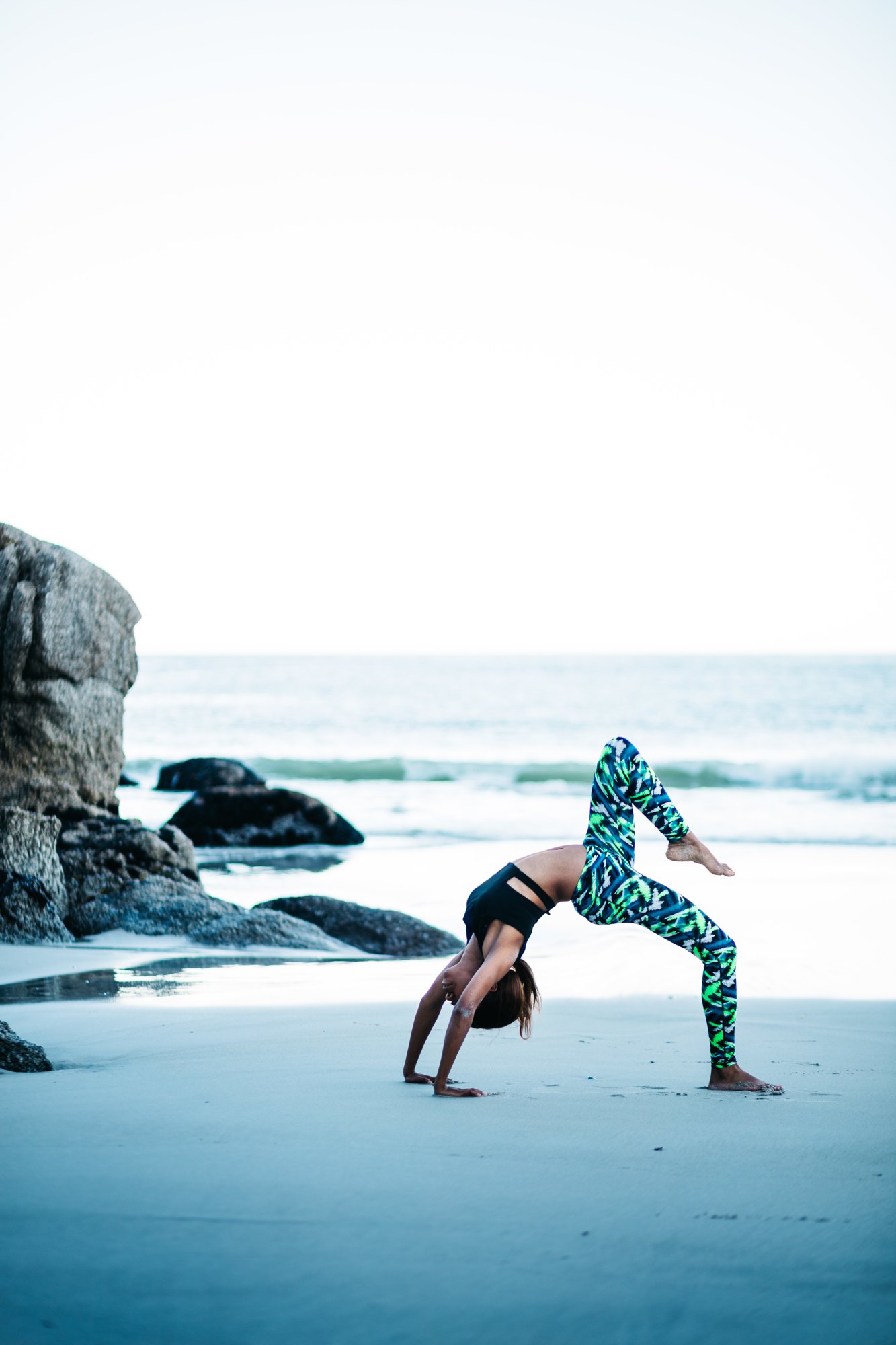
Wild Thing (Camatkarasana): steps, a modern pose and easier options

Wild thing is a modern one-armed backbend from side plank: one foot steps back behind you and the free arm reaches overhead. Not a beginner pose; Camatkarasana is modern usage.

Not yet reviewed by a qualified teacher Names and shape checked against 5 sources

Wild Thing on a rocky beach
Sanskrit name
No established Sanskrit name: a modern descriptive name
Also called
Flip Dog (related), Rock Star Pose (Yoga International), Camatkarasana (modern usage, Yoga Journal, Yoga International), Chamatkarasana
Record
Modern descriptive name (no established Sanskrit)
Pose family
Arm balance, Backbend
Starting position
Hands-supported
Movement
Backbend, Balance
Taught in
Vinyasa Yoga: Flow, Breath and What to Expect
Difficulty
Intermediate
Prerequisite skills
Steady side plank and downward-facing dog; comfortable weight on one hand.
Body areas
Arms and wrists, Chest, Hips, Shoulders, Spine
Props
Blanket, Mat
Practised
Solo

Names in different traditions

TraditionName usedNote
Yoga JournalWild Thing (Camatkarasana)From Down Dog onto the outer edge of one foot like side plank, step the other foot back, lift the hips, reach the top arm overhead; 5-10 breaths.
Yoga InternationalWild Thing (Camatkarasana), sometimes Rock Star PoseSide plank variation, top foot stepped back, chest turned to the ceiling, top arm overhead; cue "flip your dog".

Step by step

Coming into the pose

  1. Start in downward-facing dog.
  2. Shift the weight into the right hand and roll onto the outer edge of the right foot, as in side plank.

In the pose

  1. Inhale and lift the hips. Exhale and step the left foot back behind you, toes on the floor, knee partly bent.
  2. Press through the right hand, draw the right shoulder blade into the back and curl the upper back into a backbend, lifting the hips higher.
  3. Reach the left arm overhead and let the head follow the upper back. Breathe 5 to 10 breaths.

Coming out

  1. Bring the left arm and leg back, return to downward-facing dog and repeat on the other side.

Breathing

Inhale to lift the hips, exhale to step the foot back, inhale to lift into the backbend; breathe evenly for 5 to 10 breaths.

Alignment cues

  • Supporting hand presses firmly; fingers grip.
  • Supporting shoulder drawn into its socket, away from the ear.
  • Hips lifting; backbend from the upper back.
  • Neck follows the upper back without strain.

Common alignment errors

  • Sagging into the supporting shoulder.
  • Hips dropping toward the floor.
  • Throwing the head back.
  • Supporting hand too far from the shoulder line.

Modifications and easier variations

  • Knee down: from tabletop, open to the side, extend the top leg back behind you and reach the arm overhead (Yoga Journal). none
  • Three-legged dog with the knee bent and hip opened, lowering the foot toward the floor only as far as comfortable. none

Advanced variations

Props and chair adaptations

  • A folded blanket under the knee in the knee-down version. blanket

Precautions

  • Carpal tunnel syndrome or rotator cuff injury: avoid (Yoga Journal).
  • Load on the front of the supporting shoulder (biceps tendon), more than in chaturanga: keep the shoulder stable (Yoga International).
  • Other wrist or shoulder injuries: avoid or use the knee-down version.
  • Neck problems: keep the head in line.
  • Pregnancy: avoid this balance-backbend combination unless your teacher and midwife agree.

Learn it with a teacher: Learn it in class first so a teacher can check the supporting shoulder; learn the flip into wheel only with a teacher.

General information, not medical advice. Poses do not cure illness. If you are pregnant, injured or have a health condition, check with your doctor and tell your teacher before you practise.

In short: wild thing is a one-armed backbend that grows out of side plank: from downward-facing dog you roll onto the outer edge of one foot, step the other foot back behind you, lift the hips and sweep the free arm overhead, so the chest opens to the sky. It asks for wrist and shoulder strength, balance and an open front body. It is a modern pose, popular in vinyasa classes, and not a beginner pose.

Wild thing is playful and expressive, which is a big part of its appeal. It is also easy to collapse into the supporting shoulder. Below we explain the name, the cues that keep the shoulder safe, the precautions, easier options and where you will meet it.

The name: a modern pose with a modern Sanskrit name

“Wild thing” is a modern English name. Yoga Journal gives it the Sanskrit Camatkārāsana, from camatkāra, a word for astonishment or wonder; the magazine also quotes a poetic translation about the “enraptured heart”. The pose does not appear in Light on Yoga or in the classical hatha texts we checked, Yoga International also uses Camatkarasana (it glosses it as “miracle pose” or “surprise pose”), but no older source does, so we treat it as modern usage rather than an established classical name. Yoga International notes the pose is sometimes called “rock star pose”, and teachers may cue it as “flip your dog”; some styles teach a flip dog with small differences in the legs and hips.

How to make wild thing work

Build it from side plank. From downward-facing dog, shift the weight into one hand and roll onto the outer edge of the same-side foot. Press firmly through the supporting hand, with the fingers gripping the mat, and keep the top of that arm bone drawing back into the shoulder socket. Yoga Journal’s sequence is to lift the hips on an inhalation, step the top foot back behind you on an exhalation with the knee partly bent, then curl the upper back into the backbend and reach the top arm overhead.

The pose should feel like the hips and chest lifting, not like hanging from the shoulder. If the supporting shoulder creeps up toward the ear, lift the hips higher or step back to side plank. Let the head follow the upper back only as far as the neck is comfortable. Hold for five to ten breaths, return to downward-facing dog and repeat on the other side.

It helps to build the pose in stages over several sessions. First hold side plank for a few breaths on each side until the supporting shoulder feels stable. Then practise the knee-down version, which teaches the chest-opening turn without the full balance. Only then step the foot back from side plank, keeping the hips high. Yoga Journal’s advice for nervous beginners is to go slowly: open the hip from three-legged dog and lower the foot toward the floor a little more with each inhalation, stopping when it no longer feels comfortable.

Precautions in plain words

Yoga Journal advises avoiding wild thing with carpal tunnel syndrome or rotator cuff injuries. Yoga International points to the load on the front of the supporting shoulder (the biceps tendon), greater than in chaturanga because only one hand is down; keep that shoulder stable and turn the chest up rather than sinking into the joint. Avoid it too with other wrist or shoulder injuries, and take care with neck problems by keeping the head in line. Because it combines a backbend with a one-armed balance, it is best avoided in pregnancy unless your teacher and midwife agree, and it always needs a good warm-up. If you are new to it, try the knee-down version first.

Preparation and what comes next

Prepare with downward-facing dog, three-legged dog with the hip opened, side plank and bow pose. Return to downward-facing dog afterwards and rest in child’s pose. Over time, wild thing can lead toward wheel from a flipped position, which should be learned with a teacher.

Where it is taught

Wild thing is a feature of vinyasa and power yoga classes. It is not part of the Ashtanga series, Light on Yoga or the Sivananda basic asanas.
Preparatory poses

Follow-up poses and transitions

Counterposes

Related poses

More arm balance poses

Frequently asked questions

Is Camatkarasana a traditional Sanskrit name?

No established classical source uses it. Yoga Journal and Yoga International give Camatkarasana for wild thing, a modern pose, so we list it as modern usage.

Is wild thing a beginner pose?

No. It combines a one-armed balance with a backbend. Start with side plank and the knee-down version.

What is the difference between wild thing and flip dog?

They are similar flipped shapes from downward-facing dog. Yoga International uses "flip your dog" as the cue into wild thing; some styles teach flip dog as its own pose with small differences in the legs and hips.

Sources

  1. Wild Thing (Camatkarasana), Yoga Journal (accessed October 6, 2026)
  2. B.K.S. Iyengar, Light on Yoga (checked: no Camatkarasana or wild thing), Internet Archive (Digital Library of India copy) (accessed October 6, 2026)
  3. How to Do Flip Dog and Wild Thing (Camatkarasana) (pointer only), Liforme (accessed October 6, 2026)
  4. Controversial Yoga Poses I Still Love to Practice (and Why): Wild Thing (Camatkarasana), Rachel Land, Yoga International (accessed October 6, 2026)
  5. I Speak Yoga: Demystifying 3 Phrases ("Flip Your Dog": wild thing, camatkarasana), Karen Shelley, Yoga International (accessed October 6, 2026)

Facts checked on October 6, 2026