Crocodile Pose (Makarasana): the belly-down rest for easy breathing

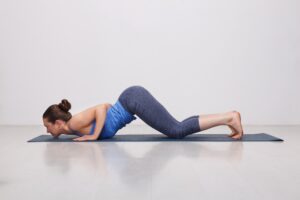
Crocodile pose (Makarasana) is a belly-down resting pose with the forehead on folded arms, used for relaxation and breath awareness. Setup, the three versions that share the name, and precautions.

Not yet reviewed by a qualified teacher Names and shape checked against 6 sources

Sanskrit name
Makarāsana मकरासन (source) (varies by tradition, see below)
Pronunciation
Muh-Kuh-RAHS-uh-nuh (source)
Also called
Crocodile Posture
Other spellings
Makarasana
Pose family
Prone, Resting and restorative
Starting position
Prone (on the belly)
Movement
Neutral rest
Taught in
Hatha Yoga: The Historical Term and the Modern Class
Difficulty
Beginner
Prerequisite skills
Comfortable lying on the belly.
Body areas
Core, Shoulders, Spine
Props
Blanket, Mat
Practised
Solo

Names in different traditions

TraditionName usedNote
Gheranda Samhita (17th century)MakarāsanaGS 2.40 as quoted in Light on Yoga: face down, chest on the ground, legs stretched out, head held in the arms; said to increase bodily heat.
Yoga International (Himalayan Institute)Makarasana, the crocodile poseLegs about shoulder-width, toes out; forearms folded, forehead on the forearms, upper chest slightly lifted; 5–10 minutes or more for breath training.
Yoga JournalCrocodile Pose (Makarasana)Legs slightly wider than hips, hands stacked under the forehead; 2–4 minutes (restorative article).
Bihar School of YogaMakarasana (the crocodile pose)Head and shoulders raised, chin in the palms, elbows on the floor (Asana Pranayama Mudra Bandha).
Iyengar (Light on Yoga)MakarāsanaAsana 26, plate 62: an active variation of Salabhasana with the hands behind the head.
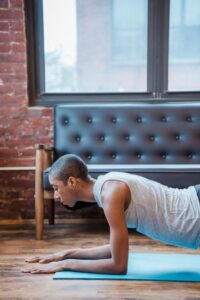
Yin yoga (Yoga International)CrocodileUsed for a forearm plank counterpose: a different shape.

Step by step

Coming into the pose

  1. Lie face down. Spread the legs about shoulder-width apart; let the toes turn out and the heels in, or the other way if that is more comfortable.
  2. Fold the arms in front of you, each hand holding the opposite elbow, and rest the forehead on the forearms.

In the pose

  1. Draw the elbows in just enough that the shoulders and upper chest lift slightly; the belly and lower ribs stay on the floor.
  2. Close the eyes and relax the face, shoulders, belly, buttocks and legs. Feel the breath press the belly into the floor and widen the lower back.
  3. Stay one to two minutes between poses, or 5 to 10 minutes as a breathing practice.

Coming out

  1. Slide the arms down, turn the head to one side and rest a breath or two; then press back to child's pose or roll onto the back.

Breathing

Slow, relaxed breathing through the nose. With the chest held still and the belly on the floor, the breath moves into the lower back and the sides of the waist; let the exhalation be unhurried.

Alignment cues

  • Upper chest slightly lifted, belly and lower ribs down.
  • Forehead, not the chin or nose, resting on the arms.
  • Legs heavy and relaxed; choose the foot position that lets the buttocks soften.

Common alignment errors

  • Elbows so close that the neck and upper back strain.
  • Squeezing the buttocks or legs instead of letting them go.
  • Trying to breathe into the upper chest.

Modifications and easier variations

  • Uncross the arms and stack the hands under the forehead, or rest the chin on the floor with the arms overhead and slightly apart. none

Advanced variations

Props and chair adaptations

  • Thin folded blanket or rolled towel under the upper chest. blanket
  • Seated alternative: sit at a table, fold the forearms on it and rest the forehead on them; let the breath widen the back. chair

Precautions

  • Neck or upper-back strain: move the elbows forward or stack the hands.
  • Pregnancy: avoid lying on the belly once it is growing; use side-lying rest.
  • Lower-back problems: use the flat resting version rather than the raised Bihar version.

Learn it with a teacher: The resting version is safe to practise on your own. Learn Iyengar's active version with a teacher, like locust.

General information, not medical advice. Poses do not cure illness. If you are pregnant, injured or have a health condition, check with your doctor and tell your teacher before you practise.

In short: crocodile pose is a resting pose on the belly. The legs stretch out a little apart, the forearms are folded under the head and the forehead rests on them, so the upper chest lifts slightly off the floor. Because the belly presses on the floor, you feel each breath widen the lower back and the sides of the waist, which makes it a favourite pose for learning relaxed breathing.

Crocodile pose is quieter than most belly-down poses: there is no lifting and no effort, only resting and breathing. It is used between backbends such as cobra and locust, as a place to rest when lying on the back is uncomfortable, and as a pose for breath training. The name, though, means different shapes in different schools, so it is worth knowing which one your teacher has in mind.

The name and its different versions

The Sanskrit name is Makarāsana, from makara, a sea creature usually translated as crocodile, and āsana, posture (see what asana means). The oldest description is in the Gheranda Samhita, the 17th-century hatha text, which, as quoted in Light on Yoga, describes lying face down with the chest on the ground, the legs stretched out and the head held in the arms; the text says it increases bodily heat.

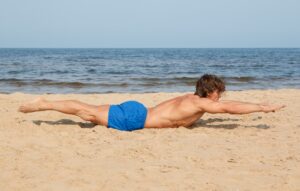
Today three versions share the name. The resting version on this page, with the forehead on folded forearms, is taught by Yoga International (from the Himalayan Institute tradition) and by Yoga Journal, which stacks the hands under the forehead instead. The Bihar School of Yoga lifts the head and shoulders and rests the chin in the palms with the elbows on the floor, a shape close to sphinx pose. And in Light on Yoga, B.K.S. Iyengar presents Makarasana as an active variation of locust: the fingers are interlocked behind the head and the chest and legs are lifted off the floor. If a class calls for crocodile and starts lifting, it is probably the Iyengar version. Yin teachers use “crocodile” for something else again, a forearm plank used as a short active counterpose.

How to make it work

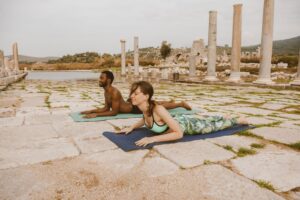
Lie face down and spread the legs about shoulder-width apart. Yoga International turns the toes out and the heels in, but says a few people are more comfortable the other way round; choose whichever lets the legs and buttocks relax. Fold the arms, hold each elbow with the opposite hand and rest the forehead on the forearms. Now draw the elbows in toward you just enough that the upper chest and shoulders lift slightly while the belly and lower ribs stay on the floor. That small lift is what makes the pose work: the chest stays fairly still, so the breath moves into the belly, the lower back and the sides of the waist.

Close your eyes and watch the breath. As you inhale, the belly presses into the floor and the lower back rises a little; as you exhale, everything sinks back. Yoga International suggests 5 to 10 minutes or more when the pose is used for breath training; between other poses, a minute or two is plenty. Our guide to diaphragmatic breathing explains the same pattern in other positions.

To come out, slide the arms down by your sides, turn the head to one side and rest for a breath or two, then press back into child’s pose or roll onto your back.

Precautions in plain words

If drawing the elbows in strains the neck or upper back, move the elbows further forward so the chest is lower, or uncross the arms and stack the hands under the forehead. A thin folded blanket under the upper chest takes pressure off the shoulders. Lying on the belly is not suitable in pregnancy once the belly is growing; use side-lying rest instead. The Bihar version with the chin in the hands is a mild backbend, so with a lower-back problem start with the flat resting version. The Iyengar version is a strong back-strengthening pose and needs the same care as locust. This page is general information, not individual advice.

Preparation, what comes next and where it is taught

No preparation is needed. Crocodile pose works well between belly-down backbends: rest here after cobra, locust or bow pose. Afterwards, child’s pose gently rounds the back the other way. You will meet it in hatha classes, in the Himalayan Institute tradition, in Bihar School (Satyananda) teaching and in restorative sequences. Browse more resting poses in the pose library.
Frequently asked questions

What is crocodile pose good for?

It is a resting pose on the belly that many people find relaxing. Because the chest is held still and the belly rests on the floor, it makes relaxed breathing into the belly and lower back easy to feel.

Is crocodile pose the same everywhere?

No. The resting version has the forehead on folded forearms. The Bihar School rests the chin in the hands with the elbows down, and Light on Yoga uses the name for an active locust variation with the hands behind the head.

How long should I stay in crocodile pose?

A minute or two between poses, or 5 to 10 minutes or more as a breathing practice, as Yoga International suggests.

Sources

  1. Makarasana: The Crocodile Pose (Sandra Anderson), Yoga International (accessed October 6, 2026)
  2. Crocodile Pose, Yoga International (accessed October 6, 2026)
  3. 8 Restorative Yoga Poses to Calm You Down in Minutes (Crocodile Pose), Yoga Journal (accessed October 6, 2026)
  4. Swami Satyananda Saraswati, Asana Pranayama Mudra Bandha: Makarasana (the crocodile pose), Bihar School of Yoga (Internet Archive) (accessed October 6, 2026)
  5. B.K.S. Iyengar, Light on Yoga (Yoga Dipika): asana 26 Makarasana, plate 62, quoting Gheranda Samhita 2.40, Digital Library of India (Internet Archive) (accessed October 6, 2026)
  6. A Lower Back-Focused Yin Sequence (yin "crocodile" = forearm plank), Yoga International (accessed October 6, 2026)

Facts checked on October 6, 2026