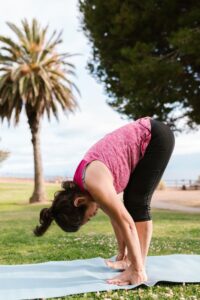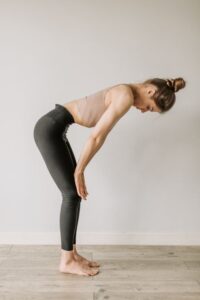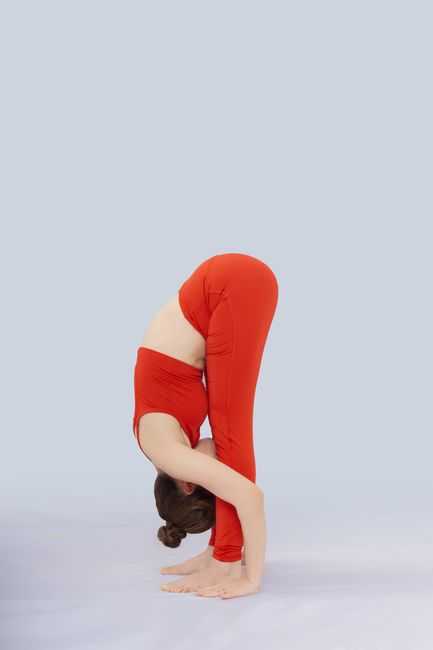
In short: dangling is the yin standing forward fold. You stand with the feet hip-width apart, bend the knees, fold forward and hold the opposite elbows, then let the upper body hang for a minute or more. Many teachers alternate it with a deep squat.
Below: how it differs from standing forward bend, how long to stay, how to come up safely and who should skip it.
The name and the related asana
Dangling is an English yin name with no Sanskrit of its own; you may also hear ragdoll for a similar soft-kneed hang. Bernie Clark relates it to Uttānāsana, the standing forward bend, but notes that the yang version emphasises the hamstring stretch while dangling is about releasing the back. So the knees stay bent and the spine rounds.
Setting up
Stand with the feet hip-width apart, bend the knees and fold. Clasp the elbows with the opposite hands; Janice Quirt (Yoga International) adds that the back rounds at the end of the fold and the legs stay bent to avoid too much muscle work. If the back feels strained, rest the elbows on the thighs, a chair or a table. With a lower back problem, Clark suggests bending the knees more and keeping the back straighter.
How much to bend the knees is the main choice in this pose. Clark notes that bending them more works the front of the thighs and releases the back, and he describes the pose as a gentle stretch for the lower spine that also loosens the hamstrings. So if you feel a strong pull behind the knees, bend them more: the aim here is a long, soft hang through the back, not a hamstring stretch. Let the head and neck hang heavy, with no effort to look forward, and keep the weight spread evenly between the heels and the balls of the feet.
Props are simple. A chair seat or a table in front of you takes some of the weight if you rest the forearms on it. Resting the elbows on the thighs is the easiest version of all. Stand on a mat or a non-slip floor so the feet do not slide while you relax.
The long hold
Clark calls three minutes in dangling intense and suggests breaking it into two or more holds with about two minutes of squat in between; Quirt does exactly that, three minutes of dangling, then garland pose (squat) for two, and repeats. If you feel no sensation, Quirt suggests clasping the wrists or forearms behind the legs.
The squat in between is part of the plan, not a break from it. To get there, Quirt bends the knees a bit more from dangling, walks the feet out heel and toe until they are about mat-width apart with the toes turned out at 45 degrees, then drops the hips into garland pose, palms together and elbows pressing into the inner knees. Clark’s squat page gives two to three minutes per round and says the pose can be repeated during a practice; he also suggests alternating dangling and squat for one to two minutes each. He advises skipping the squat with knee injuries, or with very tight hips that make the knees strain, and putting folded blankets or a bolster under the heels if they lift.
During the hold itself, follow the usual yin approach: come to a moderate edge, let the muscles soften, stay still and breathe slowly. Because this is a standing pose, the legs never relax completely, so shorter rounds, as Clark suggests, make sense. If you start to feel light-headed, come up at once, slowly.
Coming out and the rebound
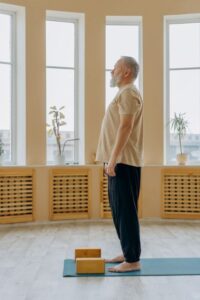
Bend the knees a little more, release the hands to the floor and roll up slowly, head last. Clark also offers a staged way up: hands on the shins, come halfway, fold back down a few times, then rise with a straight spine. Stand still for a few breaths in mountain pose.
Clark’s counterposes for dangling are squat or any gentle backbend. Paul Grilley calls the quiet time after a yin pose the rebound: what you feel after you release a pose and relax. On YinYoga.com it is described as resting on the back for about one to five minutes, and Clark adds that it is optional; a counterpose or easy movement works too. After dangling, you can simply stand in mountain pose with the eyes closed, or lie down in corpse pose if they feel a little dizzy.
Precautions in plain words
Because the head hangs below the heart, Clark advises against dangling with high blood pressure or glaucoma, and slow rising with low blood pressure. With a bad back, bend the knees a lot or rest the elbows on the thighs. In pregnancy, widen the feet and keep it short. This page is general information, not individual advice.
Before, after and where it is taught
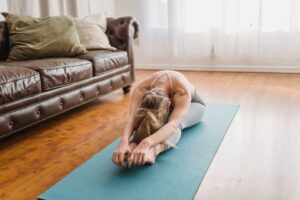
Caterpillar is the seated version and a good alternative if standing folds make you dizzy. You will meet it in yin yoga classes, which hold mostly floor poses for several minutes with the muscles relaxed, and in some gentle and restorative classes. Dangling is one of the few standing poses in yin, often used to change level in a class.