Dragonfly / Straddle (Yin Yoga): the wide-legged seated fold

Dragonfly, also called straddle, is the yin wide-legged seated fold: legs apart, back rounded, held 3 to 5 minutes or longer. Setup, props for tight hamstrings, knee safety and how it differs from seated wide angle.

Not yet reviewed by a qualified teacher Names and shape checked against 3 sources

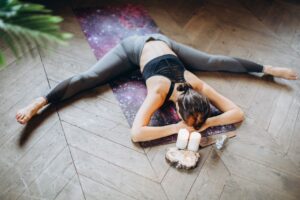
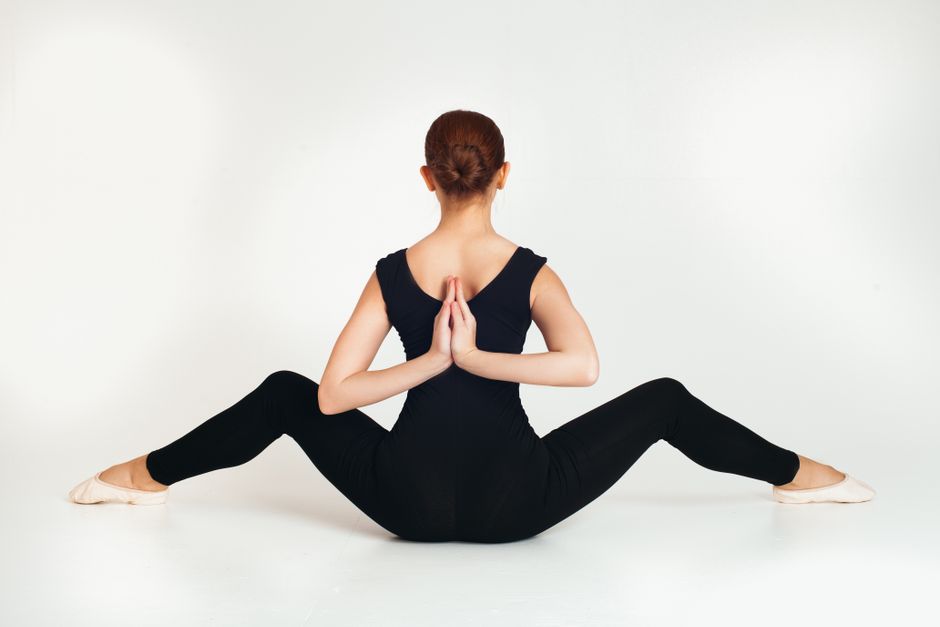
Back view of unrecognizable ballerina in black sportswear sitting with legs apart and praying hands behind back during training
Sanskrit name
No established Sanskrit name: a modern descriptive name
Also called
Yin Dragonfly, Straddle, Yin Straddle, Dragonfly Pose
Record
Yin yoga pose
Pose family
Forward bend, Hip opener and leg extension, Seated
Starting position
Seated
Movement
Forward fold
Taught in
What Is Yin Yoga? Long Holds, Slow Pace and a Typical Class
Difficulty
Beginner
Prerequisite skills
Sitting with the legs apart, on a cushion if the pelvis tips back.
Body areas
Hamstrings, Hips, Spine
Props
Block, Bolster, Cushion
Practised
Solo

Names in different traditions

TraditionName usedNote
Yin yoga (Bernie Clark, YinYoga.com)Dragonfly (aka Straddle)Legs as wide as comfortable, fold forward; 3 to 10 minutes.
Yin yoga (Sarah Powers, in Yoga Journal)Dragonfly PoseLegs wide, fold from the hips onto hands, elbows or a bolster; 5 minutes or more.
Yoga Journal (5 Yin Yoga Poses for Tight Hips)Dragonfly PoseFold to the first edge; 3 to 5 minutes; Windshield Wipers after.

Step by step

Coming into the pose

  1. Sit on a cushion and open the legs as wide as is comfortable.
  2. Bend the knees, or put a bolster under the thighs, if the hamstrings are tight.

In the pose

  1. Fold forward from the hips onto straight arms, the elbows, a block or a bolster. Let the back round once the hips stop.
  2. Stay 3 to 5 minutes, or longer as you get used to it.

Coming out

  1. Push the floor away and roll up slowly. Lean back on the hands, tighten the legs and bring them together.
  2. Shake out the legs and rest.

Breathing

Natural breathing; let the exhalations soften the inner thighs and back.

Alignment cues

  • Legs only as wide as the inner knees allow.
  • Kneecaps facing up or slightly forward; engage the thighs if the knees feel unstable.
  • Head and chest supported for long holds.

Common alignment errors

  • Forcing the legs wider than the knees like.
  • Rounding hard from the lower back with the pelvis tipped back; sit higher.
  • Getting up quickly after a long hold.

Modifications and easier variations

  • Knees well bent, feet on the floor. none

Advanced variations

  • Fold over one leg, or add a side bend or twist (Bernie Clark).
  • Chest to the floor with the legs wide (Sarah Powers), only if it comes naturally.

Props and chair adaptations

  • Cushion or bolster under the hips. cushion
  • Bolster under the thighs or knees if the hamstrings are tight. bolster
  • Elbows or forehead on a bolster or block. block
  • Chair alternative: sit at the front of a chair with the legs wide and fold forward a little, forearms on the thighs. chair

Precautions

  • Sciatica: sit high or skip.
  • Lower back that should not round: keep the back long or skip.
  • Inner knee discomfort: bring the legs closer or firm the thighs (Bernie Clark).
  • Pregnancy: a wide-legged fold leaves room for the belly; keep it upright and propped.

Learn it with a teacher: Safe to practise on your own with props.

General information, not medical advice. Poses do not cure illness. If you are pregnant, injured or have a health condition, check with your doctor and tell your teacher before you practise.

Yin and active versions

Related active (yang) pose: Seated Wide-Angle Forward Bend (Upavistha Konasana): steps and props

How the yin version differs: seated wide angle pose (Upavistha Konasana) is usually taught with active legs, kneecaps facing up and a long spine. Dragonfly lets the knees bend or the legs relax, lets the back round and is held for 3 minutes or much longer.

In short: dragonfly, also called straddle, is the yin wide-legged seated fold. You sit on a cushion with the legs apart, fold forward onto the hands, elbows or a bolster, and let the back round and the legs relax for several minutes.

Below: how it differs from seated wide angle pose, the props that make it work for tight hamstrings, knee safety and coming out.

The name and the related asana

Dragonfly is an English yin name, and Bernie Clark gives straddle as its other name; neither has Sanskrit. The legs match seated wide angle pose (Upaviṣṭha Koṇāsana), but the yin version lets the back round and the legs soften, and stays much longer. It is not related to dragon, despite the name.

Setting up with props

Sit on a cushion: Clark notes it helps the hips tilt forward. Open the legs only as wide as is comfortable. If the hamstrings are tight, bend the knees generously or put a bolster under the thighs. Fold forward onto straight arms, or rest the elbows on a block or bolster, and support the head in the hands if needed.

Why dragonfly feels hard at first, and what helps

Bernie Clark is frank that dragonfly is very frustrating for beginners. The inner thigh muscles attach near the sitting bones, just as the hamstrings do, so when the legs open wide they tug on the sitting bones and the top of the pelvis tips back. The result is that you sit on the back of the pelvis and cannot fold, however hard you try. Forcing it does not help; patience and a few props do.

  • Sit higher. A bolster or a firm cushion under the sitting bones lets the pelvis tip forward. Before you fold, you can even draw the flesh of the buttocks back and out so you sit on the front of the sitting bones.
  • Do not chase width. Clark gives 90 degrees between the legs as plenty, with up to 120 degrees for experienced students. A full side split is not needed.
  • Bend the knees a lot if you are stiff. It is fine to have the feet flat on the floor. With bent knees and a raised seat, the body can lean forward and let gravity do the work instead of the muscles.
  • Bring the floor up. If you fold a long way, slide a bolster under the chest. If the head feels heavy, rest it in the hands.

Variations within the hold

Because the hold is long, Clark often splits it. You might spend the first half folding forward and the second half in a twist: fold over one leg and turn the chest toward the ceiling, or sit up tall and twist. Folding over one leg on its own gives more stretch to the spine and the back of that leg. The arms can rest on a bolster, on the floor in front of you or behind your back. Whatever you choose, change position slowly, and only when the sensation has settled.

The long hold

Yoga Journal’s tight-hips sequence folds to the first edge and stays three to five minutes. Sarah Powers aims for five minutes or more and comes all the way down onto the belly only if it feels natural; Clark gives three to ten minutes. If the knees feel unstable, Powers suggests lifting the chest a little and engaging the thighs from time to time.

Coming out and the rebound

Push the floor away and roll up slowly. Clark has you lean back on the hands, tighten the leg muscles and bring the legs together, then shake them out. Windshield-wiper knees, a cross-legged seated backbend or tabletop are his suggested counterposes.

Clark’s instruction to roll up slowly is half a joke and half serious: he calls it a test, and popping up quickly misses the point of the practice. The legs often feel stiff after a long straddle, so take your time bringing them together.

Precautions in plain words

Clark notes dragonfly can aggravate sciatica (sit higher or skip it) and is not for backs that should not round. For the inner knees, bring the legs closer or firm the thighs. In pregnancy the wide legs leave room for the belly; stay fairly upright on a bolster. This page is general information, not individual advice.

Before, after and where it is taught

Butterfly and half butterfly often come first, as in Sarah Powers’s low-back sequence, and caterpillar after. The standing cousin is wide-legged forward bend. You will meet it in yin yoga classes, which hold mostly floor poses for several minutes with the muscles relaxed, and in some gentle and restorative classes.
Frequently asked questions

Is dragonfly the same as straddle?

Yes. Bernie Clark lists the yin pose as "Dragonfly (aka Straddle)".

How long do I hold dragonfly?

Three to five minutes is common (Yoga Journal); Bernie Clark gives three to ten minutes and Sarah Powers five or more.

What if my inner knees hurt?

Bring the legs closer together or gently tighten the thighs, as Bernie Clark and Yoga Journal suggest.

Sources

  1. Dragonfly (aka Straddle), YinYoga.com (Bernie Clark) (accessed October 6, 2026)
  2. These Yin Yoga Poses Will Feel Soooo Good on Your Low Back (with Sarah Powers), Yoga Journal (accessed October 6, 2026)
  3. 5 Yin Yoga Poses to Help Unlock Tight Hips, Yoga Journal (accessed October 6, 2026)

Facts checked on October 6, 2026