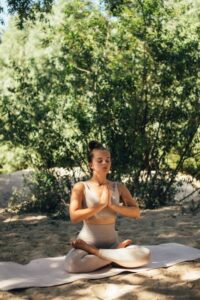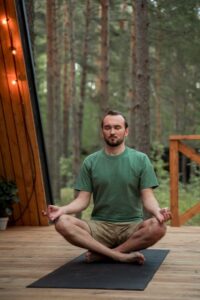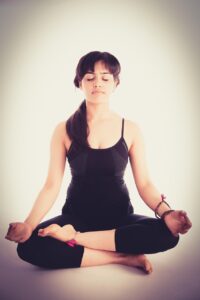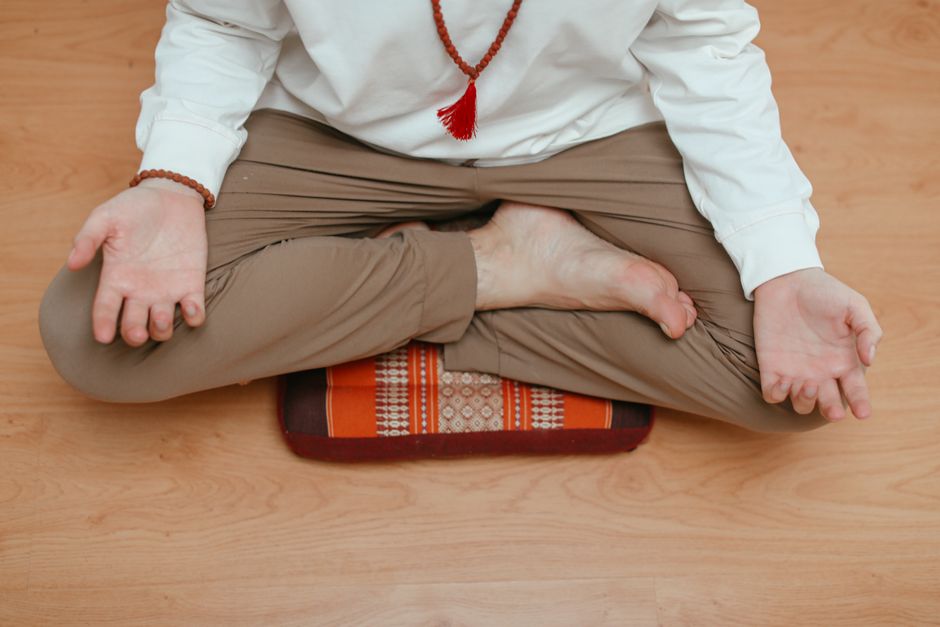
In short: auspicious pose is a classical cross-legged meditation seat in which each foot is tucked into the fold between the opposite thigh and calf, with the spine upright. Unlike accomplished pose, no heel presses against the body. Sit on a cushion so the knees can rest low, and let the hips, not the knees, do the turning.
Svastikāsana is one of the seats described in the Hatha Yoga Pradipika, and the Bihar School calls it the easiest of the classical meditation postures. It is a good step between easy pose and the seats that need more hip rotation. Below we explain the name, how to arrange the feet, precautions and related seats.
The name
In Sanskrit, svastika means any lucky or auspicious object or mark, and especially the ancient good-luck sign; the Monier-Williams dictionary gives both meanings. The pose is named for good fortune. The spelling Swastikasana is common in Indian schools. In the Hatha Yoga Pradipika (15th century), the seat is described simply: both feet placed between the thighs and the calves, the body straight. The Bihar School’s Asana Pranayama Mudra Bandha gives the same placement and notes that, unlike Siddhasana, the perineum is not pressed.
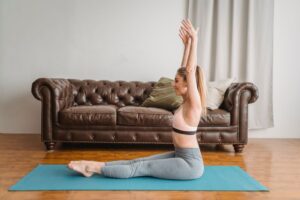
One note on usage: Iyengar Yoga syllabi list arm stretches done “in Swastikasana”, where the term may refer to a simpler cross-legged seat. We have not yet confirmed exactly how Iyengar teaching defines it, so if your teacher uses the word, check which shape they mean.
Arranging the feet
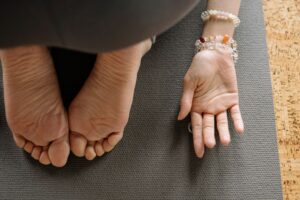
Sit on a firm cushion or folded blanket. Bend the left leg and place the sole against the inner right thigh, the heel a little away from the body. Bend the right leg and slide the right foot, toes first, into the space between the left thigh and calf. Then, reaching under, draw the left toes up into the space between the right thigh and calf. Both knees rest toward the floor and the feet stay hidden in the folds of the legs. Rest the hands on the knees or in the lap, lift the spine and let the shoulders drop. Alternate which foot goes on top from one sitting to the next.
Making the seat steady
A meditation seat has a different job from most poses. The Bihar School explains that the purpose of every meditative pose is to let you sit in one position for a long time, with the spine straight, without strain or discomfort. So the test for auspicious pose is not how it looks but whether you can stay still and breathe easily in it. Height under the hips is the main tool: when the hips sit higher than the knees, the pelvis tips slightly forward and the lower back can stay upright without effort. Try a few heights of cushion or folded blanket until the knees can rest and the spine feels light.
The Bihar book suggests placing the hands on the knees in jñāna or chin mudrā (in its description, the index finger folds to touch the root of the thumb; the palms face down in one and up in the other) or simply resting them in the lap; our guide to mudras explains these hand gestures. It also advises patience: beginners will find it hard to sit for long at first, and it suggests lengthening the time little by little, by about half a minute a day.
- Knees higher than the hips: sit on something higher, or slide a folded blanket under each knee.
- Lower back rounding: usually the seat is too low. Raise it before you try to pull yourself upright.
- Leaning to one side: one foot may be wedged deeper than the other. Re-tuck the feet so the hips feel level.
- Holding the breath to stay still: let the breath stay soft and even. Stillness should come from comfort, not effort.
Precautions in plain words
If the knees lift high or ache, raise the seat or support the knees, or return to easy pose. The Bihar School advises against Swastikasana with sciatica or sacral problems. Come out and stretch the legs if they go numb. People with knee or hip injuries, or after joint replacement, should ask their doctor or physical therapist before sitting cross-legged for long periods. This page is general information, not individual advice.
The Bihar School is clear that you should never use undue force or strain to get into a meditation seat. If the legs start to ache badly after a while, it advises unlocking them slowly and massaging them before sitting again. Tingling or numbness is a sign to change legs or come out, not to push on. Sharp pain on the inside of the knee usually means the hip is not rotating far enough and the knee is twisting instead, so go back to a higher seat or to easy pose.
Preparation and related seats
Prepare with bound angle, cow face pose and easy pose. Related classical seats are accomplished pose, half lotus and lotus; the Hatha Yoga Pradipika’s gracious pose is another seat from the same chapter.
For loosening the legs, the Bihar School recommends a set of pre-meditative exercises, starting with the half butterfly and full butterfly, which come from the first part of its pawanmuktasana series. A few minutes of these before you sit helps the hips turn out more easily. In the same chapter, the Bihar book lists auspicious pose as one of four classical meditation seats, with lotus and accomplished pose, and treats easy pose and half lotus as the simpler seats for beginners.
Where it is used
Auspicious pose is used as a seat for breathing practices and meditation in hatha and Bihar School teaching. See our guide on how to meditate for sitting posture.
It also has a special place in the old texts. Svastikāsana is the very first posture the Hatha Yoga Pradipika describes. In Pancham Sinh’s 1914 translation, the text says posture “should be practiced for gaining steady posture, health and lightness of body”, and a quiet, even seat like this one is a good place to explore what that means. Many people find that a few minutes of sitting here, breathing slowly, is a calm way to begin or end a practice.