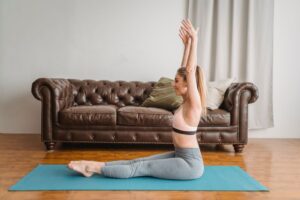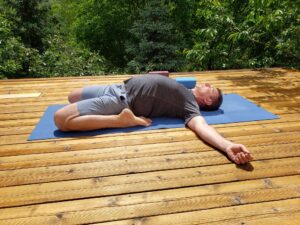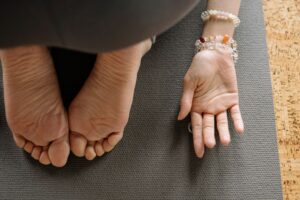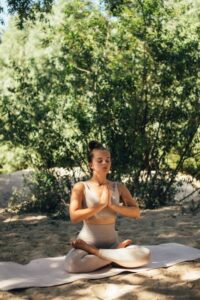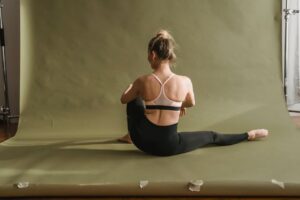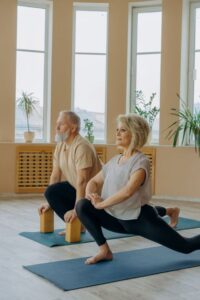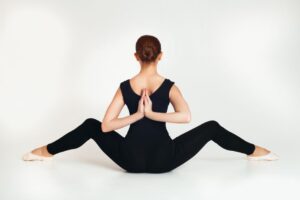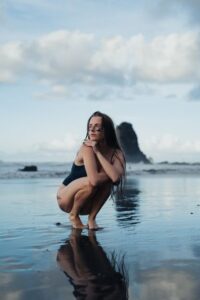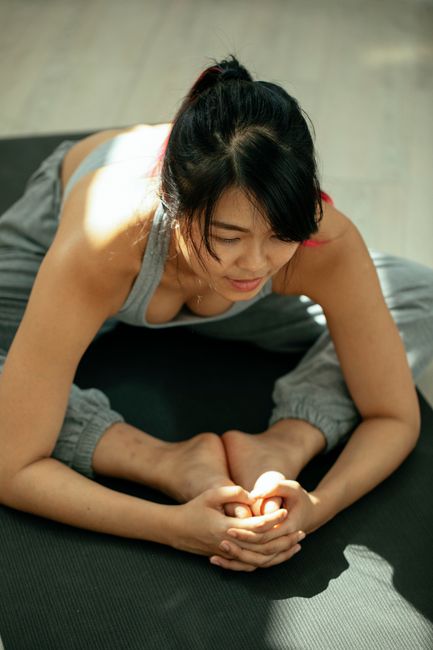
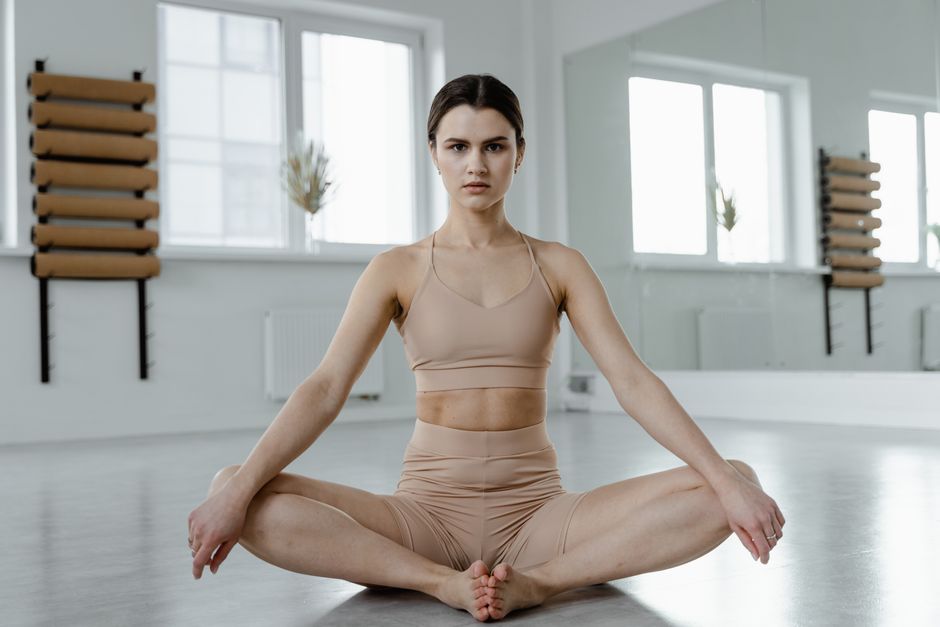
In short: bound angle pose is a seated hip opener: the soles of the feet press together, the heels draw in toward the body, the knees open out to the sides and the spine sits upright, with the hands holding the feet. Sit on a folded blanket, let the knees descend on their own, and support them with blocks if they hover high.
Bound angle is one of the most widely taught seated poses. It stretches the inner thighs and groins, and it is a good way to observe how far your hips rotate outward, which varies a great deal from person to person. Below we explain the names, how to make the pose work, precautions and how it differs from the yin butterfly.
The name, cobbler and butterfly
Baddha means bound or caught and koṇa angle. B.K.S. Iyengar’s Light on Yoga (1966) describes Baddha Koṇāsana as sitting with the heels near the perineum, catching the feet, and widening the thighs until the knees approach the floor, and adds that this is how Indian cobblers sit; Yoga Journal repeats the point, which is why the pose is also called cobbler’s pose. In many non-yin classes it is called butterfly pose. In the Ashtanga Primary Series, Baddha Koṇāsana appears in three forms, A, B and C, according to the practice sheet published by AshtangaYoga.info.
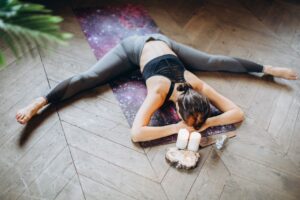
Yin yoga also has a butterfly, but it is taught differently: the feet usually sit further from the body, the spine rounds forward passively, and the shape is held for several minutes. Because the instructions and intention differ, the yin version has its own page. The Hatha Yoga Pradipika’s Bhadrasana (gracious pose) is a related seat with the heels drawn to the perineum.
How to make it work
Height under the seat comes first. Yoga Journal recommends sitting on a folded blanket with the soles together, and moving the feet further away from the groin if the knees feel uncomfortable. Hold the feet or ankles, press the outer edges of the feet down and lift the spine from the base. Let the thighs release outward from the hip joints; never push the knees down with the hands or elbows. If the knees stay high, rest them on blocks so the inner thighs can let go.
Yoga Journal’s article on protecting the knees explains why: bound angle asks the thigh bones to rotate outward a long way in the hip sockets. In a tight student the pelvis rolls back to compensate, and asking that student to sit upright by force can strain the knee instead. Raise the seat and let the knees be high. To fold forward, Light on Yoga’s version hinges from the hips with a long spine; keep it gentle and stop where the back begins to round.
Precautions in plain words
With a groin or knee injury, keep the feet further away and the knees supported on blocks, and ask your doctor or physical therapist. Do not let anyone press the knees down. With a lower back or sacroiliac problem, stay upright on a high seat rather than folding. In pregnancy the upright, supported version is commonly practised; check with your midwife or doctor. This page is general information, not individual advice.
Preparation and next poses
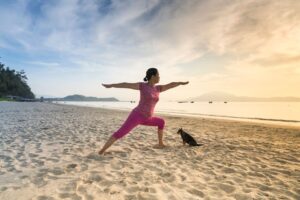
Begin from staff pose. Yoga Journal’s sequence warms up the inner thighs with standing poses such as warrior II. From bound angle you can move to seated wide-angle forward bend, the restful reclining bound angle, or the cross-legged seats such as half lotus, for which it is useful preparation.
Where it is taught
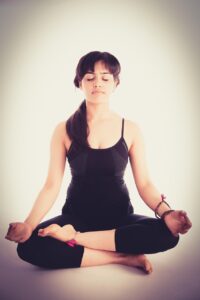
Bound angle is part of Ashtanga, Iyengar, hatha and vinyasa classes, and a reclined form is a staple of restorative yoga. Light on Yoga also recommends it as a seat for pranayama and meditation. Find related hip openers in the pose library.