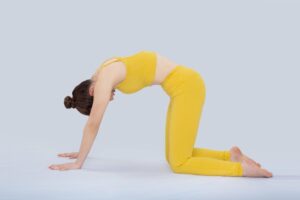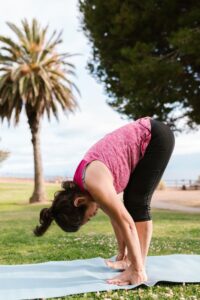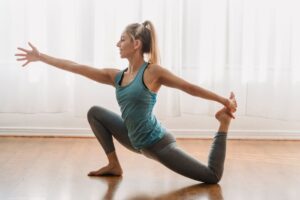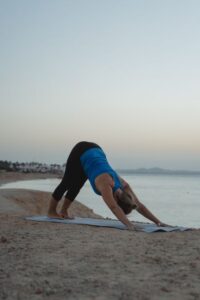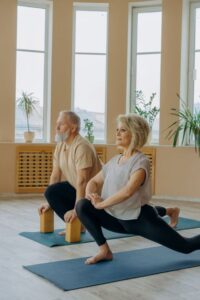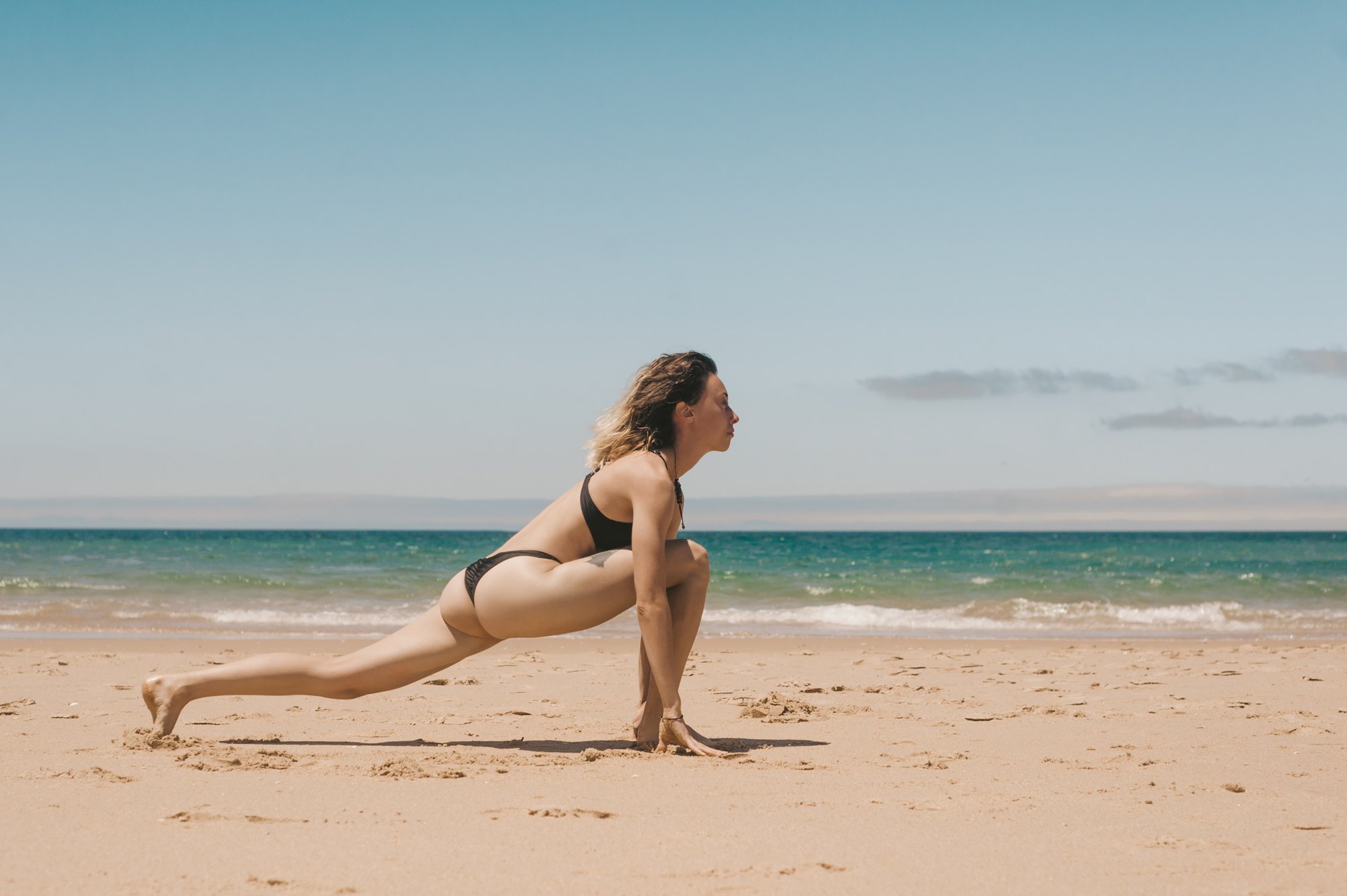
In short: equestrian pose is the kneeling lunge of the 12-position sun salutation: one leg steps far back with the knee on the floor, the front foot stays between the hands, the hands stay on the floor and the chest lifts with the gaze up. It stretches the front of the back hip and works the legs. In the sun salutation it lasts one inhalation, as position 4 and again as position 9.
Equestrian pose looks like a low lunge with the hands down, and it is easy to mix the two up. Below we explain the name, how the pose is done in the schools that teach it, the precautions and where it sits in the sequence.
The name
The Sanskrit name is Aśva Sañcalanāsana, usually written Ashwa Sanchalanasana or Ashva Sanchalanasana: aśva means horse and sañcalana movement or riding, so “equestrian pose”. The Bihar School of Yoga’s Asana Pranayama Mudra Bandha uses the name for positions 4 and 9 of its sun salutation, and the Art of Living uses it for steps 4 and 9 of theirs. The Sivananda centres describe the same lunge in English as positions 4 and 9 of their Sun Salutation.
How the pose is done
From the standing forward bend with the hands on the floor, inhale and stretch one leg back as far as is comfortable, lowering that knee to the floor. The front foot stays where it was, between the hands, and the front knee bends. In the Bihar description the body’s weight rests on the two hands, the front foot, the back knee and the toes of the back foot; the back arches gently, the head tilts back and the gaze goes upward. The Sivananda instructions say simply to arch back and look up, lifting the chin. The Art of Living adds that the front foot should be exactly between the palms.
The arch should be modest and spread through the upper back. Let the hips sink only as far as the front knee stays over the ankle, and keep the hands planted: in this sequence they stay in one place from position 3 to position 10, as the Sivananda centres put it. Schools alternate the leading leg: in the Bihar text, positions 1 to 12 make half a round with the right leg stepping back, and the second half repeats them with the left; the Sivananda centres likewise lead with one foot in the first sequence and the other in the second.
Two small things make the pose much easier. First, the length of the stride. A long step back lets the front shin stay upright, so the stretch lands in the front of the back hip instead of in the front knee. Second, the front foot. If it lands behind the hands, people tend to shuffle the hands back, which breaks the “hands stay put” rule. When stepping forward into position 9 is hard, bend the front knee more in the forward bend, or help the foot forward with one hand and then replace it. Over time the hip flexors and hamstrings get used to the movement and the step gets easier.
Equestrian pose versus low lunge: in low lunge (Anjaneyasana) the torso comes upright and the arms reach overhead, and it is often held for several breaths. In equestrian pose the hands stay on the floor beside the front foot, and in the sun salutation it lasts a single inhalation. If you want a longer stretch of the front hip, practice low lunge on its own and keep equestrian pose for the flowing sequence.
Precautions in plain words
Pad the back knee if the floor is hard. Do not throw the head back if you have a neck problem: lift the chest and look forward instead. With knee problems, keep the front knee over the ankle and the stride shorter. With lower back pain, keep the arch small. If you get light-headed during sun salutations, slow down and rest between rounds.
Preparation and what comes next
In the sun salutation, equestrian pose follows the standing forward bend (position 3). What comes next differs: the Sivananda centres and the Art of Living move into a plank (the Art of Living calls step 5 Dandasana, stick pose), while the Bihar text goes straight to Parvatasana, an inverted V like downward-facing dog; all three then lower into the eight-point salute. On the way back, equestrian pose returns as position 9, after the inverted V. Warm up for it with cat-cow and a few gentle low lunges.
Where it is taught
Equestrian pose belongs to the 12-position sun salutation taught in Sivananda yoga, Bihar/Satyananda hatha yoga and the Art of Living. Ashtanga and most vinyasa sun salutations do not use it.