Reverse Warrior: a side bend from warrior II, step by step

Reverse warrior is a modern side bend from warrior II: front arm up and back overhead, back hand light on the back leg, front knee still bent. Lift up before you lean.

Not yet reviewed by a qualified teacher Names and shape checked against 4 sources

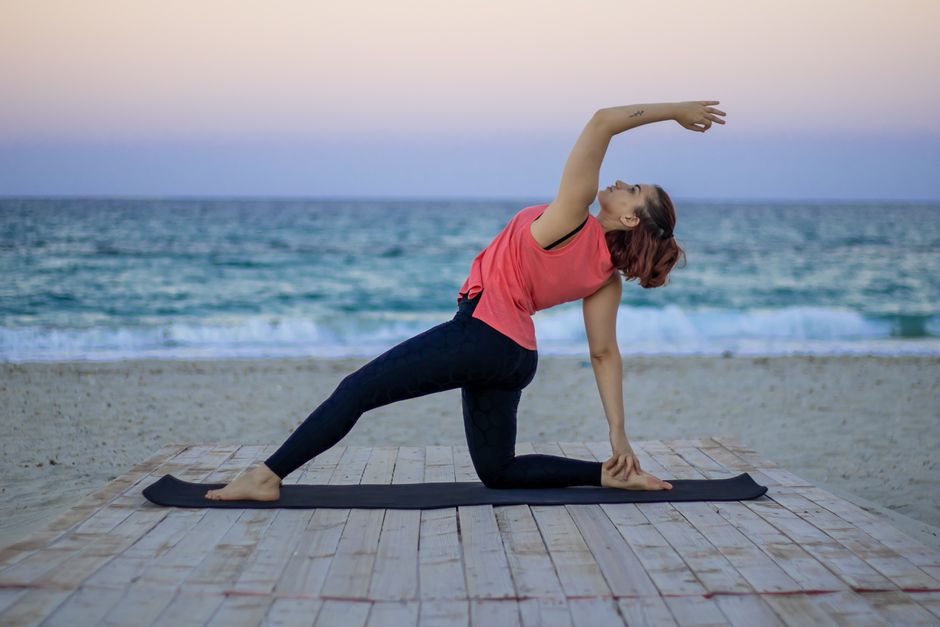
Woman practicing yoga on a beach mat at sunset in Mahdia, Tunisia.
Sanskrit name
No established Sanskrit name: a modern descriptive name
Also called
Peaceful Warrior, Proud Warrior, Exalted Warrior, Side Warrior, Viparita Virabhadrasana (modern usage)
Record
Modern descriptive name (no established Sanskrit)
Pose family
Side bend, Standing
Starting position
Standing
Movement
Lateral bend, Strength hold
Taught in
Vinyasa Yoga: Flow, Breath and What to Expect, Hatha Yoga: The Historical Term and the Modern Class
Difficulty
Beginner
Prerequisite skills
A steady warrior II.
Body areas
Core, Hips, Legs, Shoulders, Spine
Props
Chair, None, Wall
Practised
Solo

Names in different traditions

TraditionName usedNote
Yoga JournalReverse Warrior (Proud or Peaceful Warrior; "Viparita Virabhadrasana")A side bend from warrior II that is often misunderstood as a backbend.
Yoga InternationalReverse Warrior Pose; Exalted WarriorFront palm up, back hand on the back leg, side bend over the back leg, front knee working toward 90°.

Step by step

Coming into the pose

  1. Start in warrior II with the right knee bent over the right ankle and the arms at shoulder height.
  2. Turn the right palm to face up. Rest the left hand lightly on the back of the left thigh or calf.

In the pose

  1. Inhale and reach the right arm up toward the ceiling, lengthening the right side of the waist.
  2. Exhale and arc the right arm up and back overhead into a side bend. Keep the right knee bent and pointing over the right foot; press the front foot down.
  3. Keep the back hand light, both hip points roughly level, and breathe into the right ribs for a few breaths. Look up at the hand or down.

Coming out

  1. Inhale and come back up through centre to warrior II; change sides or continue the flow.

Breathing

Inhale to reach up and lengthen; exhale into the side bend. Hold for a few steady breaths, or move with the breath in a flow.

Alignment cues

  • Lift up before leaning back; keep it a side bend.
  • Front knee stays bent and over the front foot.
  • Back hand rests lightly; no weight in it.
  • Front foot presses down; back heel anchored.

Common alignment errors

  • Bending backward instead of sideways and pinching the lower back.
  • Straightening the front knee as you lean.
  • Leaning on the back hand and sinking into the back leg.
  • Collapsing the short-side ribs.

Modifications and easier variations

  • Shorter stance and less bend in the front knee; top hand on the hip. none

Props and chair adaptations

  • Press the outer edge of the back foot against a wall for stability (Yoga International). wall
  • From a chair warrior II (front thigh on the seat), reach the front arm up and back. chair

Precautions

  • Lower back pinching: lift up more and lean less.
  • Shoulder problems: top hand on the hip or head.
  • Neck problems: look forward or down.
  • Hamstring or groin tear, hip injury or hip replacement: modify as for warrior II.

Learn it with a teacher: You can learn it on your own if warrior II is comfortable. Ask a teacher if you feel lower-back pinching.

General information, not medical advice. Poses do not cure illness. If you are pregnant, injured or have a health condition, check with your doctor and tell your teacher before you practise.

In short: reverse warrior starts in warrior II and adds a side bend: the front arm sweeps up and back overhead while the back hand rests lightly on the back leg and the front knee stays bent. It stretches the side of the body and keeps the legs working. The most useful cue: lift up before you lean back, so it stays a side bend and does not turn into a backbend.

Reverse warrior is everywhere in flowing classes, usually as a brief stop between warrior II and the next pose. It is easy to rush. Below we explain the name, how to make it a true side bend, the precautions and how it links to other poses.

The name: a modern pose

Reverse warrior is a modern name for a modern pose. It does not appear among the warrior poses of Light on Yoga or in the Ashtanga series. Yoga Journal and Yoga International both describe it, and it is also called peaceful warrior, proud warrior or exalted warrior. You will often hear the Sanskrit-style label Viparīta Vīrabhadrāsana (“reversed warrior pose”) in class; that is modern usage, not a name found in the traditional texts we checked, so we record it as an alternative name only.

Making it a side bend

Set up a good warrior II first: wide stance, front knee over the ankle and pointing over the foot, back leg straight. Yoga Journal notes that the pose is often misunderstood and practised as a backbend, when the intention is to open the side body and the muscles between the ribs. So before leaning, lengthen: turn the front palm up, reach the front arm toward the ceiling and feel the front side of the waist grow long. Then arc the arm up and back over the head.

The back hand only rests on the back thigh or calf; do not lean your weight into it. Keep bending the front knee: Yoga International’s instruction is to keep working toward a right angle at the front knee and to press the front thigh back, so the pose does not drift into a straight-legged lean. Press the front foot down, keep both hip points roughly level, and let the gaze go up to the raised hand or down to the floor if the neck prefers. Stay for a few breaths, then come back up through warrior II.

More cues that help

  • Open the front ribs, not the back ones. Yoga Journal’s side-bend sequence asks you to fan the ribs on the side of the raised arm open while the lower belly stays active, and to avoid collapsing into the ribs on the back-leg side. The stretch should be long and even along one side, not a crease on the other.
  • Lift the pelvis off the front thigh. One teacher quoted by Yoga Journal cues students to lift the pelvis away from the front thigh and lengthen the waist on that side before leaning. It keeps you from sinking into the front hip.
  • Work the feet. Press the outer (little-toe) edge of the back foot down so its arch lifts. Another cue from the same article is to feel as if you are dragging the heels toward each other without moving them. This light squeeze wakes up the inner thighs and makes the stance steadier.
  • Let the shoulder settle. Reach the arm up first, turn the palm to face behind you, and once you start to lean, let the shoulder blade relax down instead of hunching toward the ear.

How long to stay depends on the class. In a flow it is often one or two breaths; Yoga Journal’s side-bend sequence holds it for 8 full breaths on each side. If standing is tiring, a kneeling side bend such as gate pose gives a similar stretch along the side of the body with less work for the legs.

Precautions in plain words

If you feel pinching in the lower back, you are probably bending backward rather than sideways: lift up more and reduce the lean. With shoulder problems, keep the top hand on the hip or the side of the head. With a neck problem, look forward or down. The front knee follows the same rules as warrior II, and Yoga Journal’s cautions for warrior II (hamstring or groin tears, hip injury or replacement) apply here as well. For more stability, press the outer edge of the back foot against a wall.

Preparation and what comes next

Prepare with warrior II and a simple standing side bend. Reverse warrior often flows back into warrior II and then into extended side angle, the side bend in the opposite direction. It is a recurring step in dancing warrior and other warrior flows.

Where it is taught

Reverse warrior belongs to modern vinyasa and power yoga, and is common in contemporary hatha classes. It is not part of the Iyengar or Ashtanga syllabus.


Frequently asked questions

Does reverse warrior have a Sanskrit name?

It is a modern pose. Classes often call it Viparita Virabhadrasana, but that is modern usage, not a name from the traditional texts we checked.

Is reverse warrior a backbend?

No, it is meant as a side bend. Lift and lengthen the front side of the waist before arcing back, and keep the lower back long.

Where does my back hand go?

Lightly on the back of the back thigh or calf. It should not carry your weight.

Sources

  1. 17 Cues for Reverse Warrior That You’ve Probably Never Heard Before, Yoga Journal (accessed October 6, 2026)
  2. Reverse Warrior Pose, Yoga International (accessed October 6, 2026)
  3. 4 Side Bends You Didn’t Know You Needed (Reverse Warrior from Warrior 2), Yoga Journal (accessed October 6, 2026)
  4. B.K.S. Iyengar, Light on Yoga: Virabhadrasana I–III (no reverse warrior), Internet Archive (Digital Library of India copy) (accessed October 6, 2026)

Facts checked on October 6, 2026