Pawanmuktasana Part 2 from the Bihar School manual: eight practices starting on the back, from raised legs to the boat pose, in order, with the book's counts and precautions.
Origin and source
Asana Pranayama Mudra Bandha (Swami Satyananda Saraswati), Pawanmuktasana Part 2.
Who it is for
Comfortable lying on the back and lifting one leg; no acute back pain.
The steps in order
Version shown: Asana Pranayama Mudra Bandha, 4th revised edition (2008): 8 practices
| # | Step | Breath | Side | Hold | Cues and options |
|---|
| 1 |  1. Padotthanasana (raised legs pose)
Uttānapādāsana | Inhale | Each side | 3 to 5 seconds, breath held; 10 rounds each leg
Asana Pranayama Mudra Bandha, 4th revised edition (2008) | Transition: Lying, inhale and raise one straight leg, hold, exhale down; then the other; then both, without lifting the buttocks. Easier option: Bend the other knee; one leg only. |
| 2 | 2. Padachakrasana (leg rotation) | Free breathing | Each side | 10 each direction (both legs: 3 to 5)
Asana Pranayama Mudra Bandha, 4th revised edition (2008) | Transition: Raise one straight leg about 5 cm and draw large circles, heel off the floor; then both legs. Easier option: Small circles; other knee bent. |
| 3 | 3. Pada Sanchalanasana (cycling) | Free breathing | Each side | repetitions forward and backward
Asana Pranayama Mudra Bandha, 4th revised edition (2008) | Transition: Cycle one leg, then both legs. Easier option: One leg only. |
| 4 | 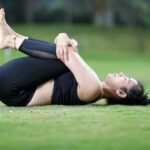 4. Supta Pawanmuktasana (leg lock pose)
Pavanamuktāsana | Exhale | Each side | a few seconds; 3 times each leg, 3 with both
Asana Pranayama Mudra Bandha, 4th revised edition (2008) | Transition: Hug one knee to the chest; exhaling, lift the head and shoulders and bring the knee towards the nose; inhale down. Then both knees. Easier option: Head stays down. |
| 5 | 5. Jhulana Lurhakanasana (rocking and rolling) | Free breathing | | 5 to 10 times
Asana Pranayama Mudra Bandha, 4th revised edition (2008) | Transition: Lying, hug the knees and roll from side to side; then, from a squat holding the shins, rock backwards and forwards along the spine, coming up onto the feet. Easier option: Side to side only; folded blanket under the spine; skip with serious back problems. Keep the head forward when rocking back so it does not hit the floor (APMB). |
| 6 | 6. Supta Udarakarshanasana (sleeping abdominal stretch) | Exhale | Each side | 3 seconds, breath held; 5 rounds
Asana Pranayama Mudra Bandha, 4th revised edition (2008) | Transition: Lying, knees bent and feet together, hands clasped behind the head; exhaling, lower both knees to one side and turn the head the other way; inhale up; then the other side. Easier option: Pillow under the knees. Related pose: reclining spinal twist. |
| 7 | 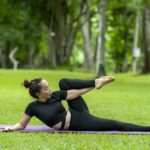 7. Shava Udarakarshanasana (universal spinal twist) | Exhale | Each side | as long as comfortable, once each side
Asana Pranayama Mudra Bandha, 4th revised edition (2008) | Transition: Arms out, one foot beside the other knee; the opposite hand brings the bent knee across to the floor, head turns away. Easier option: Pillow under the knee. |
| 8 | 8. Naukasana (boat pose, lying version) | Hold the breath | | count of 5 with the breath held; 3 to 5 rounds
Asana Pranayama Mudra Bandha, 4th revised edition (2008) | Transition: Lying, inhale deeply, hold the breath and lift legs, arms, shoulders, head and trunk about 15 cm, balancing on the buttocks; lower, then exhale and relax. Easier option: Lift the head and arms only, breathing normally. Bihar School version starting from lying; differs from the seated boat pose (poses/boat-pose). APMB: breath retained while raising, holding and lowering; exhale only when back on the floor. Breath-holding under effort is not for high blood pressure or heart conditions. |
Left and right
One-leg versions: right, then left, before both legs; twists both sides.
Repetitions and counting
Per APMB: raised legs 10 each leg; leg rotation and cycling 10 each way; leg lock 3 each leg + 3 both; rocking 5-10; sleeping abdominal stretch 5 rounds; universal twist once each side; Naukasana 3-5 rounds. Rest between practices.
Props and adaptations
One leg at a time with the other knee bent; hands under the hips for leg raises; blanket under the spine for rocking; head down in leg lock; smaller twists.
Precautions
- APMB: not with high blood pressure, serious heart conditions, sciatica or slipped disc, or soon after abdominal surgery.
- Hernia or lower back pain: leave out the two-leg versions, rocking and Naukasana. Pregnancy: ask your midwife or doctor first.
- Start with one practice at a time; the two-leg versions are strenuous.
- Keep the lower back on the floor in leg movements.
- "Digestive/abdominal group" is the source name, not a treatment claim.
Learn it with a teacher: A teacher can adapt the leg raises and Naukasana to your back and blood pressure.
General information, not medical advice. Poses do not cure illness. If you are pregnant, injured or have a health condition, check with your doctor and tell your teacher before you practise.
Pawanmuktasana Part 2 around the world
Share your Pawanmuktasana Part 2, wherever you are
Pawanmuktasana Part 2 is the second group of the Bihar School’s Pawanmuktasana series, done mostly lying on the back: leg raises, leg rotation, cycling, the leg-lock pose (the classic wind-relieving pose), rocking and rolling on the spine, two abdominal twists and the Bihar School’s boat pose, which starts lying down. Swami Satyananda Saraswati’s Asana Pranayama Mudra Bandha calls it the digestive or abdominal group; that is its traditional name, not a health claim.
The order
The book lists eight practices, starting from lying flat on the back, legs together, arms by the sides (the rocking practice also uses a squat): Padotthanasana (raised legs pose), Padachakrasana (leg rotation), Pada Sanchalanasana (cycling), Supta Pawanmuktasana (leg lock pose), Jhulana Lurhakanasana (rocking and rolling), Supta Udarakarshanasana (sleeping abdominal stretch), Shava Udarakarshanasana (universal spinal twist) and Naukasana (boat pose). Some course lists call the first two Utthanpadasana and Chakra Padasana. The Bihar School’s Naukasana starts lying on the back: holding the breath in, you lift the legs, arms, shoulders, head and trunk together, only about 15 cm off the floor, balancing on the buttocks, then come down and breathe out. It differs from the seated boat pose of Light on Yoga.
Before you start
Asana Pranayama Mudra Bandha asks you to begin calm and relaxed, lying in corpse pose (shavasana), and to rest there briefly between practices. Thirty seconds to a minute is usually enough, but the book’s more reliable guide is to rest until the breathing is back to normal. Use a thin mat or a folded blanket, especially for the leg lock and the rocking practice, where the body rolls on the spine. Throughout, the book suggests keeping your attention on four things: the movement, the pressure inside the abdomen, the stretch of the muscles and the breath.
The book also notes that right-handed people tend to learn these practices most easily with the right side leading, and should then repeat them with the left side leading so both sides develop evenly.
How the counting and sides work
The counts are the book’s: raised legs 10 rounds with each leg (inhale up, hold the leg and the breath for 3 to 5 seconds, exhale down); leg rotation and cycling 10 times each way with one leg, fewer with both; leg lock 3 times with each leg and 3 with both; rocking and rolling 5 to 10 times; the sleeping abdominal stretch 5 rounds; the universal spinal twist once to each side, held as long as is comfortable; Naukasana 3 to 5 rounds. One-leg versions are done on the right, then the left, before both legs together. Rest flat on the back between practices until the breath is back to normal. The book advises not to try the whole group at once, especially the two-leg versions: add one practice at a time. Do not lift the buttocks off the floor in leg raises; if the back is weak, bend the other knee with the foot on the floor.
Details that make each practice work
- Leg rotation: lift the straight leg only about 5 cm and draw circles as large as is comfortable; the heel never touches the floor during the rotation.
- Cycling: keep the rest of the body, including the head, flat on the floor. If the belly muscles cramp, the book suggests breathing in deeply while gently pushing the abdomen out, then relaxing the whole body as you breathe out.
- Leg lock: breathe in fully first; then, breathing out, lift the head and shoulders and bring the knee toward the nose without straining. Keep the straight leg on the floor.
- Rocking and rolling: keep the head tucked forward as you rock back so it does not hit the floor. If clasping the shins is hard, hold the sides of the thighs near the knees. The book recommends it first thing in the morning after waking.
- Sleeping abdominal stretch: keep the knees and feet together and the elbows on the floor, and turn the head the opposite way to the knees. The book notes that the distance of the feet from the buttocks changes which part of the spine the twist reaches: farther away for the lower back, closer for higher up.
Precautions and alternatives
This group takes effort and can strain the lower back. The book says it should not be practised with high blood pressure, serious heart conditions, back conditions such as sciatica or a slipped disc, or soon after abdominal surgery. We would also leave out the two-leg versions, rocking and Naukasana with a hernia or lower back pain, and ask your midwife or doctor first if you are pregnant. Rocking and rolling needs a folded blanket under the spine, and it is not for anyone with serious back problems. Gentler options: wind-relieving pose one leg at a time and a reclining twist. This page has not yet been reviewed by a qualified teacher.