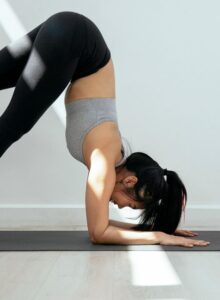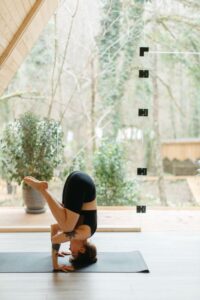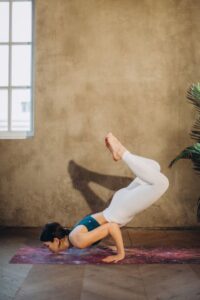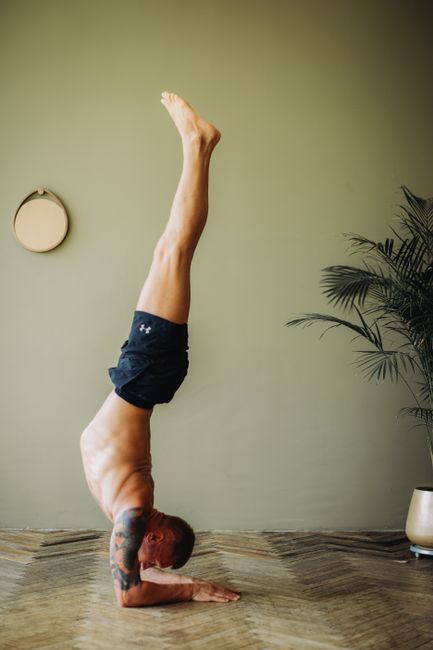
In short: forearm stand is an inversion balanced on the forearms, which lie parallel on the floor, shoulder-width apart, with the body rising straight up above the elbows and the head off the floor. It needs strong, open shoulders and a steady core, and it is an advanced pose: learn it at a wall first.
Many people know it as forearm balance or elbow balance. It sits between headstand, where the head takes part of the load, and handstand, where only the hands touch the floor.
The name
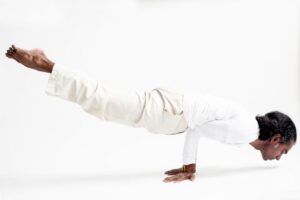
Piñcha means feather or wing and mayūra peacock, so Piñcha Mayūrāsana is the feathered peacock: the raised legs suggest a peacock’s tail feathers. AshtangaYoga.info describes it as a forearm stand with the torso and legs growing straight up, and places it in the Ashtanga intermediate series. The Iyengar Yoga (UK) syllabus lists it at plate 357 of Light on Yoga and has it taught first against a wall with the palms in several positions. Despite the shared word, it is a different pose from peacock pose (Mayūrāsana), a horizontal balance on the hands.
Making the pose work
The base decides everything. Forearms parallel and shoulder-width apart, palms down, pressing the forearms, wrists and palms into the floor while lifting and broadening the shoulder blades. If the elbows keep sliding out, Yoga Journal suggests a strap looped just above the elbows at shoulder width. AshtangaYoga.info adds a key point about balance: because the legs are heavy, the shoulders need to move slightly forward over the middle of the forearms; from there the pelvis can draw back and the straight legs can rise without a kick.
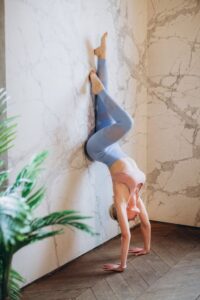
Most people learn with a wall. Yoga Journal describes two ways: setting the fingertips near the wall and kicking up so the heels rest lightly on it, or facing away from the wall in dolphin pose and walking the feet up the wall until the body is aligned, then lifting one foot at a time. Draw the navel in and lengthen the tailbone toward the heels so the lower back does not sag. Yoga Journal suggests starting with 10 to 15 seconds and working toward a minute; Ashtanga holds five breaths.
Precautions in plain words
Avoid forearm stand with shoulder, neck or back injuries, high blood pressure, heart conditions, glaucoma, a detached retina or recent eye surgery. Do not start learning inversions during pregnancy. Clear the space around you, practise near a wall, and learn how to come down safely before trying it in the middle of the room. This page is general information, not individual advice.
Preparation and what comes next
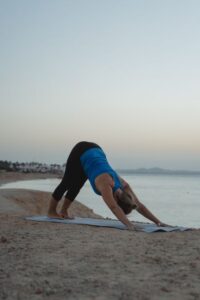
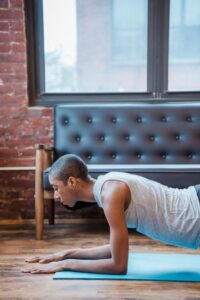
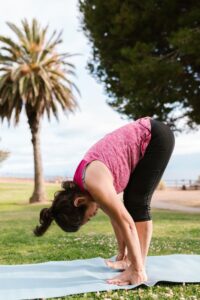
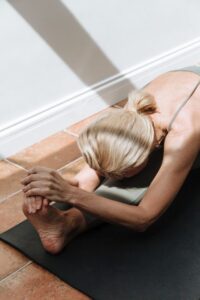
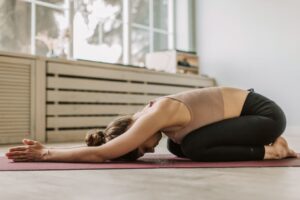
Build strength and shoulder opening with dolphin pose, downward dog, forearm plank and the supported headstand. Practise lifting one leg at a time from dolphin. Yoga Journal lists downward dog, handstand, standing forward bend and seated forward bend as preparatory and counterposes; rest in child’s pose afterwards. From forearm stand, advanced practitioners move on to scorpion and, in Ashtanga, to Kāraṇḍavāsana.
A simple way to practise it. A simple progression is to work in dolphin pose first, holding for several breaths and walking the feet in, then to practise the wall version with the feet walking up to an L shape. Next, practise kicking up with the heels landing softly on the wall, and only later take one foot and then the other away. Keep sessions short, rest in child’s pose between attempts, and stop before the shoulders tire, since tired shoulders let the elbows slide.
You will meet forearm stand in Ashtanga (intermediate series), Iyengar and advanced vinyasa and power yoga classes.