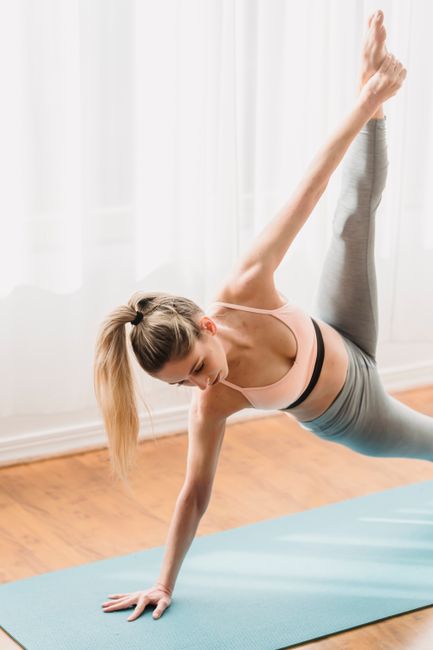
In short: side plank balances the body sideways on one hand and the outer edge of one foot, the feet stacked and the body in one straight line, the top arm reaching up. It strengthens the wrists, arms, shoulders and the sides of the waist and trains balance. Start with the bottom knee down or the feet staggered; the classic Vasisthasana adds the top leg lifted and held by the big toe.
Side plank shows up in yoga, pilates and strength training alike. In yoga it is a demanding balance on one arm, and the version you will see depends on the teacher: many classes treat the basic side plank as the whole pose, while Light on Yoga and the Ashtanga advanced series treat it as the first stage of a fuller pose with the top leg raised. This page covers both.
The name
Vasiṣṭhāsana is dedicated to the sage Vasiṣṭha, one of the seven sages and an author of Vedic hymns; Yoga Journal translates the name as “most excellent”. In Light on Yoga, B.K.S. Iyengar describes the balance on one hand and foot with the top hand on the hip as the preparation, and the final pose with the top leg raised vertically, the big toe held. AshtangaYoga.info gives the same final shape in the third (advanced A) series and notes that older Ashtanga books sometimes swap the names Vasiṣṭhāsana and Viśvāmitrāsana; it follows Light on Yoga. The Bihar School’s manual also teaches vashishthasana with the top leg raised, the body on an incline. Yoga Journal and Yoga International use Vasisthasana for the basic side plank. We therefore give the basic shape as the main pose and the toe-hold as its full classical form.
How to make it work
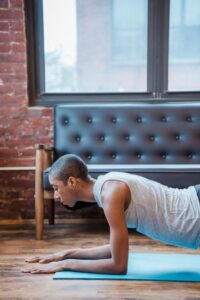
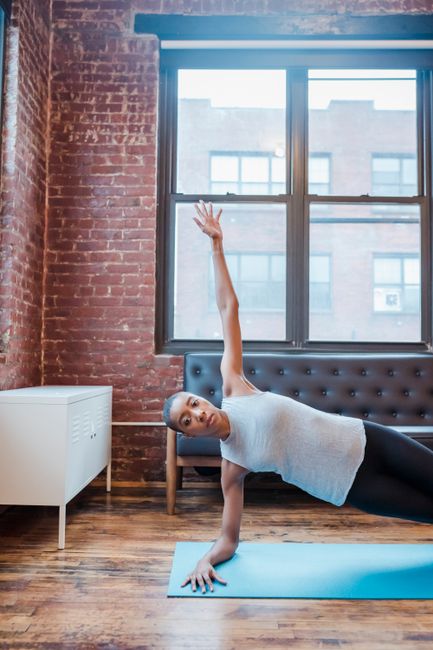
From plank, place the supporting hand slightly in front of the shoulder, roll onto the outer edge of that foot and stack the other foot on top. The two common faults pull in opposite directions: the hips sag toward the floor, or they swing back behind the line of the shoulders and heels. Press the bottom hand and the outer edge of the bottom foot down and lift the hips, so heels, hips and head are in one plane. Keep the top hand on the hip until you are steady, then reach it up, and look ahead or down if looking up makes you wobble. Yoga Journal recommends building up through the supported versions, and Yoga International suggests a wall: standing with the hand on the wall, then a chair, then blocks, gradually moving the body toward the diagonal.
Precautions in plain words
Side plank puts the whole upper body weight on one wrist and shoulder. Yoga Journal advises avoiding it with ankle, hip, wrist, shoulder or back injuries, and checking with a doctor if you have unregulated high blood pressure, have had abdominal surgery or are pregnant. A forearm version spares the wrist. The full toe-hold version also needs hamstring length and should be learned after the basic pose is steady. This page is general information, not individual advice.
Preparation and what comes next
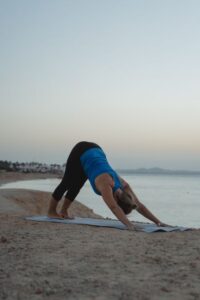
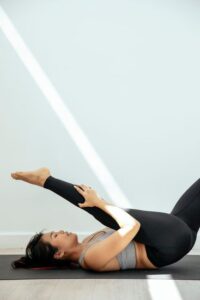
Build strength with plank and downward dog; Yoga Journal suggests gate pose, with the bottom knee on the floor, as a first step. Reclining hand-to-big-toe pose prepares the leg for the toe-hold version. From side plank you can step the top foot back into wild thing or return through plank. The related arm balance Visvamitrasana follows it in the Ashtanga third series.
Where it is taught
The basic side plank is common in vinyasa, power and hatha classes; the toe-hold version belongs to Iyengar and advanced Ashtanga practice. Browse more balances in the pose library.