Sphinx Pose: the forearm backbend, steps and cues

Sphinx pose is a gentle belly-down backbend on the forearms, elbows under the shoulders. A modern name; schools give it different Sanskrit labels.

Not yet reviewed by a qualified teacher Names and shape checked against 3 sources

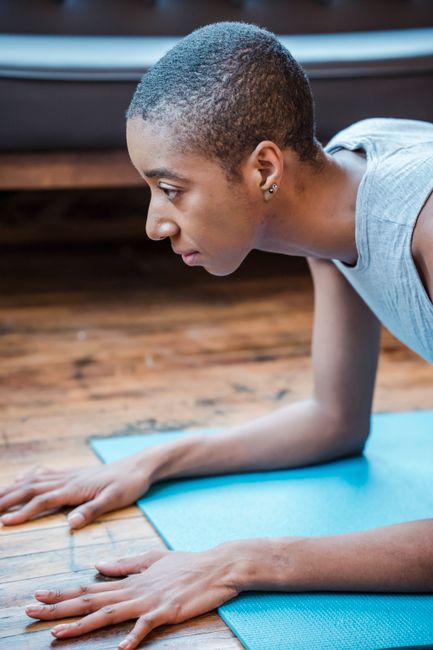
Side view of sportive African American female with short hair practicing Phalakasana posture on mat during intense yoga workout
Sanskrit name
No established Sanskrit name: a modern descriptive name
Also called
Supported Cobra, Easy Cobra, Sphinx, Salamba Bhujangasana (modern usage, Yoga Journal), Saral Bhujangasana (Bihar School: easy cobra)
Record
Modern descriptive name (no established Sanskrit)
Pose family
Backbend, Prone
Starting position
Prone (on the belly)
Movement
Backbend
Taught in
Hatha Yoga: The Historical Term and the Modern Class, Vinyasa Yoga: Flow, Breath and What to Expect, What Is Yin Yoga? Long Holds, Slow Pace and a Typical Class
Difficulty
Beginner
Prerequisite skills
Lying on the belly comfortably.
Body areas
Chest, Shoulders, Spine
Props
Blanket, Mat, None, Wall
Practised
Solo

Names in different traditions

TraditionName usedNote
Bihar School (Asana Pranayama Mudra Bandha)Saral Bhujangasana (easy cobra pose)Forearms on the floor, upper arms raised to vertical; held 3 to 4 minutes static or up to 5 rounds; "also known as sphinx asana"; preparation for bhujangasana.
Yoga JournalSphinx Pose (Salamba Bhujangasana)Elbows under shoulders, forearms parallel, mild backbend, 5 to 10 breaths.
Yin yogaSphinxHeld passively for minutes; separate record yin-sphinx.

Step by step

Coming into the pose

  1. Lie on the belly, legs long and side by side, tops of the feet on the floor.
  2. Place the elbows under the shoulders with the forearms parallel and the palms down.

In the pose

  1. Inhale, press the forearms down and lift the head and chest into a mild backbend, upper arms about vertical.
  2. Lengthen the tailbone toward the heels, keep the legs lightly active and draw the lower belly softly up from the floor.
  3. Draw the shoulders away from the ears and the chest forward between the arms. Stay 5 to 10 breaths.

Coming out

  1. Exhale and lower the chest and head to the floor. Rest with the head to one side; repeat once or twice if you like.

Breathing

Inhale as you lift, breathe slowly and evenly in the pose, exhale as you lower.

Alignment cues

  • Elbows under the shoulders, forearms parallel.
  • Chest forward and up, shoulders away from the ears.
  • Tailbone long toward the heels.
  • Lower belly lightly lifting; buttocks firm but not clenched.

Common alignment errors

  • Hanging in the shoulders so they rise toward the ears.
  • Elbows too far back, which overloads the lower back.
  • Gripping the buttocks.
  • Craning the neck back instead of lifting the chest.

Modifications and easier variations

  • Slide the elbows further forward to lower the chest. none

Advanced variations

Props and chair adaptations

  • A folded blanket under the hips cushions the hip points; a rolled towel in a U-shape under the belly supports the belly lift (Yoga Journal). blanket
  • Standing sphinx: forearms on a wall at shoulder height, hips toward the wall, gentle arch, shoulders down. wall
  • Sit at the front of a chair, forearms on a table, and lift the chest forward and up. chair

Precautions

  • Lower back pinching: lower the chest or use a blanket under the hips.
  • Back injury or headache: choose another pose or ask a teacher.
  • Pregnancy: avoid belly-down poses; use the standing wall version.
  • Shoulder discomfort: widen the elbows slightly.

Learn it with a teacher: Suitable for self-practice. Ask a teacher if backbends usually leave your lower back sore.

General information, not medical advice. Poses do not cure illness. If you are pregnant, injured or have a health condition, check with your doctor and tell your teacher before you practise.

The yin yoga version

Yin yoga version: Sphinx and Seal (Yin Yoga): long-held belly-down backbends

The shapes look alike, but yin yoga holds them for several minutes with the muscles soft and props for support, while the active version is held with muscular engagement for a few breaths. The instructions and the intention differ, so follow the page for the version you are practising.

In short: sphinx pose is a mild backbend on the belly with the forearms on the floor and the elbows under the shoulders, so the chest lifts while the arms take part of the weight. It gently works the back muscles and opens the chest and belly. It is one of the easiest ways to learn backbending and a common alternative when cobra pinches the lower back.

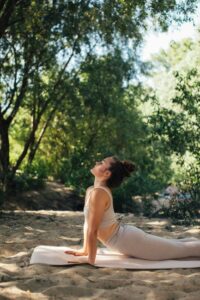
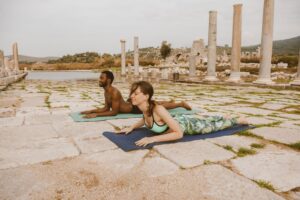
Sphinx looks like the Egyptian statue: lower body long on the ground, upper body propped on the forearms, head up. This page covers the active sphinx used in hatha and vinyasa classes. The long, passive hold of yin yoga has its own page, yin sphinx, because the intention and timing are different.

The name: a modern English name with two Sanskrit labels

“Sphinx” is a modern descriptive name, and schools do not agree on a Sanskrit one. Yoga Journal lists it as Salamba Bhujangasana, “supported cobra”. The Bihar School’s Asana Pranayama Mudra Bandha teaches the same forearm shape as Saral Bhujangasana, “easy cobra”, and adds that it is also known as sphinx. Because the two credible sources give different Sanskrit names, we treat both as modern usage and keep sphinx as the main name. Neither name appears in Light on Yoga.

How to make sphinx work

Set the elbows under the shoulders and the forearms parallel, then lift the head and chest so the upper arms become roughly vertical. The Bihar School version starts with the forearms beside the head and walks the upper arms up to vertical; Yoga Journal starts with the elbows under the shoulders. Either way, the forearms press down and the chest moves forward and up between the arms, with the shoulders drawing away from the ears.

Keep the legs long and lightly active and lengthen the tailbone toward the heels so the lower back feels broad. Yoga Journal adds a subtle cue: draw the lower belly gently away from the floor, without hardening it, to spread the bend along the spine instead of pressing it into the lower back. Hold for five to ten breaths, lower, rest with the head to one side, and repeat once or twice. The Bihar School allows a longer static hold of a few minutes, which brings it closer to the yin version.

Sphinx is also a useful check-in pose. Because the forearms hold you steady, you can feel where the bend is happening: ideally a gentle, even curve through the upper and middle back, with the lower back quiet. If all the sensation gathers in one spot of the lower back, that is a sign to lengthen the tailbone, lift the belly softly or lower the chest. Many teachers use two or three short rounds of sphinx early in class, before cobra or upward-facing dog, so the back warms up gradually.

Precautions in plain words

Sphinx should feel like a gentle stretch, not a pinch. If the lower back aches, slide the elbows a little further forward to lower the chest, or place a folded blanket under the hips. With a back injury or a headache, Yoga Journal suggests offering an alternative; ask a teacher or physiotherapist. Belly-down poses are usually avoided in pregnancy, where the standing wall version is kinder. If your shoulders feel jammed, widen the elbows slightly.

Preparation and what comes next

Sphinx itself is a preparation. Warm up with cat-cow or a few breaths in child’s pose, then use sphinx to prepare for cobra, upward-facing dog and bridge. Afterwards, push back to child’s pose to release the lower back.

Where it is taught

You will meet sphinx in hatha and vinyasa classes as a warm-up backbend, in the Bihar School system as easy cobra before full cobra, and, held passively for minutes, in yin yoga (see yin sphinx).
Frequently asked questions

What is the Sanskrit name for sphinx pose?

There is no single established one. Yoga Journal uses Salamba Bhujangasana (supported cobra); the Bihar School calls the same shape Saral Bhujangasana (easy cobra). Sphinx is a modern English name.

Is sphinx easier than cobra?

Usually yes. The forearms take part of the weight and the backbend is smaller, which is why sphinx is often offered when cobra pinches the lower back.

How is yin sphinx different?

The shape is the same, but in yin yoga the muscles stay relaxed and the pose is held for several minutes. See the yin sphinx page.

Sources

  1. Sphinx Pose, Yoga Journal (accessed October 6, 2026)
  2. Swami Satyananda Saraswati, Asana Pranayama Mudra Bandha: Saral Bhujangasana (easy cobra pose), Bihar School of Yoga (copy hosted by hathajoga.lt) (accessed October 6, 2026)
  3. Cobra Pose (suggests sphinx when cobra compresses the low back), Yoga Journal (accessed October 6, 2026)

Facts checked on October 6, 2026