This article contains affiliate links: if you buy through them we may earn a commission, at no extra cost to you. Read our affiliate disclosure.
In short: “hatha yoga” has two meanings. Historically, Haṭha yoga is a tradition of physical and breathing practices described in Sanskrit texts such as the Haṭhapradīpikā, aimed at spiritual goals; nearly every posture-based style taught today descends from it. In a modern studio, a “hatha” class usually means something narrower: a slower, all-round class where you hold each pose for a few breaths, with breathing and relaxation, at a gentle to moderate pace.
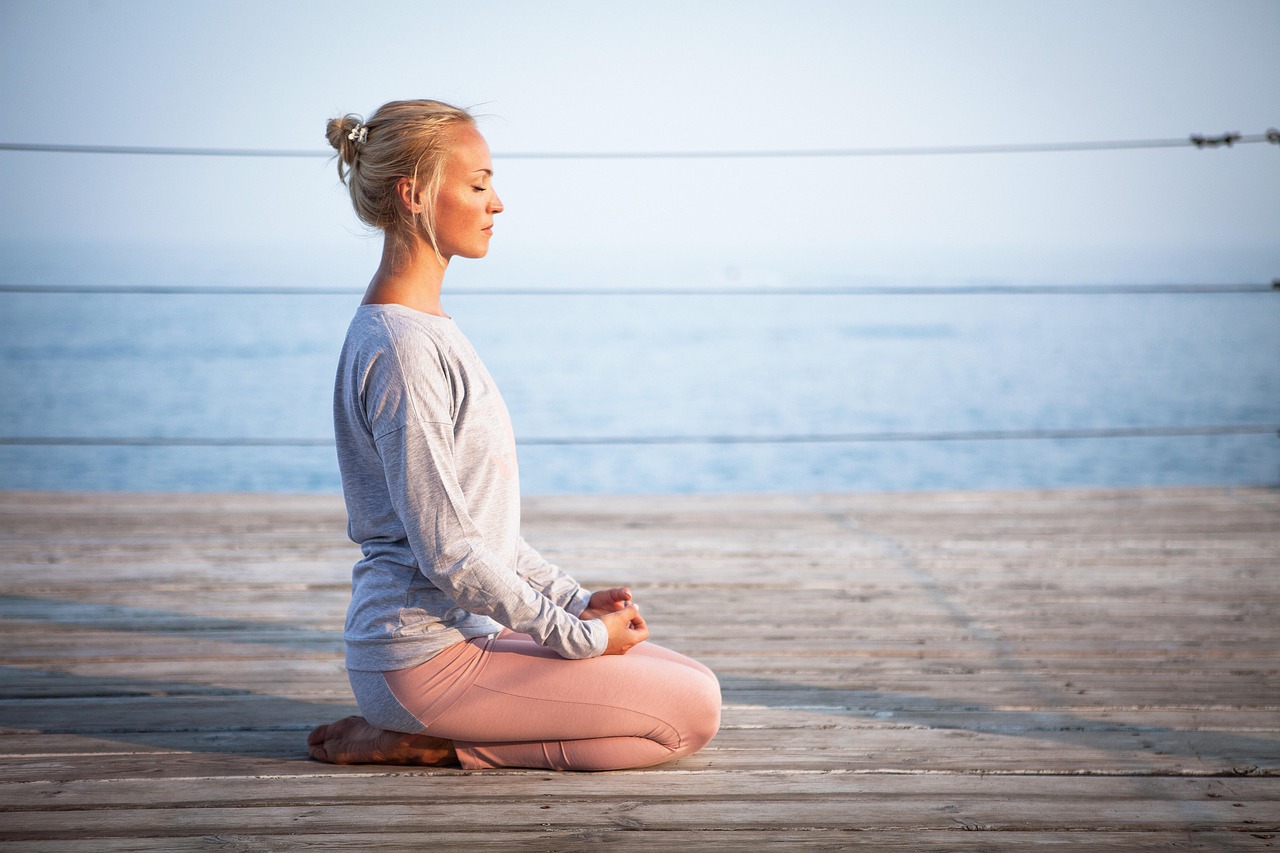
Few yoga words cause as much confusion as “hatha.” A historian, a teacher trained in India and your local studio timetable may all use it differently, and none of them is wrong. This guide separates the historical tradition from the modern class label, explains what each involves, and helps you decide whether a hatha class is the right place to start.
What does hatha mean?
Haṭha (हठ) is a Sanskrit word. The Monier-Williams Sanskrit-English Dictionary gives its first meanings as “violence, force,” with the adverbial sense “by force, forcibly,” and lists haṭha as a short name for haṭha-yoga. Encyclopaedia Britannica glosses Hatha Yoga as the “Discipline of Force.” The name refers to the effortful methods of the tradition, such as strong breath control and physical techniques, not to forcing your body in a class.
You will often hear that ha means sun and ṭha means moon, so that hatha “balances” the two. That is a symbolic interpretation found in some modern teachings; the dictionary meaning of the word is “force.”
Hatha yoga as a historical tradition
Britannica describes Hatha Yoga as a school of yoga that stresses mastery of the body as a way to reach a state of spiritual perfection. Tradition names Gorakhnath, the legendary eleventh-century founder of the Kanphata yogis, as its founder, though it grew out of older yogic traditions. Its practices include diet, cleansing techniques, breath regulation (prāṇāyāma) and postures (āsana).
The best-known Hatha text is the Haṭhapradīpikā (“Light on Haṭha”), compiled by Svātmārāma. In Pancham Sinh’s 1914 English translation, it opens by describing Hatha as a staircase leading to Raja Yoga, and Svātmārāma says he teaches Hatha for the sake of Raja Yoga. In other words, the physical work was a means to meditation and liberation, not an end in itself. The text describes:
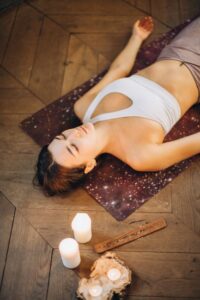
- Postures: it says Śiva taught 84 postures and singles out four as the most important (Siddhāsana, Padmāsana, Siṃhāsana and Bhadrāsana). It includes lotus pose (Padmāsana) and the corpse pose (Śavāsana), “lying down on the ground, like a corpse,” which it says removes fatigue and rests the mind. Today we call that pose corpse pose or savasana.
- Cleansing practices: six “actions” (ṣaṭkarma), among them Kapalabhati, a forceful breathing technique.
- Breath control and seals: pranayama techniques, locks and mudrās, and teachings about awakening kuṇḍalinī, which the text calls the support of all yoga practices. Our guides to mudras and chakras explain these ideas in context.
The text also makes claims that belong to its own worldview, such as calling Padmāsana “the destroyer of all diseases.” Those are traditional teachings, not medical facts, and we report them as such.
Scholars continue to study this tradition. The Haṭha Yoga Project at SOAS, University of London, a five-year project funded by the European Research Council (2015 to 2020), charted the history of physical yoga practice through Sanskrit texts and fieldwork, and the sourcebook Roots of Yoga by James Mallinson and Mark Singleton (Penguin Classics, 2017) translates material from more than a hundred texts spanning almost three thousand years. For the full timeline, read our history of yoga; for the classical philosophy Hatha texts point toward, see the Yoga Sutras.
Hatha yoga as a modern class label
In the twentieth century, postural yoga spread worldwide, and almost all of it can be traced to Hatha practices. Yoga Journal puts it simply: most forms of yoga in the West can be classified as Hatha Yoga, because Hatha refers to the practice of physical postures, so Ashtanga, vinyasa, Iyengar and power yoga are all forms of it.
On a studio timetable, though, “hatha” has come to mean a particular kind of class:
- Slower pace: you come into a pose, hold it for several breaths and come out before the next, rather than flowing continuously as in vinyasa.
- All-round content: standing poses, balances, seated poses, gentle backbends and twists, some breathing and a final relaxation.
- Room for instruction: teachers have time to explain alignment and offer props and options.
- Gentle to moderate effort: usually unheated and suitable for beginners.
There is no single governing body or fixed syllabus for “hatha” classes, so ask the studio what the class involves.
What happens in a typical hatha class
A 60- to 75-minute class often looks like this:
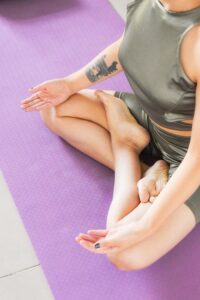
- Settling and breathing: a few minutes seated or lying down, often with simple diaphragmatic breathing.
- Warm-up: gentle movement for the spine and hips, such as cat-cow.
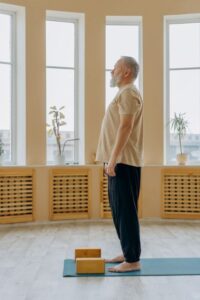
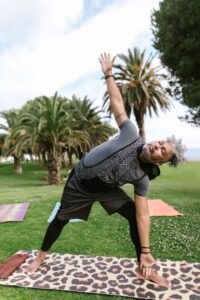
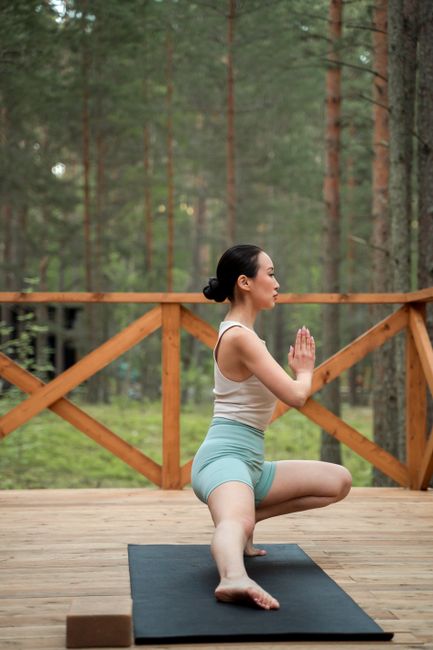
- Standing poses: mountain pose, triangle pose, warriors and a balance such as tree pose, each held for several breaths.
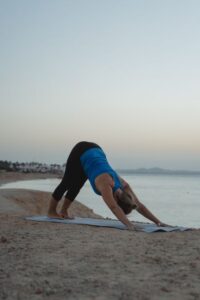
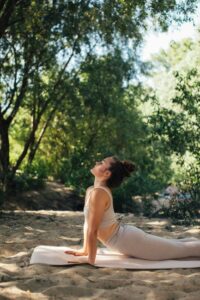
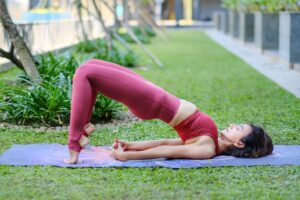
- Floor work: downward-facing dog, a gentle backbend such as cobra or bridge, seated forward bends and twists.
- Breathing practice: a few minutes of a calm technique such as alternate nostril breathing.
- Relaxation: five to ten minutes in savasana.
Intensity and level
We class modern hatha as gentle on our style chooser: a good fit for beginners, people returning after a break and anyone who wants a steady, unhurried practice. Some hatha classes are quite strong, with long holds of standing poses, so the label alone is not a guarantee. If you are new, our guide to yoga for beginners explains how to choose a first class.
Who a hatha class suits
A modern hatha class suits almost anyone who wants a calm, unhurried practice: complete beginners, people coming back after an injury or a long break (with their doctor’s go-ahead), older adults, and experienced practitioners who want time to refine poses rather than flow through them. Because poses are held and explained, it is also a good way to learn the shapes that faster classes assume you already know, such as downward-facing dog and triangle.
It may suit you less if you want a cardio workout, in which case a vinyasa or power class is a better fit, or if you want deep stillness, which a yin class offers. If you need a chair or extra support, a chair yoga class uses the same kinds of poses in a seated or supported form.
Two meanings, one practice
The historical and modern meanings are not as far apart as they seem. A gentle studio class that combines postures, a few minutes of breathing and a final relaxation is a small, modern slice of what the Hatha texts describe. What is usually missing are the stronger breathing and cleansing techniques, the seals and the explicitly spiritual goal. Some teachers bring those in carefully, with explanation; many leave them out. Neither approach is the “real” hatha. If you are curious about the older layers, our guides to the eight limbs of yoga and pranayama are good next steps.
Props for a hatha class
Most studios supply props. If you practice at home, a pair of blocks and a strap make many standing and seated poses more comfortable, for example a block under your hand in triangle or a strap around your feet in a seated forward bend. Our yoga blocks guide explains cork versus foam. Two useful props, from our research (not hands-on testing):
Cork Yoga Blocks, 2-Pack
- 9 x 6 x 4 in each (listing)
- Natural cork, rounded edges
- About $27, seen October 2026
Hugger Mugger D-Ring Cotton Yoga Strap
- 6, 8 or 10 ft lengths
- Cotton webbing, metal D-ring (maker)
- About $22, seen October 2026
Breathing practices in Hatha yoga
Breath control is central to the historical tradition, and some of its techniques are strong. The Haṭhapradīpikā itself says the six cleansing practices are for people with particular imbalances and that others need not do them. Today, gentle practices such as diaphragmatic breathing and alternate nostril breathing are good places to start; forceful techniques such as Kapalabhati and practices involving breath retention should be learned from a qualified teacher, and people who are pregnant or have high blood pressure, heart disease or other health conditions should check with a doctor first. Our breathing exercises hub sorts techniques by intensity.
Considerations and cautions
Modern hatha classes are among the safest ways to begin, but a few cautions apply. The U.S. National Center for Complementary and Integrative Health advises learning with a qualified instructor and suggests that beginners avoid extreme practices such as headstands, shoulder stands, the lotus position and forceful breathing; if you have a health condition or are pregnant, talk with your health care provider and tell your teacher. Our prenatal yoga guide covers pregnancy. Lotus in particular can strain the knees; our lotus guide gives safer seated alternatives.
Hatha compared with other styles
| Hatha (modern class) | Vinyasa | Yin | Iyengar | |
|---|---|---|---|---|
| Pace | Slow to moderate, pauses between poses | Continuous flow | Very slow, still | Slow, precise |
| Holds | Several breaths | One breath per movement | Several minutes | Often long, with props |
| Focus | All-round practice | Breath-linked movement | Long passive holds | Alignment and props |
See our guides to yin and Iyengar yoga for more, or the full types of yoga comparison.
Hatha yoga on retreat and in India
Many retreats offer a gentle hatha class alongside a stronger flow, and in India you will find schools that teach Hatha in its broader sense, with breathing, cleansing practices and philosophy as well as postures. Our India guide covers the main centers, and our guide on how to choose a yoga retreat explains how to check what a retreat means by “hatha” before you book.