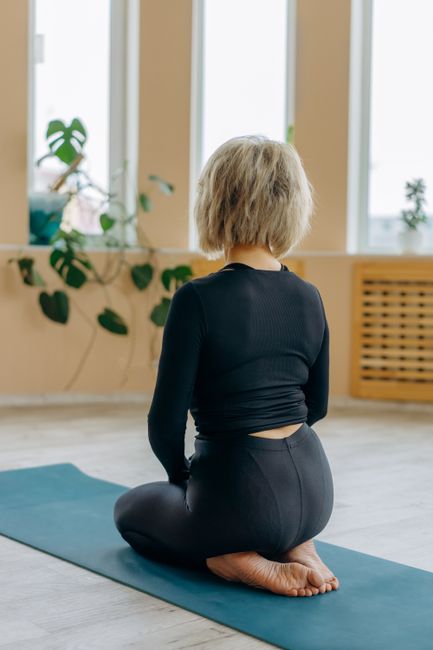
In short: ankle stretch is a short yin pose for the fronts of the feet and ankles. You sit on the heels with the tops of the feet on the floor, lean back onto the hands and lift the chest, and, if it is comfortable, let the knees rise off the floor. About a minute is usually enough.
It is the natural partner of toe squat. Below: how it relates to thunderbolt pose, the setup, the hold and the cautions.
The name and the related asana
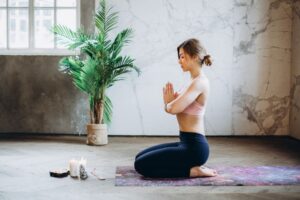
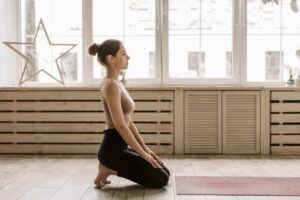
Ankle stretch is an English yin name with no Sanskrit of its own. It starts from the same kneeling seat as thunderbolt pose (Vajrāsana), but instead of sitting upright you lean back to load the fronts of the ankles. Bernie Clark uses it as the counterpose to toe squat, squats and long seated meditation.
Setting up with props
Sit on the heels. Clark progresses in stages: lean back on the hands, then place the hands beside the legs, then, optionally, hold the knees and draw them gently toward the chest. Janice Quirt (Yoga International) comes out of toe squat by untucking the toes, keeps the weight on the tops of the feet, leans back with the fingertips behind her and lifts the heart in a very gentle backbend, letting the knees rise. If the ankles hurt, Clark suggests a folded blanket or towel under the feet; for the knees, a rolled towel behind them or a cushion between the thighs and calves.
You do not have to start from toe squat. In her feet-focused sequence, Quirt comes in from hands and knees: walk the knees together, sink the hips toward the heels, then place the hands on the floor or on blocks behind the hips, with the fingers pointing toward you or away from you, whichever the wrists prefer. Blocks behind you mean you lean back less, so the stretch on the ankles is milder. Clark is honest that the starting seat itself is a test: if the ankles or knees complain just sitting on the heels, this may not be the pose for you.
Think of the setup as a series of small steps you can stop at. Sitting upright on the heels is the first stage. Leaning back onto the hands, with the heart lifted, adds weight to the fronts of the ankles. Letting the knees rise adds more. Pick the stage where you feel a clear but bearable stretch across the tops of the feet and ankles, and stay there.
The hold
Clark gives about a minute, adjusted to comfort, and Quirt holds it for a minute in one sequence and three minutes in her feet-focused one. Come out at any sharp pain in the ankle.
That is short for yin, where many poses are held for three to five minutes, and there is a reason. Clark calls the pose relatively intense and says it should not be held long if there is a lot of discomfort. The usual yin approach still applies: come to a moderate edge, let the muscles of the legs and feet relax, and stay still, breathing slowly. If the sensation keeps building rather than settling, ease back a stage, for example by bringing the knees down or moving the hands closer to the hips, instead of waiting it out.
Coming out and the rebound
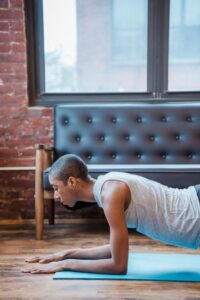
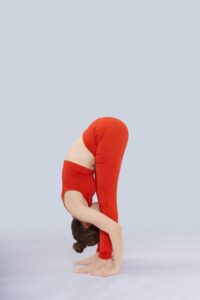
Lean forward, bring the hands to the floor beside the knees and step one foot at a time back to a push-up position, as Clark describes; Quirt tucks the toes and steps forward to stand. Clark suggests plank, dangling or squatting as counterposes.
Clark also lists crocodile and any posture that straightens the legs, which makes sense after a long time with the knees bent. On YinYoga.com he explains that many teachers add a little yang (active) movement between yin poses, and that it should be brief. After a longer hold, you can also simply lie on your back for a minute or more. Paul Grilley calls this pause the rebound: the time after you release a pose and relax, when you notice what you feel. YinYoga.com describes resting on the back for about one to five minutes, and Clark adds that it is optional; a counterpose or easy movement is fine too. Stand up only when the feet feel ready.
Precautions in plain words
Ankle stretch is short but can be intense. Pad the feet, keep the knees down if the ankles are stiff, and skip it with sharp ankle pain or a significant knee problem. Put the hands on blocks or fists if the wrists complain. This page is general information, not individual advice.
Before, after and where it is taught
Toe squat comes first; saddle stretches the same fronts of the ankles more deeply. The pairing is a classic one: Clark’s toe squat page names ankle stretch as its counterpose, and when he combines toe squat with arm work such as eagle or cow face arms, he suggests a short ankle stretch between the two sides. Quirt’s mood sequence follows two minutes of toe squat with one minute of ankle stretch, then moves on to dangling; her feet sequence places a three-minute ankle stretch near the end, before half butterfly and a final rest. You will meet it in yin yoga classes, which hold mostly floor poses for several minutes with the muscles relaxed, and in some gentle and restorative classes.