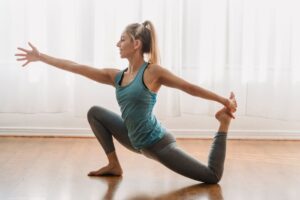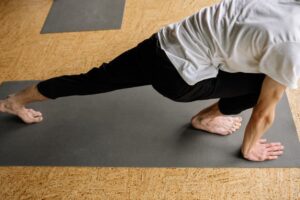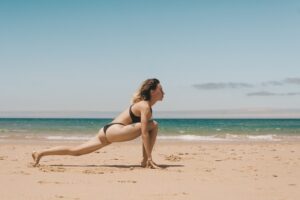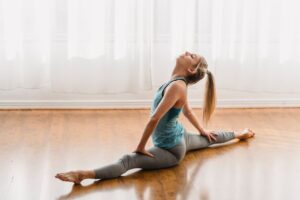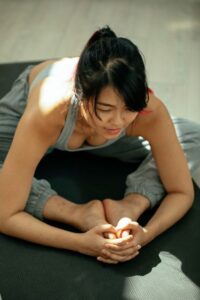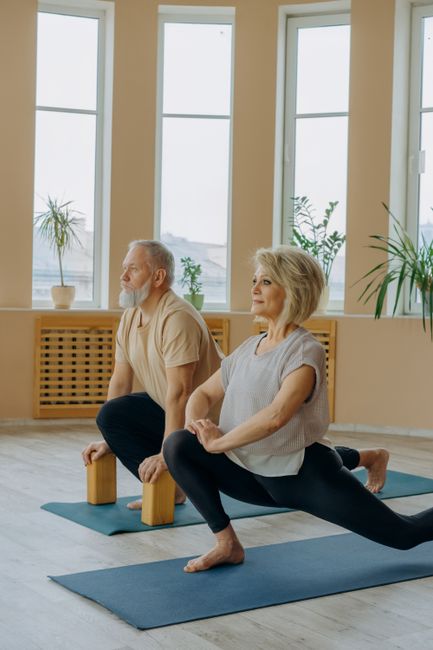
In short: dragon is the yin family of lunges. One foot steps forward between the hands, the back knee rests on the floor, and the hips sink with gravity while the legs stay as relaxed as possible. Bernie Clark teaches a whole family of named dragons, from the simple Baby Dragon to deeper versions, held for about a minute each or one at a time for several minutes.
This page explains how yin dragon relates to low lunge and lizard, how to set it up, the named variations including Flying Dragon, and how to come out safely.
The name and the related asanas
Dragon is an English yin name with no Sanskrit of its own. Paul Grilley calls it the yin variation of a runner’s lunge, and Clark names Añjaneyāsana (low lunge) as its yang relative. The shape is close to those lunges, but the work is different: in yin dragon you pad the back knee, let the hips settle and keep the muscles quiet for a long time rather than lifting and engaging.
Setting up with props
From hands and knees or downward-facing dog, step one foot forward between the hands and walk it forward until the knee is about above the heel; then slide the back knee back. Pad the back knee with a blanket and, if the back ankle is stiff, put a blanket under it too. Clark suggests pressing the top of the back foot down, especially the little-toe side. Blocks under the hands keep the chest from collapsing.
The long hold
Clark offers two ways to practise: hold each variation for about a minute and cycle through several, or choose one and stay for three to five minutes. Grilley suggests one to five minutes. Keep the front knee tracking over the foot and let the hips sink only as far as feels sustainable.
Flying Dragon and the other dragons
Clark and Janice Quirt (Yoga International) use the same names for the first steps of a dragon cycle. Baby Dragon is the simple low lunge with the hands on the floor or blocks. Dragon Flying High brings the hands or forearms onto the front thigh and lifts the chest, so more weight drops into the hips; Grilley’s version, torso upright with the hands on the front knee, is the same idea. Dragon Flying Low moves both hands inside the front foot, which may step out a little, and lowers toward the forearms or blocks. Together these two are often called Flying Dragon.
Clark lists more: Twisted Dragon (one hand pushes the front knee out while the chest turns toward it), Winged Dragon (the front knee falls out and the foot rolls to its outer edge), Overstepping Dragon (the front knee moves far past the ankle), Dragon Splits and Fire-Breathing Dragon (back toes tucked and the back knee lifted). The deeper ones ask more of the hips, knees and ankles; build up to them over time. Yoga Journal’s 12-pose sequence uses simple letters (Dragon A, B, C) for similar versions.
Coming out and the rebound
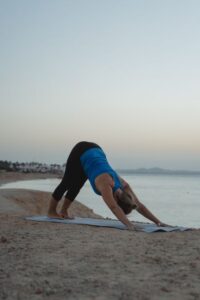
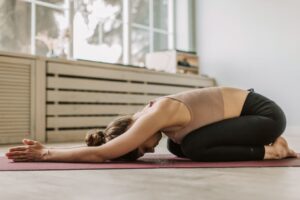
Place the hands under the shoulders, bring the back knee forward a little, tuck the back toes and step back to downward-facing dog, as Clark describes. A short down dog with alternating heel lifts and then child’s pose are his suggested counterposes. Rest a few breaths before the second side.
Precautions in plain words
Clark warns that dragon can be uncomfortable for the kneecap and stiff ankles: pad the knee well and support the ankle. If the front of the front hip pinches, lift the hips slightly or move the front foot outward. In pregnancy keep the stance short and avoid the deep versions. This page is general information, not individual advice.
Before, after and where it is taught
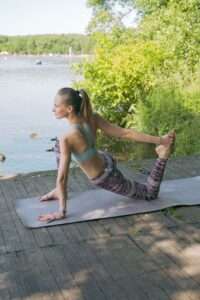
A few breaths of downward-facing dog or a short active lunge warm up the hips. Swan often follows in hip-focused classes, and full split is the far end of the dragon family. You will meet it in yin yoga classes, which hold mostly floor poses for several minutes with the muscles relaxed, and in some gentle and restorative classes.