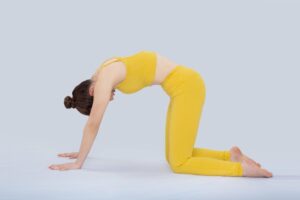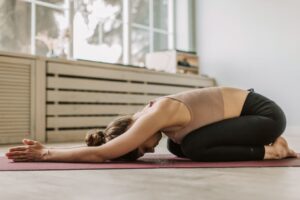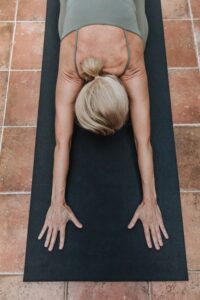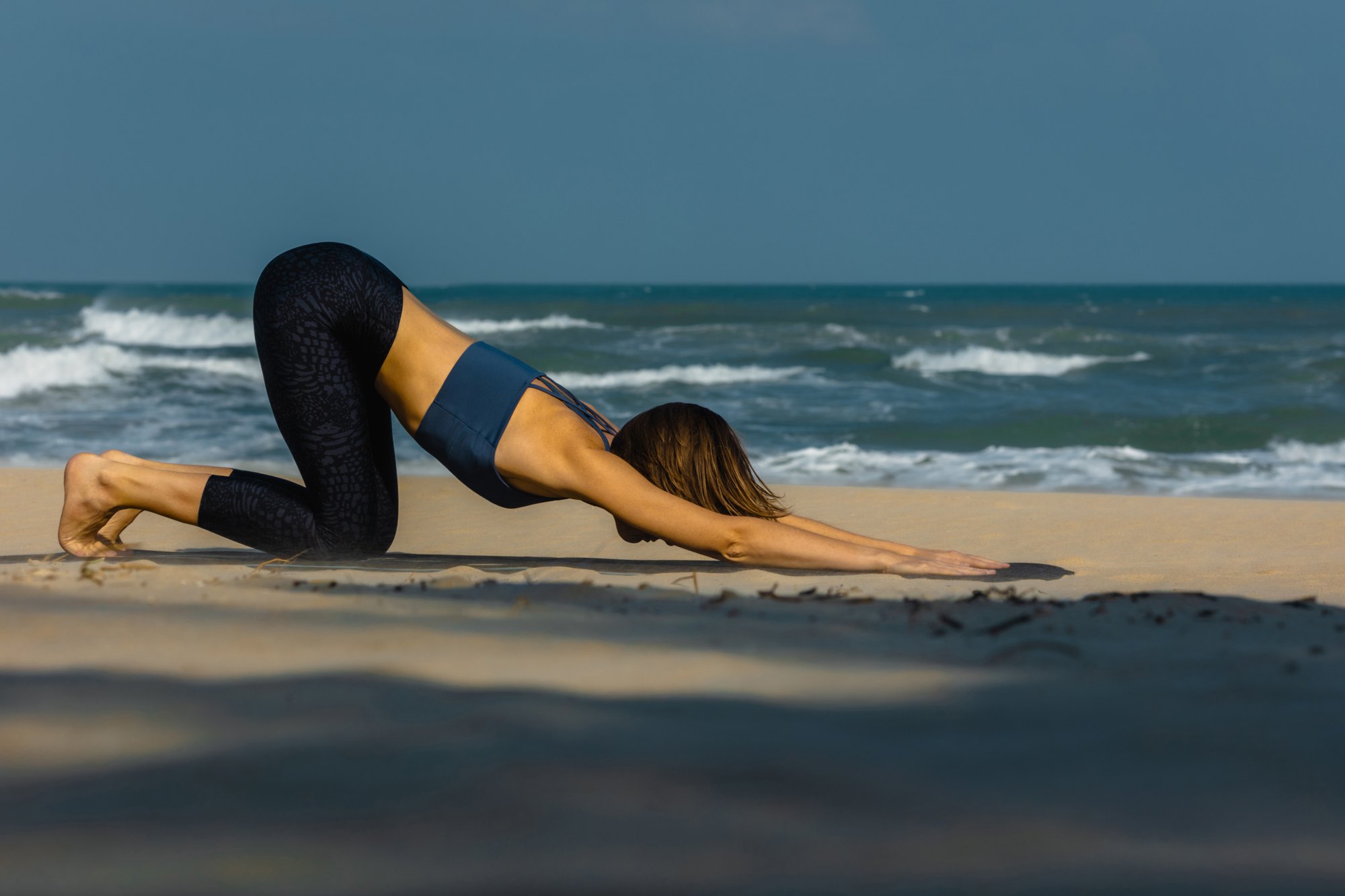
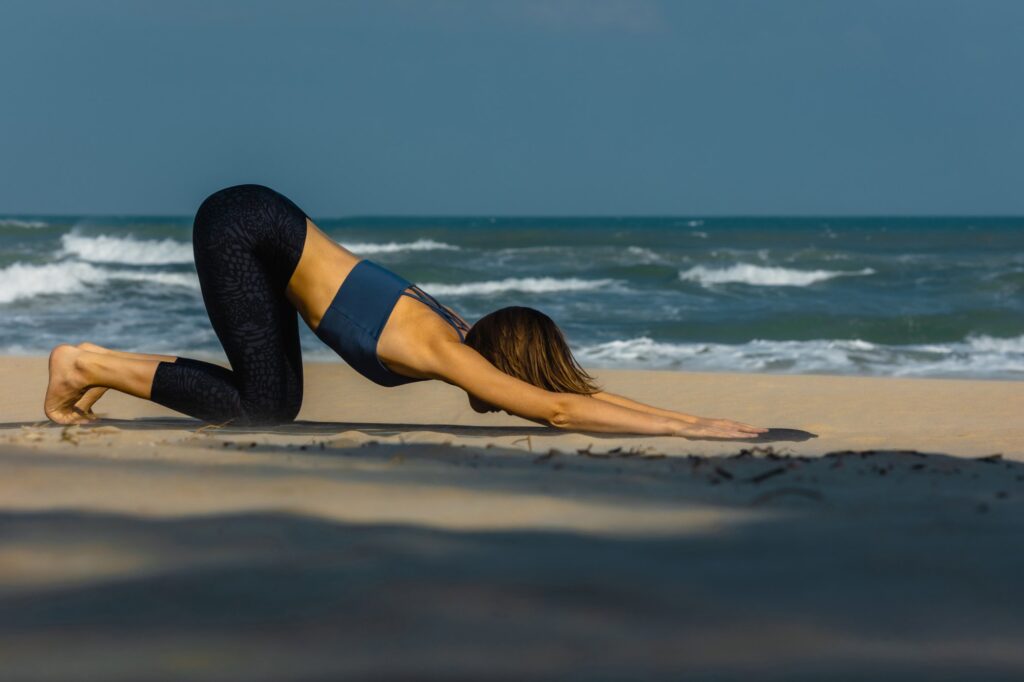
In short: melting heart is a kneeling yin pose for the shoulders and upper back. From hands and knees you walk the hands forward, keep the hips over the knees and let the chest sink toward the floor, then rest there for a few minutes. It looks like a child’s pose that forgot to sit back.
Below: the names, how it relates to extended puppy pose, props and the cautions for the neck and hands.
The name and the related asana
Melting heart is an English yin name. Bernie Clark and Yoga International also call it Anahatasana, after anāhata, the name of the heart chakra; that is a yin-community name, not a classical asana name, so we list it as an alias. The shape is close to extended puppy pose, which Clark points to as its yang relative (he calls it half down dog or puppy dog). The yin difference: the arms rest instead of pressing, and the chest sinks with gravity for minutes.
Setting up with props
Pad the knees with a blanket. Walk the hands forward until the chest drops toward the floor, keeping the hips right above the knees, as Clark describes. A bolster under the chest makes it restful. Leah Sugerman (Yoga International) places the elbows on two blocks, brings the palms together and rests the forehead on another block, with the thumbs drawn toward the back of the neck for a stronger shoulder stretch. If the shoulders complain, widen the arms or do one arm at a time with the head resting on the other forearm.
The long hold
Clark suggests three to five minutes, shorter if the chin rests on the floor, because that puts the neck in a strong backbend. Sugerman holds the block version for three minutes. Keep checking the hands: tingling means it is time to move the arms or come out.
Finding your version
Clark’s basic setup keeps the hands about shoulder-width apart and the hips right above the knees. From there, small changes make a big difference, so it is worth trying a few before you settle for the long hold.
- Shoulders pinch or ache with the arms overhead: move the hands further apart. Clark notes that a pinching feeling at the back of the shoulders is often a compression point that widening the arms releases.
- Very flexible: you can rest the chin on the floor and look ahead, but this bends the neck back strongly, so keep that version short and watch the neck.
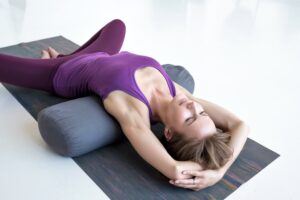
- Want it more restful: lay a bolster lengthwise under the chest so the body can relax onto it.
- One side at a time: reach one arm forward and rest the head on the other forearm, then switch.
- Toes: tucked or untucked, whichever is kinder to your feet and ankles.
What it should feel like
Clark describes melting heart as a backbend for the upper and middle back, with a mild effect on the lower spine. The sensation you are looking for is a broad, even feeling across the upper back, chest and shoulders. It should never feel sharp in the neck. Tingling in the hands or fingers is a different matter: Clark explains that it often means a nerve is being compressed, and that continuing to compress it can damage it. If the hands tingle, change the arm position at once or skip the pose.
Where it fits in a practice
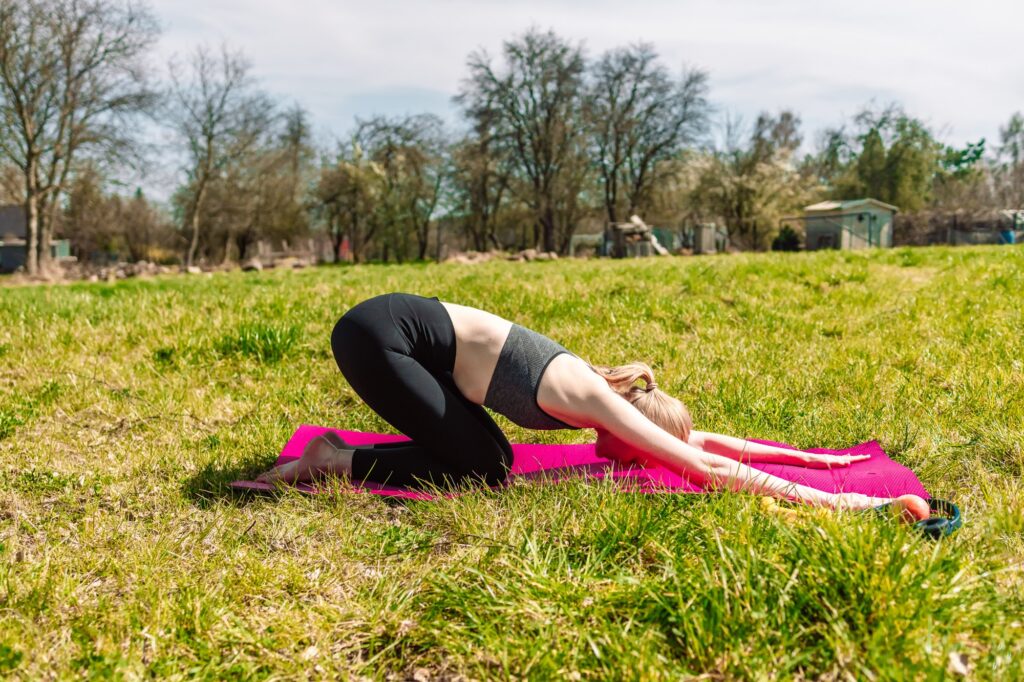
Clark suggests melting heart after a series of lower-back bends, such as sphinx or seal, and as a gentle warm-up for deeper backbends. Because it is a backbend, he prefers child’s pose, a mild forward fold, as the counterpose afterward.
Coming out and the rebound
Sit back into child’s pose, which Clark prefers as the counterpose, or slide forward onto the belly and rest. Stay still a few breaths before the next shape.
Precautions in plain words
The neck and the nerves of the arms are the things to watch. With a neck problem, rest the forehead rather than the chin and keep it short. With tingling in the hands or a shoulder injury, change the arm position or skip it. Pad sensitive knees. This page is general information, not individual advice.
Before, after and where it is taught
Cat-cow warms up the spine; sphinx and supported fish continue the gentle backbend theme. You will meet it in yin yoga classes, which hold mostly floor poses for several minutes with the muscles relaxed, and in some gentle and restorative classes.