Supported Fish Pose: bolster and block setups for a gentle chest opener

Supported fish is a restorative chest opener: lying back over a block or bolster under the shoulder blades with the head supported. Three setups, how long to stay and precautions for the neck and back.

Not yet reviewed by a qualified teacher Names and shape checked against 4 sources

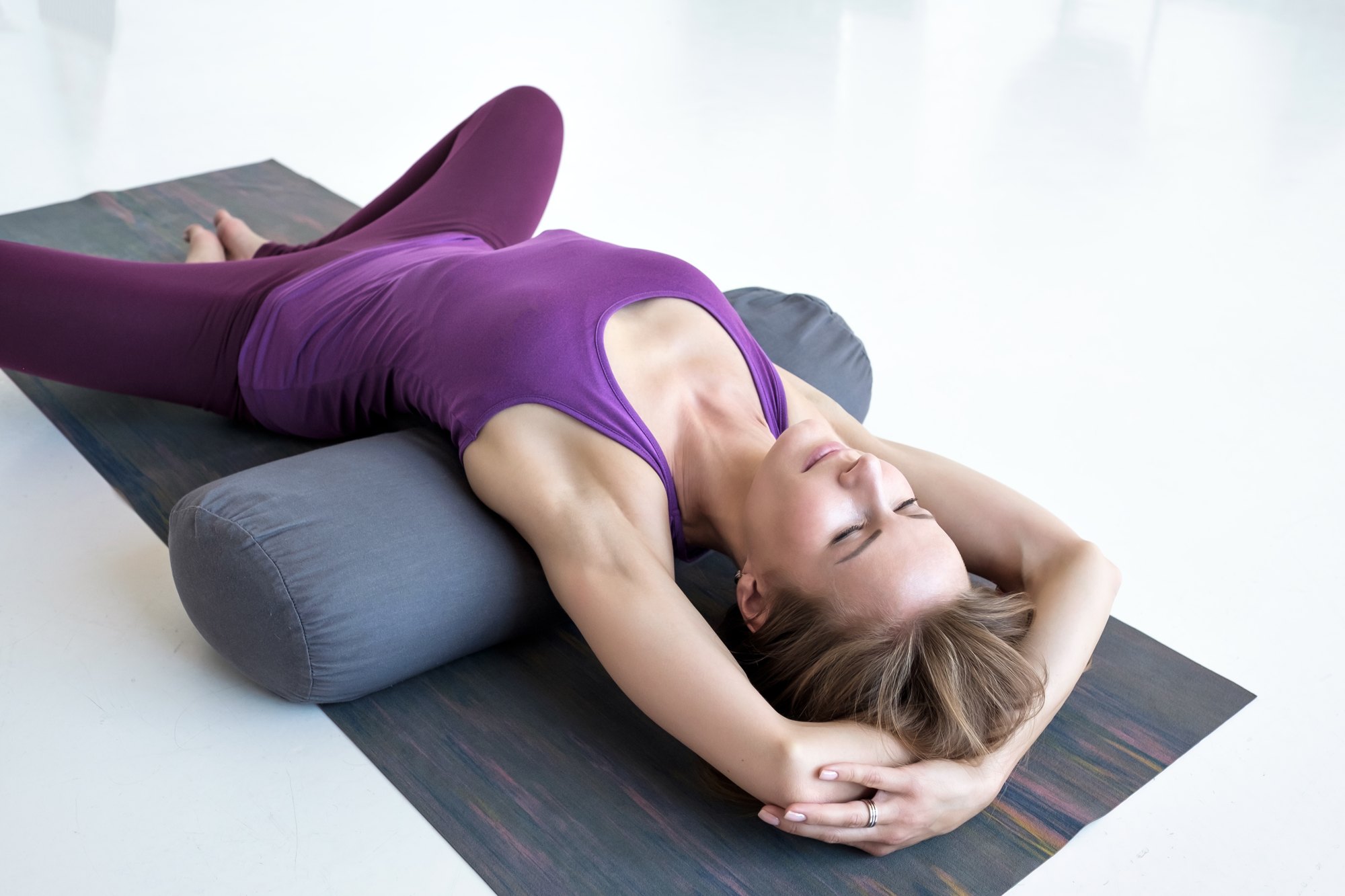
Supported fish pose over a bolster
Sanskrit name
No established Sanskrit name: a modern descriptive name
Also called
Supported Heart Opener, Bolster Fish, Fish Pose with Blocks, Supported Fish Pose, Salamba Matsyasana (modern usage)
Record
Supported adaptation
Variation of
Fish Pose (Matsyasana): the two classic versions, steps and neck care
Pose family
Backbend, Resting and restorative, Supine
Starting position
Reclining (on the back)
Movement
Backbend, Neutral rest
Taught in
Hatha Yoga: The Historical Term and the Modern Class, What Is Yin Yoga? Long Holds, Slow Pace and a Typical Class, Vinyasa Yoga: Flow, Breath and What to Expect
Difficulty
Beginner
Prerequisite skills
Lying back onto props with control; no backbend experience needed.
Body areas
Chest, Shoulders, Spine
Props
Blanket, Block, Bolster, Mat
Practised
Solo

Names in different traditions

TraditionName usedNote
Yoga Journal (Cyndi Lee)Supported Fish PoseTwo blocks: one under the shoulder blades, one under the head; bent-leg and rolled-blanket versions.
Yoga International (restorative sequence)Supported FishBolster under the space between the low or mid back and the bottom of the shoulder blades, head on a block, 5 minutes.
Yoga Journal (4 Stretches to De-Stress)Supported Fish PoseBlock or bolster lengthwise between the shoulder blades, 8 to 10 minutes.

Step by step

Coming into the pose

  1. Place a block on its middle or low height across or along the mat where your shoulder blades will be, and a second block, a bit higher, where your head will rest. Or lay a bolster lengthwise.
  2. Sit in front of the props with the legs long or the knees bent, then lower yourself back slowly onto the forearms and then onto the props.

In the pose

  1. Adjust so the support sits under the shoulder blades, not under the lower ribs, and the head rests level or a little higher than the chest.
  2. Let the arms rest by the sides, palms up, or open them out to the sides. Legs can be long with the feet falling open, or bent with the knees resting together.
  3. Stay about 5 minutes, or up to 8 to 10 minutes if it stays comfortable.

Coming out

  1. Bend the knees, roll to one side off the props and rest a breath or two, then press up to sitting.

Breathing

Breathe naturally. Many people notice the breath reaching more into the upper chest here; let it be easy rather than forcing deep breaths.

Alignment cues

  • Support under the shoulder blades, not under the lower ribs.
  • Head supported so the neck does not hang back.
  • Shoulders drape to the sides; palms up.
  • Bend the knees if the lower back pinches.

Common alignment errors

  • Leaving the head unsupported so the neck arches back.
  • Placing the block too low, under the lower ribs or lower back.
  • Choosing the highest block height on the first try.
  • Sitting straight up out of the pose instead of rolling to the side.

Modifications and easier variations

  • Rolled blanket: fold a blanket and roll it, then lie on it along the lower edge of the shoulder blades with the head on the flat part. A softer, smaller lift. blanket
  • Knees bent, feet a little wider than the hips and knees resting together, for a tight lower back. none

Advanced variations

Props and chair adaptations

  • Bolster lengthwise along the spine, with a folded blanket under the head. bolster
  • Two blocks at the same height under the head and the shoulder blades if the neck feels strained. block
  • Seated alternative: sit at the front of a chair, hold the sides of the seat behind you and gently lift the chest for a few breaths. chair

Precautions

  • Neck problems: keep the head supported level with or above the chest; never let it hang back.
  • Lower back discomfort: bend the knees and lower the props.
  • Pregnancy after the first trimester: keep it short and well propped, or choose a side-lying rest; follow your health care provider's advice.
  • Shoulder discomfort or tingling in the hands: bring the arms closer to the body.
  • Roll to the side and come up slowly if you feel light-headed.

Learn it with a teacher: Safe to practise on your own with a sensible prop height. Ask a teacher to check the setup if your neck or lower back complains.

General information, not medical advice. Poses do not cure illness. If you are pregnant, injured or have a health condition, check with your doctor and tell your teacher before you practise.

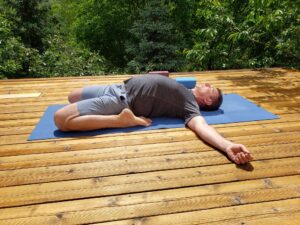
In short: supported fish is lying back over a block, bolster or rolled blanket placed under the shoulder blades, with the head resting on its own support. The chest opens and the shoulders drape to the sides while the body rests. It is a gentle, modern restorative setup, very different from the active fish pose it is named after.

This page covers the three usual setups, how to choose a height, how long to stay and who should take care. It is a supported adaptation of fish pose, with its own page because the props and the way you practise it are its own.

The name

Supported fish, bolster fish and supported heart opener are modern descriptive names, borrowed from Matsyāsana, fish pose. You may hear “Salamba Matsyasana” in some classes (sālamba, supported), but we have not found it in two primary sources, so we list it only as modern usage. In classical fish pose the chest is lifted actively and, in some versions, the crown of the head touches the floor; in the supported version nothing is held up by muscle and the head never hangs back.

Three ways to set it up

Two blocks. Cyndi Lee, writing in Yoga Journal, places two blocks where the head and the shoulder blades will rest. The shoulder-blade block should not touch the ribs below the shoulder blades. If the neck feels compressed, set both blocks at the same height so the head is not lower than the chest. Lower yourself from a seated position onto the blocks and let the feet fall apart.

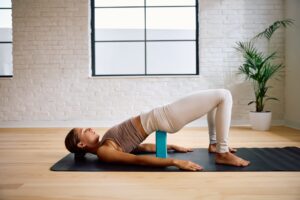
Bolster. Lay a bolster lengthwise along the mat and lie back on it so it supports the space between the low or middle back and the bottom of the shoulder blades, with the head on a block or folded blanket, as in Yoga International’s restorative sequence, where it is held for about 5 minutes. Yoga Journal’s de-stress sequence suggests 8 to 10 minutes, or as long as it is comfortable.

Rolled blanket. For the softest version, fold a blanket lengthwise, roll it a couple of turns and lie with the roll along the lower edges of the shoulder blades and the head on the flat part. If the lower back is tight in any setup, bend the knees with the feet a little wider than the hips and let the knees rest together.

Settling in, staying and coming out

How you lie down matters as much as the props. Cyndi Lee’s method is to sit in staff pose with the props behind you and lower yourself slowly, checking that the block stays under the shoulder blades. Once you are down, rest the arms alongside the body with the palms up and let the shoulders drape off the support. Then relax the face, throat and jaw. Yoga International offers two other arm positions: hands resting on the belly, or, for more stretch, arms overhead on the floor with the palms up.

Treat the height of the head support as something to adjust, not a fixed rule. A lower head block gives more stretch to the front of the neck and chest; a higher one is gentler. Change one thing at a time and stay with the setup that lets you breathe slowly and forget about your neck.

To come out, Yoga International’s sequence bends the knees with the feet on the mat if the legs were straight, lets both knees fall to one side and rolls onto that side, then presses up to sitting with the top hand. Resting on your side for a breath or two before you sit up is a good habit after any long restorative hold.

The same sequence also includes a side-lying version, supported side fish: a bolster across the mat under the side of the rib cage, the head on a block, knees and hips stacked and bent. It is held about 5 minutes on each side, and the upper side of the ribs opens with each inhalation. It is a useful option for anyone who prefers not to lie on the back.

Precautions in plain words

The neck is the main thing to watch: keep the head supported level with or a little above the chest. With a sensitive lower back, bend the knees and use a lower support. After the first trimester of pregnancy, keep it short and well propped, or rest on your side, because lying flat on the back for long periods is not recommended (ACOG). If the hands tingle or the shoulders ache, bring the arms closer to the body. Roll to the side to come out. This page is general information, not individual advice.

Before, after and where it is taught

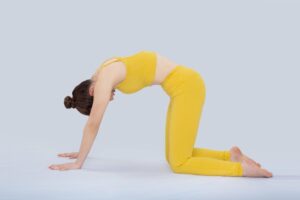
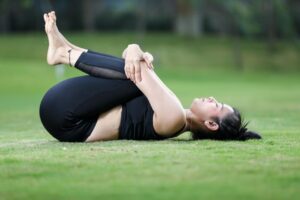
A few rounds of cat-cow warm the spine first. Afterwards, hug the knees in with wind-relieving pose or rest in child’s pose. In a restorative sequence it pairs with supported bridge and reclining bound angle; in yin classes it is often used after melting heart. It is also a calm place to practise diaphragmatic breathing.
Preparatory poses

Follow-up poses and transitions

Counterposes

Main pose

Related poses

More backbend poses

Frequently asked questions

Where should the block go in supported fish?

Under the shoulder blades, with a second block or a folded blanket under the head. Cyndi Lee in Yoga Journal notes the block should not touch the ribs below the shoulder blades.

How long should I hold supported fish?

About 5 minutes in a restorative sequence (Yoga International); up to 8 to 10 minutes if it stays comfortable (Yoga Journal).

Is supported fish the same as fish pose?

No. Fish pose (Matsyasana) is an active backbend; supported fish is a modern restorative setup where props hold the chest open and the head is always supported.

Sources

  1. 3 Ways to Adapt Fish Pose to Feel More Comfortable (Cyndi Lee), Yoga Journal (accessed October 6, 2026)
  2. A Restorative Yoga Sequence for Tight Spaces (Supported Fish), Yoga International (accessed October 6, 2026)
  3. 4 Stretches to De-Stress and Feel Your Best (Supported Fish, Supported Bridge), Yoga Journal (accessed October 6, 2026)
  4. Exercise During Pregnancy (FAQ), American College of Obstetricians and Gynecologists (accessed October 6, 2026)

Facts checked on October 6, 2026