Lotus Pose: preparation, safer alternatives and cautions

How to prepare for lotus pose without forcing the knees: half lotus and easy-seat alternatives, step-by-step instructions, cautions and the Sanskrit name.

Not yet reviewed by a qualified teacher Names and shape checked against 7 sources

Lotus Pose yoga pose
Sanskrit name
Padmāsana पद्मासन (source)
Also called
Full lotus, Lotus position
Other spellings
Padmasana
Pose family
Seated
Movement
Hip external rotation
Taught in
Hatha Yoga: The Historical Term and the Modern Class, Kundalini Yoga: Practices, Origins and What a Class Involves
Difficulty
Advanced
Body areas
Feet and ankles, Hips, Legs
Props
Blanket, Block, Cushion
Practised
Solo

Step by step

  1. Sit on the floor, or on the front edge of a folded blanket or cushion, with your legs extended.
  2. Bend your right knee out to the side. Cradle the right shin and foot in your hands and rotate the whole leg from the hip, not from the knee.
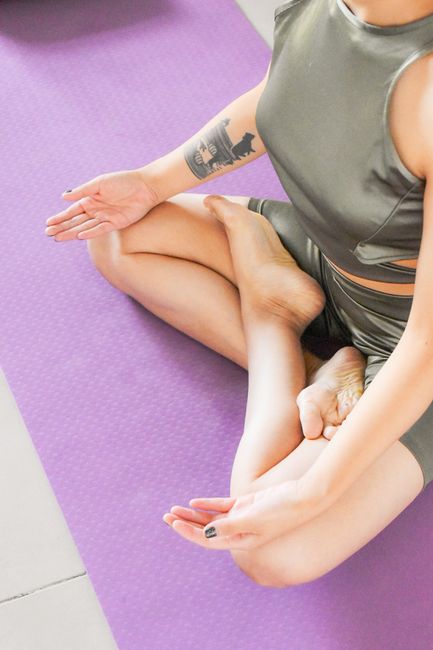
  3. Guide the right foot up into the crease of the left hip, sole facing up.
  4. Bend the left knee, rotating the left thigh outward from the hip in the same way, and lift the left foot over the right shin into the crease of the right hip.
  5. Let the knees release toward the floor. Keep the ankles in line rather than letting the feet sickle.
  6. Sit tall, lengthen the spine and breathe slowly. Stay only as long as it is comfortable.
  7. Come out slowly, one leg at a time, and stretch the legs out. Next time, cross the other leg first.

Alignment cues

  • Rotate from the hip. All the turning should happen where the thigh meets the pelvis.
  • No knee pain, ever. A stretch in the hip or ankle is fine; any pinching or pain in the knee means stop.
  • Sit high enough. A cushion or blanket under the sitting bones tilts the pelvis forward and helps the spine stay upright.
  • Alternate the legs. Yoga Journal suggests switching which leg goes in first, so you do not always load the hips the same way.

Common alignment errors

  • Pulling the foot into place by bending the knee sideways instead of rotating the hip.
  • Pushing the knees down with the hands.
  • Sitting in lotus cold, at the start of practice.
  • Staying through numbness, tingling or knee pain.
  • Always crossing the same leg on top.

Modifications and props

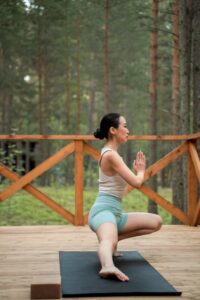
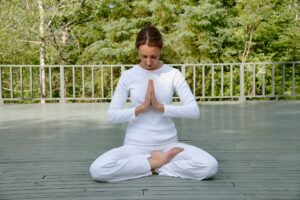
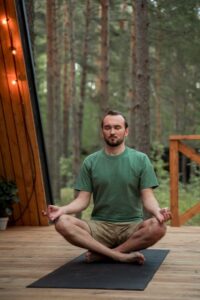
  • Easy seat: a simple cross-legged position on a cushion, knees below the hips if possible. This is the seat most people should use for meditation. cushion
  • Half lotus: one foot on the opposite thigh, the other foot on the floor under the opposite knee. Switch sides. none
  • Supported knees: blocks or folded blankets under knees that float above the floor. blanket
  • Kneeling: sit back on a cushion or block placed between or under the heels. block
  • Chair: sit toward the front of a chair, feet flat and under the knees, spine upright. chair

Precautions

  • Beginners should avoid full lotus (NCCIH).
  • Knee injury or knee surgery, hip or ankle problems: skip full lotus and check with your doctor or a physical therapist.
  • Come out at once if the legs go numb or tingle.

General information, not medical advice. Poses do not cure illness. If you are pregnant, injured or have a health condition, check with your doctor and tell your teacher before you practise.

This article contains affiliate links: if you buy through them we may earn a commission, at no extra cost to you. Read our affiliate disclosure.

In short: lotus pose is the cross-legged seat with each foot resting on the opposite thigh. It needs a lot of outward rotation at the hips, and when the hips do not have it, the knees take the strain. Treat full lotus as an advanced pose, work toward it with hip openers and half lotus, and use a cushion or an easy cross-legged seat for meditation in the meantime.

Lotus pose is probably the best-known image of yoga and meditation, and that is exactly why people force it. You do not need lotus to meditate, to breathe well or to be “good at yoga.” Many experienced practitioners never sit in full lotus, and many who do sit in it learned it gradually over years. This guide explains where the pose comes from, how to prepare for it, how to do it with care if your hips allow, and which seats to use instead.

The name and its place in the tradition

Padma means lotus and āsana means seat or posture (see asana); the Monier-Williams Sanskrit dictionary records padmāsana as a particular posture in religious meditation. Unlike many poses taught today, lotus has a long written history. The Hatha Yoga Pradipika, a 15th-century manual, says that Shiva taught 84 postures and singles out four as essential: siddhasana, padmasana, simhasana and bhadrasana. In Pancham Sinh’s 1914 translation, its first description of padmasana is a bound version, with the arms crossed behind the back to hold the toes, chin to chest and gaze at the tip of the nose; a second description rests the hands on the thighs, palms up. The same text calls padmasana the destroyer of all diseases. That is a traditional claim, not a medical finding, and nothing on this page suggests the pose treats any condition.

Lotus is still used as a seat for pranayama and meditation, often with hand gestures described in our guide to mudras. In Patanjali’s eight limbs of yoga, posture is the third limb, there to support steady sitting.

Why lotus pose needs caution

To place each foot on the opposite thigh, the thighs have to rotate outward a long way at the hip joint. Hip shape varies widely from person to person, so for some people this comes easily and for others it may never be comfortable. When the hip runs out of rotation, the knee is pulled and twisted instead, and the knee is not built to rotate that way. The US National Center for Complementary and Integrative Health advises people who are new to yoga to avoid extreme practices, naming the lotus position alongside headstands, shoulder stands and forceful breathing. A 2013 systematic review of published case reports on yoga injuries in PLOS ONE found variations of lotus among the postures most often linked to adverse events, including knee and nerve problems, and recommended that beginners avoid it.

Skip full lotus if you are new to yoga, have a knee injury or knee surgery in your history, or have hip or ankle problems. Come out straight away if your legs go numb or tingle. If you have any joint condition, check with your doctor or a physical therapist before working toward lotus, and tell your teacher. This page is general information, not individual advice.

Preparation

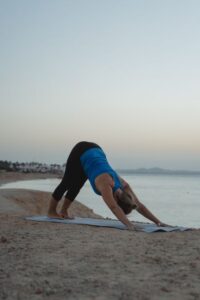
Prepare with poses that rotate the thigh outward and stretch the hips without loading the knee: reclined figure four, seated figure four and pigeon pose with good support. A wide-kneed seated stretch with the soles of the feet together is also common preparation. Warm up the body as a whole first, for example with a few downward dogs, and practice lotus later in a session, not cold. Try full lotus only once half lotus is comfortable on both sides, and come into it by rotating each thigh from the hip, never by pulling the foot into place.

Seats to use instead of lotus pose

For most people, most of the time, a simpler seat is the better choice: an easy cross-legged position on a cushion, half lotus, kneeling with a block or cushion under the sitting bones, or sitting upright toward the front of a chair. What they share is a pelvis that sits a little higher than the knees, which lets the spine stay upright without effort.

A firm meditation cushion makes cross-legged sitting much easier, because it lifts the pelvis above the knees. Two well-known buckwheat zafus are below; our guide to meditation cushions compares shapes and heights.

Classic round zafu

Hugger Mugger Zafu Meditation Cushion

  • Organic buckwheat hull fill
  • Zipper to adjust the height
  • Handmade in the USA, about $84, seen October 2026
Check price on Amazon
Cotton canvas cover

Bean Products Zafu Meditation Cushion

  • 14 in round or 18 in oval
  • Adjustable organic buckwheat fill
  • Made in Chicago, about $52, seen October 2026
Check price on Amazon

Lotus for meditation and what comes next

For meditation, comfort and stillness matter more than the shape of your legs. Our guide on how to meditate covers seated posture, and the meditation hub lists the techniques to try once you are settled. Lotus also appears inside some advanced poses, which is one more reason to build it slowly. Browse related hip openers in the pose directory, and if you want to learn seated practice with a teacher, a yoga retreat is a good setting to start.
Frequently asked questions

Do I need lotus pose to meditate?

No. An easy cross-legged seat on a cushion, kneeling on a cushion or block, or sitting upright in a chair all work. What matters is a stable, upright position you can hold comfortably.

Why can I not do lotus pose?

Lotus needs a lot of outward rotation at the hip, and hip shape varies widely. If the hips do not rotate far enough, the knees are forced to twist instead. That is a reason to use half lotus or an easy seat, not a reason to push harder.

Is lotus pose bad for your knees?

It can be if it is forced. The NIH National Center for Complementary and Integrative Health advises beginners to avoid the lotus position, and a 2013 review of yoga injury reports linked lotus variations to knee and nerve problems. Rotate from the hip and stop at any knee pain.

What is the difference between lotus and half lotus?

In full lotus both feet rest on the opposite thighs. In half lotus one foot rests on the opposite thigh and the other foot stays on the floor under the opposite knee. Half lotus asks for less rotation and is the usual step toward full lotus.

What does padmasana mean?

Padmasana (IAST: Padmāsana; Devanagari: पद्मासन) means lotus seat or lotus posture, from padma, lotus, and āsana, seat or posture. It is one of the four seated postures the Hatha Yoga Pradipika calls essential.

Sources

  1. Lotus Pose: How to Practice Padmasana, Yoga Journal (accessed October 6, 2026)
  2. Monier-Williams Sanskrit-English Dictionary: padmāsana (p. 585), Cologne Digital Sanskrit Dictionaries, University of Cologne (accessed October 6, 2026)
  3. Hatha Yoga Pradipika, translated by Pancham Sinh (1914), chapter 1 on padmasana, Internet Archive (accessed October 6, 2026)
  4. The Yoga Sutras of Patanjali, translated by Charles Johnston (1912), sutra 2.29, Project Gutenberg (accessed October 6, 2026)
  5. Yoga: What You Need To Know, National Center for Complementary and Integrative Health (NIH) (accessed October 6, 2026)
  6. Adverse Events Associated with Yoga: A Systematic Review of Published Case Reports and Case Series (Cramer et al., PLOS ONE 2013), PubMed Central (accessed October 6, 2026)
  7. Lotus position (Devanagari and transliteration), Wikipedia (accessed October 6, 2026)

Facts checked on October 6, 2026