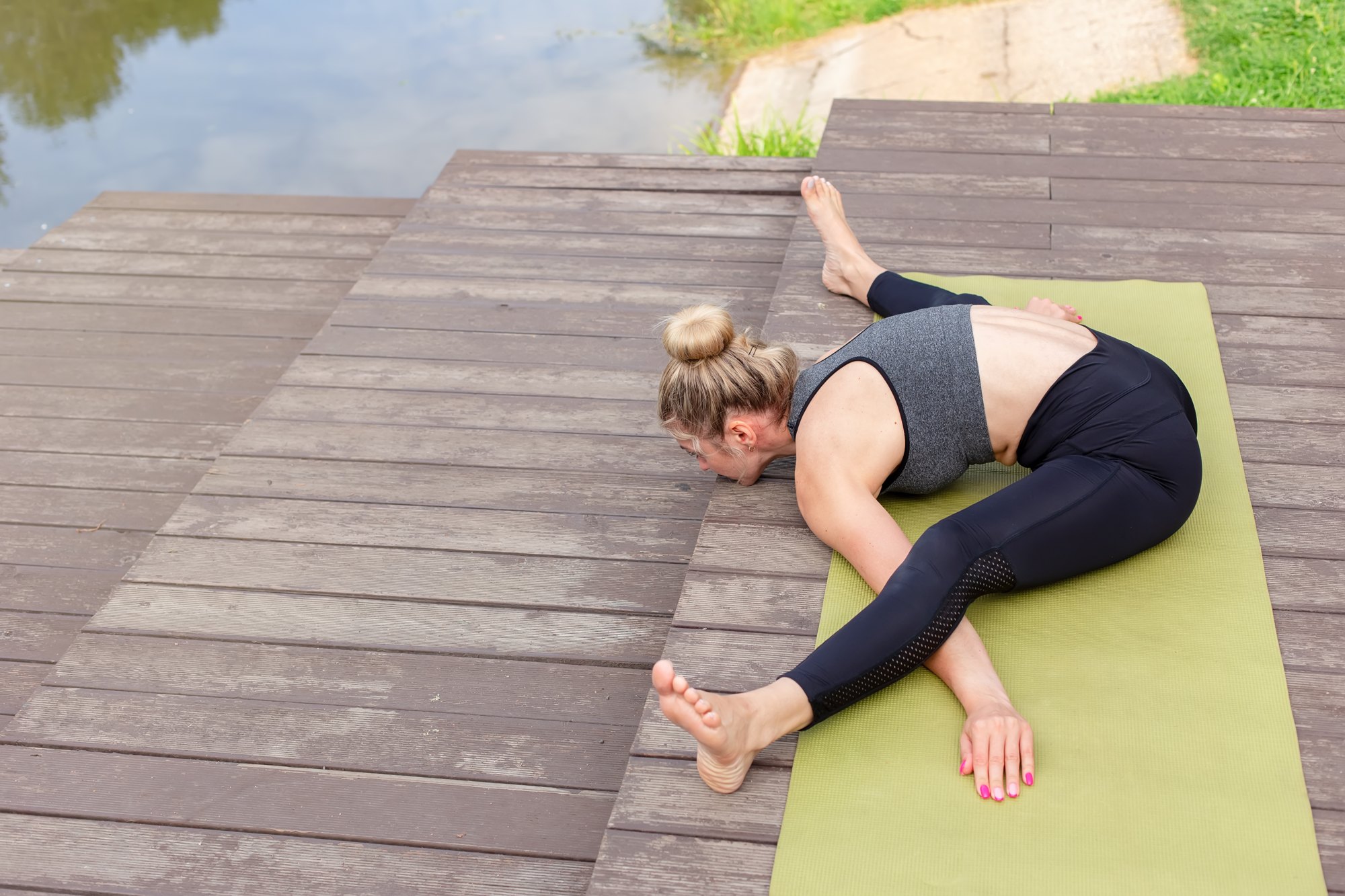
Three-Limbed Forward Bend (Triang Mukha Eka Pada Paschimottanasana)

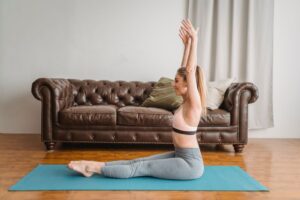
Three-limbed forward bend folds over one straight leg while the other is folded back beside the hip, knees together. A blanket under the straight-leg hip stops the sideways lean.

Not yet reviewed by a qualified teacher Names and shape checked against 2 sources

Three-limbed forward bend on a waterside deck
Sanskrit name
Triaṅga Mukhaikapāda Paścimottānāsana त्र्यङ्ग मुखैक पाद पश्चिमोत्तानासन (source) (varies by tradition, see below)
Also called
Three Parts of the Body Facing One Leg, Three-Limbed Face to One Foot Forward Bend
Other spellings
Triang Mukha Eka Pada Paschimottanasana, Triang Mukhaikapada Paschimottanasana, Try-anga Mukhaika Pada Paschimottanasana
Pose family
Forward bend, Seated
Starting position
Seated
Movement
Forward fold
Taught in
Hatha Yoga: The Historical Term and the Modern Class
Difficulty
Intermediate
Prerequisite skills
Sitting in hero pose (or half hero) without knee pain; a steady seated forward bend.
Body areas
Feet and ankles, Hamstrings, Hips, Spine
Props
Blanket, Mat, Strap
Practised
Solo

Names in different traditions

TraditionName usedNote
Ashtanga vinyasa (AshtangaYoga.info)Try-aṅga Mukhaika Pāda PaścimottānāsanaPrimary series, after Ardha Baddha Padma Paschimottanasana; five breaths each side.
Yoga JournalTriang Mukhaikapada PaschimottanasanaArchive article (1983): three limbs = foot, knee and buttock of the folded leg.

Step by step

Coming into the pose

  1. Sit in staff pose. Bend the right knee and fold the leg back so the top of the right foot rests on the floor beside the right hip, toes pointing straight back. Keep the knees together.
  2. Check the base: if you lean toward the left, sit on a folded blanket under the left buttock or under both.
  3. Inhale and lengthen the spine; hold the left foot or wrist beyond it, or a strap.

In the pose

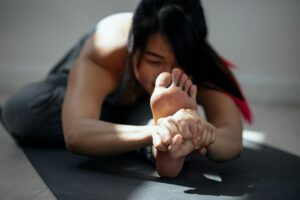
  1. Exhale and fold forward from the hips over the left leg, elbows bending outward, keeping the weight even on both sitting bones.
  2. Stay for five breaths (Ashtanga) or longer, breathing evenly.

Coming out

  1. Inhale and come up with a long spine, lean slightly to the left and straighten the right leg forward. Repeat on the other side.

Breathing

Inhale to lengthen, exhale to fold. Keep the breath even; Ashtanga counts five breaths each side.

Alignment cues

  • Knees together; the folded foot points straight back beside the hip.
  • Weight even on both sitting bones; use a blanket to stop the lean toward the straight leg.
  • Fold from the hips with a long spine, chest toward the straight-leg foot.
  • Straight leg active, kneecap pointing up.

Common alignment errors

  • Leaning toward the straight leg so the spine twists in the fold.
  • Letting the folded foot splay out to the side, which strains the knee.
  • Rounding the back to reach the foot.

Modifications and easier variations

  • Stay upright in the leg position without folding, or practise head-to-knee pose instead. none

Advanced variations

  • In Ashtanga, the chin toward the shin with the gaze toward the straight-leg foot.

Props and chair adaptations

  • Folded blanket under the straight-leg buttock, or under both buttocks to ease the folded knee and foot. blanket
  • Strap around the straight-leg foot. strap

Precautions

  • Knee or ankle injury: raise the hips on blankets until the folded knee is pain-free, or use head-to-knee pose.
  • Lower back and hamstrings: keep the spine long and the fold small.

Learn it with a teacher: With props this can be learned alone. Ask a teacher if the folded knee hurts even with blankets.

General information, not medical advice. Poses do not cure illness. If you are pregnant, injured or have a health condition, check with your doctor and tell your teacher before you practise.

In short: in three-limbed forward bend one leg is straight and the other is folded back as in hero pose, with the foot beside the hip and the knees together, and you fold over the straight leg. The main challenge is not falling sideways toward the straight leg. A folded blanket under the straight-leg buttock usually solves it.

The pose is part of the Ashtanga primary series, where it follows the half-bound lotus fold, and Yoga Journal has described it since the early 1980s. It is a good one to learn alongside head-to-knee pose: there the bent thigh turns outward, here it turns inward.

What the long name means

The name is spelled in several ways: Triaṅga Mukhaikapāda Paścimottānāsana, Triang Mukha Eka Pada Paschimottanasana, or Triang Mukhaikapada Paschimottanasana. All describe the same pose. Tri means three and aṅga limb or part; mukha is face, eka one and pāda foot or leg (mukhaika is mukha + eka joined); paścimottāna is the stretch of the back of the body, as in seated forward bend. Yoga Journal reads the “three limbs” as the foot, knee and buttock of the folded leg, and the whole name as a forward bend with the face toward one extended leg. AshtangaYoga.info translates it as the three-limbed pose with the face to the foot.

Making the pose work

The folded leg turns the thigh inward at the hip. If the inner rotation is limited, or the ankle is stiff, you tip toward the straight leg and the spine twists as you fold. Fix the base before folding: sit on a folded blanket under both buttocks to take pressure off the folded foot, or under the straight-leg buttock only to stop the lean. Point the folded foot straight back beside the hip, top of the foot on the floor, and keep the knees together. Then lengthen the spine and fold over the straight leg, holding the foot or a strap. If folding makes you lean, simply sit upright in the leg position for now; the 1983 Yoga Journal article recommends that for people who are not yet used to sitting on the floor.

In Ashtanga practice you take five breaths on each side, right side first. AshtangaYoga.info notes that this pose balances the strong outward hip rotation of the half-bound lotus fold just before it.

Precautions in plain words

The folded knee bends deeply and the ankle is stretched. With a knee or ankle injury, keep the knee pain-free with blankets under the buttocks, or practise head-to-knee pose instead. Never sit down hard onto the folded leg. The usual forward-fold cautions apply to the lower back and hamstrings. This page is general information, not individual advice.

Preparation and what comes next

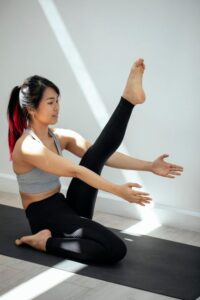
Hero pose prepares the folded leg and seated forward bend prepares the fold. In the Ashtanga primary series the order runs from half-bound lotus fold to this pose and then to head-to-knee pose. Heron pose uses the same folded leg with the straight leg lifted.

A simple way to practise it. Begin by sitting upright in the leg position for a few breaths with a blanket under the straight-leg buttock, hands on the floor beside you, and notice whether both sitting bones carry weight. Then fold only as far as the weight stays even. Over weeks, reduce the height of the blanket rather than forcing the fold. Practising hero pose regularly, with as much height under the seat as you need, makes the folded leg more comfortable over time.

You will meet the pose mainly in Ashtanga classes and in hatha classes that use the classic seated folds.
Preparatory poses

Follow-up poses and transitions

Counterposes

Related poses

More forward bend poses

Frequently asked questions

Why are there so many spellings of the name?

Sanskrit can be written with or without word joins: Triang Mukha Eka Pada and Triang Mukhaikapada are the same words (mukha + eka joined). All refer to this pose.

Why do I fall to one side?

The folded leg lifts that hip. Put a folded blanket under the straight-leg buttock so both sitting bones carry weight evenly.

Is it bad for the knees?

It bends the folded knee deeply. With blankets under the hips it is fine for many people; with a knee injury, use head-to-knee pose instead.

Sources

  1. Try-aṅga Mukhaika Pāda Paścimottānāsana: Three-limbed pose with the face to foot, AshtangaYoga.info (Dr. Ronald Steiner) (accessed October 6, 2026)
  2. Triang Mukhaikapada Paschimottanasana (archive, 1983), Yoga Journal (accessed October 6, 2026)

Facts checked on October 6, 2026