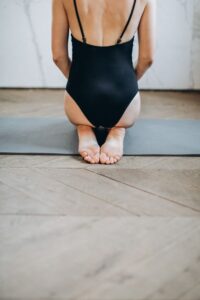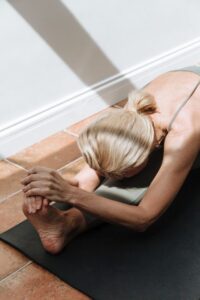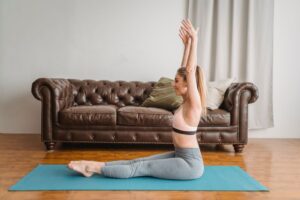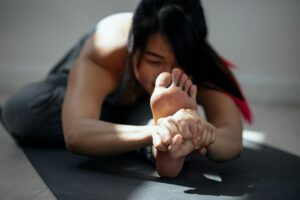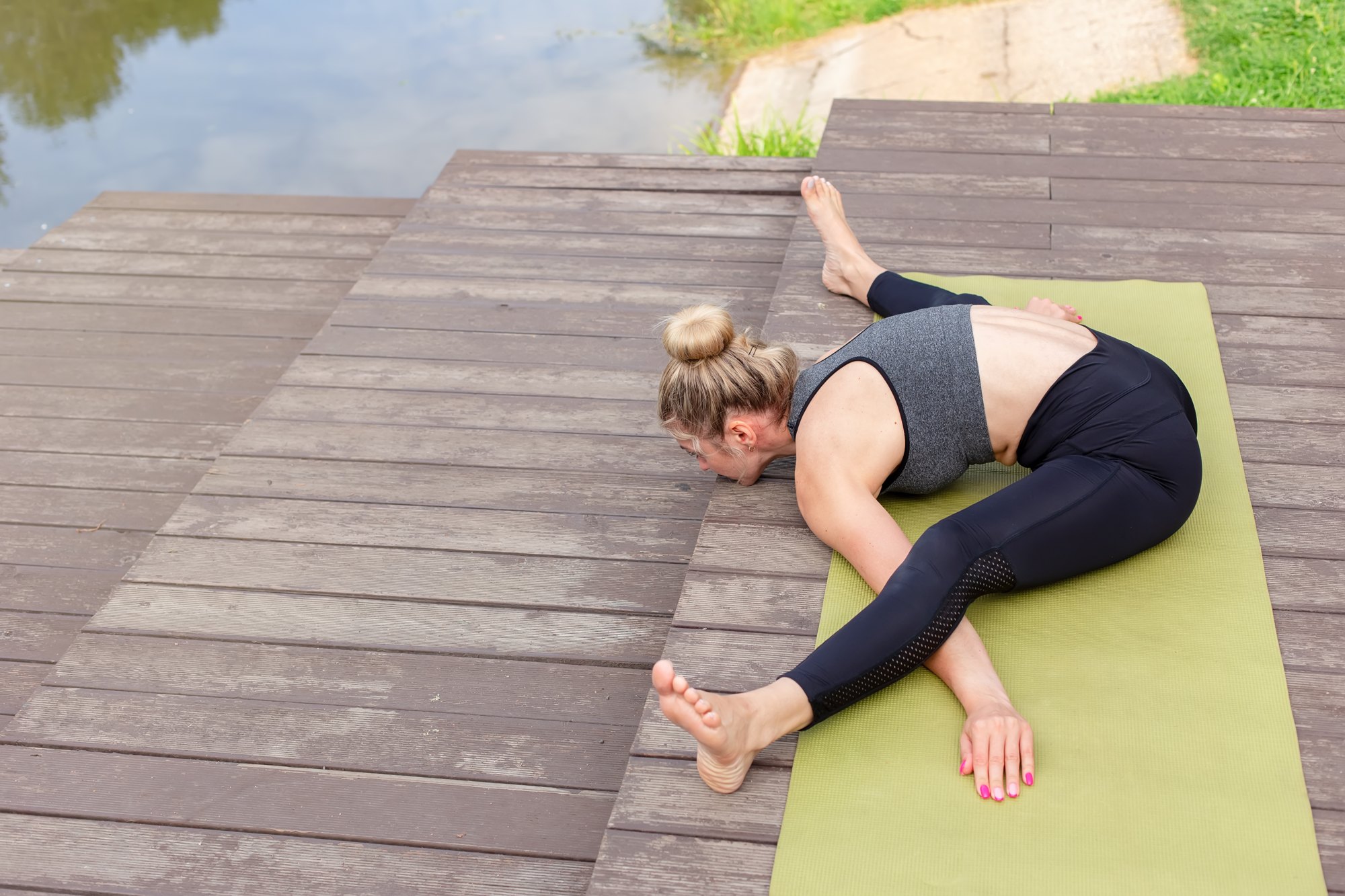
In short: in three-limbed forward bend one leg is straight and the other is folded back as in hero pose, with the foot beside the hip and the knees together, and you fold over the straight leg. The main challenge is not falling sideways toward the straight leg. A folded blanket under the straight-leg buttock usually solves it.
The pose is part of the Ashtanga primary series, where it follows the half-bound lotus fold, and Yoga Journal has described it since the early 1980s. It is a good one to learn alongside head-to-knee pose: there the bent thigh turns outward, here it turns inward.
What the long name means
The name is spelled in several ways: Triaṅga Mukhaikapāda Paścimottānāsana, Triang Mukha Eka Pada Paschimottanasana, or Triang Mukhaikapada Paschimottanasana. All describe the same pose. Tri means three and aṅga limb or part; mukha is face, eka one and pāda foot or leg (mukhaika is mukha + eka joined); paścimottāna is the stretch of the back of the body, as in seated forward bend. Yoga Journal reads the “three limbs” as the foot, knee and buttock of the folded leg, and the whole name as a forward bend with the face toward one extended leg. AshtangaYoga.info translates it as the three-limbed pose with the face to the foot.
Making the pose work
The folded leg turns the thigh inward at the hip. If the inner rotation is limited, or the ankle is stiff, you tip toward the straight leg and the spine twists as you fold. Fix the base before folding: sit on a folded blanket under both buttocks to take pressure off the folded foot, or under the straight-leg buttock only to stop the lean. Point the folded foot straight back beside the hip, top of the foot on the floor, and keep the knees together. Then lengthen the spine and fold over the straight leg, holding the foot or a strap. If folding makes you lean, simply sit upright in the leg position for now; the 1983 Yoga Journal article recommends that for people who are not yet used to sitting on the floor.
In Ashtanga practice you take five breaths on each side, right side first. AshtangaYoga.info notes that this pose balances the strong outward hip rotation of the half-bound lotus fold just before it.
Precautions in plain words
The folded knee bends deeply and the ankle is stretched. With a knee or ankle injury, keep the knee pain-free with blankets under the buttocks, or practise head-to-knee pose instead. Never sit down hard onto the folded leg. The usual forward-fold cautions apply to the lower back and hamstrings. This page is general information, not individual advice.
Preparation and what comes next
Hero pose prepares the folded leg and seated forward bend prepares the fold. In the Ashtanga primary series the order runs from half-bound lotus fold to this pose and then to head-to-knee pose. Heron pose uses the same folded leg with the straight leg lifted.
A simple way to practise it. Begin by sitting upright in the leg position for a few breaths with a blanket under the straight-leg buttock, hands on the floor beside you, and notice whether both sitting bones carry weight. Then fold only as far as the weight stays even. Over weeks, reduce the height of the blanket rather than forcing the fold. Practising hero pose regularly, with as much height under the seat as you need, makes the folded leg more comfortable over time.
You will meet the pose mainly in Ashtanga classes and in hatha classes that use the classic seated folds.