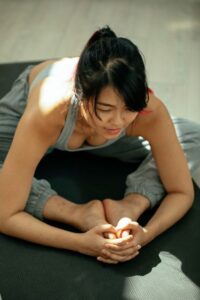
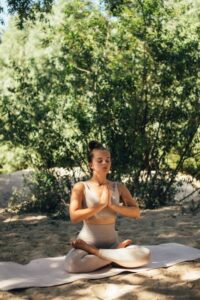
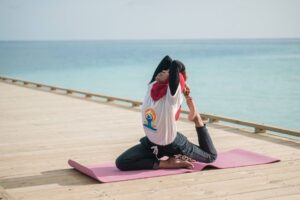
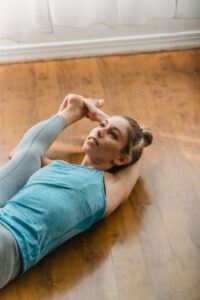
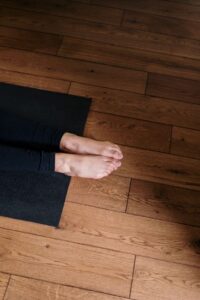
In short: fire log pose is a seated hip opener in which the shins are stacked one on top of the other, parallel to the front of the mat, like logs on a fire: the top ankle rests just beyond the bottom knee and the top knee over the bottom ankle. It gives a strong stretch to the outer hips. Sit on a folded blanket, fill any gap under the top knee, and keep the feet flexed to protect the knees.
Fire log is sometimes described as a double pigeon, because both legs take the front-leg position of pigeon pose at once. Done well it is a quiet, grounded stretch; done by forcing the top knee down, it puts the knees under strain. The difference is almost entirely in the setup and the props, which is what this page focuses on.
The name
Agni means fire and stambha a post, pillar or log; Yoga International connects the name with the stacked logs of a Vedic fire altar. Yoga Journal and Yoga International both use Agnistambhasana for this posture, and also list the English names fire log, double pigeon and ankle-to-knee pose. It is a modern posture: it does not appear in Light on Yoga or in the Ashtanga series. In yin yoga a similar shape held for several minutes is called square pose; it has its own page because the intention and instructions differ.
How to make it work
Start by sitting on the edge of a folded blanket so the pelvis tips slightly forward. If your knees sit higher than your hips, the lower back rounds and the knees take the load, so add height until the knees are level with or below the hips. Slide the bottom foot under the other leg, then lift the top shin with your hands and place it as one unit, so the top ankle rests outside the bottom knee. Yoga International suggests starting conservatively with the bottom foot close to the sitting bone and only moving it forward under the top knee when the hips allow. Any gap between the top knee and the bottom ankle, or between the knees and the floor, gets a block or folded blanket.
Flex both feet and press out through the heels; this keeps the ankles from sickling and makes the knees more stable. Sit tall for a few breaths, and if you want more, hinge forward from the hip creases with the front of the body long rather than rounding over the belly. Yoga Journal suggests holding a minute or more. If the hips are tight, simply crossing the shins in easy pose is the right version for now.
Precautions in plain words
The stretch belongs in the outer hip and buttock. Any sensation in the knee itself, especially the inside of the knee, means the hip cannot rotate that far yet: support the top knee, bring the bottom foot back or return to easy pose. With a knee injury or recent knee surgery, avoid the stacked position; with a hip replacement, follow your surgeon’s guidance on crossing the legs. If you have back problems, keep the spine upright rather than folding. This page is general information, not individual advice.
Preparation and what comes next
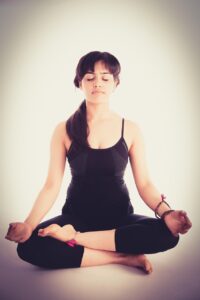
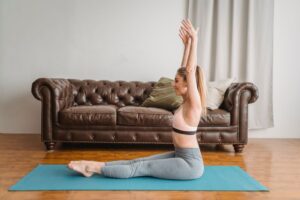
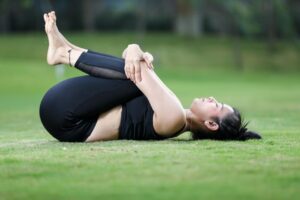
Yoga International advises warming up with gentler hip openers first: reclining figure four, bound angle and easy pose. Fire log in turn prepares the hips for half lotus and the leg position of cow face pose. Afterward, stretch the legs out in staff pose or lie back with the knees hugged in.
Where it is taught
Fire log is common in hatha and vinyasa classes, usually in the seated part of the session after standing poses have warmed the hips. A chair version, one ankle resting on the opposite knee, works well in chair yoga. Find more hip openers in the pose library.