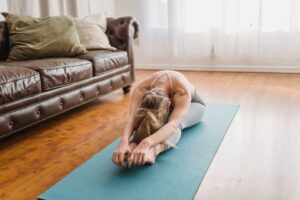
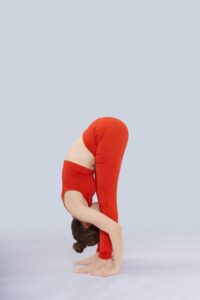
In short: half split is a kneeling stretch: the back knee rests on the mat under the hip, the front leg is straight with the heel on the floor, and you fold forward over it with a long spine. It stretches the hamstrings and calf of the front leg. Blocks under the hands make it accessible to most people; keep the front knee soft if the back of the knee pulls.
Half split turns up in many flowing classes between a lunge and the next standing pose, and it is the most common preparation for the full front split. It is also simply a good hamstring stretch in its own right, with one advantage over standing forward bends: the back knee on the floor makes it stable, so you can concentrate on the front leg.
About the name
Half split, half monkey and runner’s stretch are English descriptive names. Yoga Journal and Yoga International both use the Sanskrit Ardha Hanumanasana (ardha means half), placing the pose as the half version of monkey pose, Hanumanasana. We have not found that Sanskrit name in the older lineage references we checked (Light on Yoga, the Bihar School manual, the Ashtanga series), so we treat it as modern usage and list the pose under its English name. Kripalu teaches the same shape as Half Splits in its flows. The shape itself is widely taught, often without a name, as the first stage of the split.
How to make it work
Two things decide how the pose feels. First, the hips: stack the back hip over the back knee, rather than leaning forward over the front leg, and draw the front-leg hip back so the pelvis faces the front of the mat. Second, the spine: fold from the hip joints with the chest moving forward, not by rounding the back to bring the head down. Yoga Journal’s cue is to draw the chest forward instead of reaching the forehead to the shin. If your hands do not reach the floor without rounding, put them on blocks at whatever height keeps the back long. Flexing the front foot, toes toward you, adds a stretch to the calf; pointing it softens the pose.
Pad the back knee with a folded blanket if the floor is hard. Hold for five to ten slow breaths, and come out by bending the front knee before you move, which takes the pull off the hamstring.
Moving in and out
Half split also works well as a gentle movement rather than a hold. A Yoga Journal splits sequence suggests alternately flexing and pointing the front foot and bending and straightening the front knee, then holding whatever shape you find for 30 seconds to a minute, with the focus on the hamstrings rather than on folding all the way down. Moving between low lunge (hips forward) and half split (hips back) a few times with the breath is a common warm-up for the legs.
Precautions in plain words
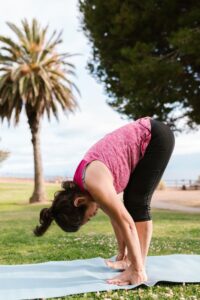
Stretch sensation belongs in the belly of the hamstring, the middle of the back of the thigh. Pulling right behind the knee or at the sitting bone is a signal to bend the front knee and come up higher; those are common places for hamstring strain. With a recent hamstring injury, avoid the pose until a health professional clears you. If kneeling hurts, use padding or do the standing version described below. If you have a lower-back problem, keep the spine long and the fold small. This page is general information, not individual advice.
Preparation and what comes next
Downward-facing dog and low lunge warm up the legs; a common flow moves back and forth between low lunge and half split a few times. From half split you can explore pyramid pose, the standing version with both feet on the floor, and, over time, monkey pose. Lizard pose works the same front leg in a different direction, toward the outer hip.
Where it is taught
Half split is common in vinyasa, power and hatha classes and in flexibility workshops. It is part of our yoga for flexibility plan. Browse related stretches in the pose library.