Tripod Headstand (Salamba Sirsasana II): set-up, stages and precautions

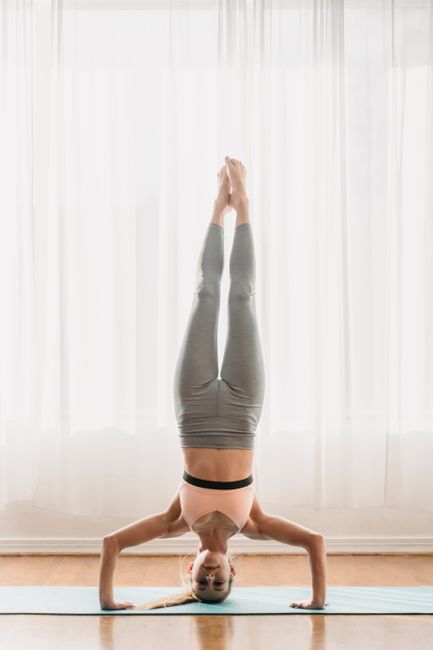
Tripod headstand (Salamba Sirsasana II) balances the body upside down on the flat palms and the crown of the head, forming a triangle. An advanced inversion and the entry to many arm balances.

Not yet reviewed by a qualified teacher Names and shape checked against 5 sources

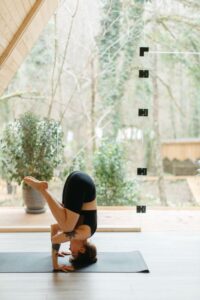
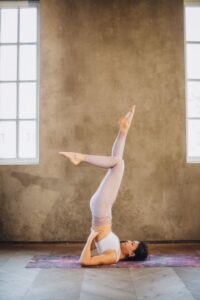
Full body of calm barefooted young female yogi performing Salamba Sirsasana B pose during Ashtanga Vinyasa yoga training in studio in sunny morning
Sanskrit name
Sālamba Śīrṣāsana II सालम्ब शीर्षासन (source)
Also called
Headstand II, Tripod Headstand Pose
Other spellings
Sirsasana II, Salamba Sirsasana II
Pose family
Inversion
Starting position
Hands-supported
Movement
Inversion
Taught in
Vinyasa Yoga: Flow, Breath and What to Expect
Difficulty
Advanced
Prerequisite skills
A solid chaturanga and crow, dolphin pose, experience in supported headstand, and healthy wrists and neck.
Body areas
Arms and wrists, Core, Neck, Shoulders
Props
Blanket, Mat, Wall
Practised
Solo

Names in different traditions

TraditionName usedNote
Iyengar (Light on Yoga)Sālamba Śīrṣāsana IIPlate 192 (Iyengar Yoga UK I8 Teaching Syllabi).
Ashtanga vinyasa (Pattabhi Jois lineage)(entry position, not a named pose)Third-series arm balances start with the crown in front of the hands, the three points forming an equilateral triangle (AshtangaYoga.info).

Step by step

Coming into the pose

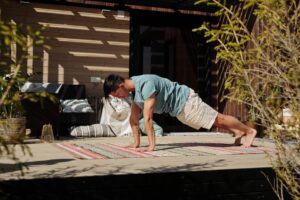
  1. Kneel and place the palms flat on the floor, shoulder-width apart.
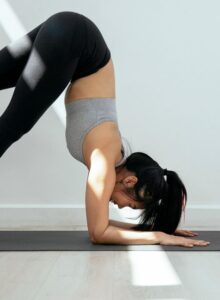
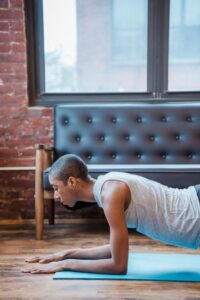
  2. Bend the elbows and place the crown of the head on the floor in front of the hands, so hands and head form an even triangle. Elbows over the wrists, upper arms about parallel to the floor.
  3. Tuck the toes, lift the hips and walk the feet in, shoulders lifting away from the floor.
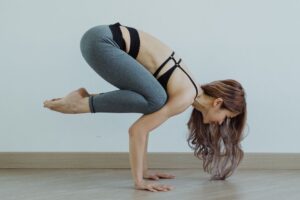
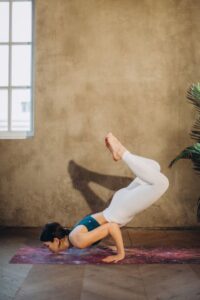
  4. Optional stage: place one knee and then the other on the backs of the upper arms and press arms and knees together.

In the pose

  1. Lift the hips over the shoulders, draw the knees into the chest, then slowly extend the legs up, inner thighs together. Keep lifting the shoulders.

Coming out

  1. Bend the knees, lower them toward the arms or the chest and bring the feet down with control. Rest in child’s pose before lifting the head.

Breathing

Steady breathing through the nose. If the breath becomes strained or the head feels pressured, come down.

Alignment cues

  • Hands and head form an even triangle; do not place the head in line with the hands.
  • Elbows over the wrists and hugging in.
  • Shoulders lift away from the floor.
  • Legs rise slowly with the hips stacked first.

Common alignment errors

  • Elbows splaying out so the shoulders collapse onto the head.
  • Hands too close to the head, so the triangle is narrow and unstable.
  • Kicking up instead of lifting the hips first.

Modifications and easier variations

  • Stay in the dolphin-like stage with the head down and the feet walking in. none
  • Stay in the knees-on-arms perch. none

Advanced variations

Props and chair adaptations

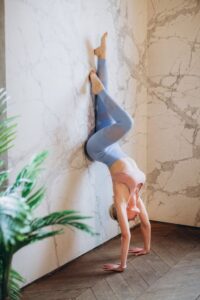
  • Set up near a wall so the feet can touch it lightly while learning. wall
  • A folded mat or thin, firm blanket under the head on a hard floor. blanket

Precautions

  • High or low blood pressure, glaucoma, detached retina or recent eye surgery: do not practise.
  • Neck injury or pain: do not practise.
  • Wrist, elbow or shoulder problems: avoid.
  • Pregnancy: do not start learning inversions.

Learn it with a teacher: Learn tripod headstand with a teacher after the supported headstand is steady; ask them to check the triangle and the shoulder lift.

General information, not medical advice. Poses do not cure illness. If you are pregnant, injured or have a health condition, check with your doctor and tell your teacher before you practise.

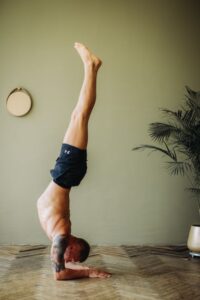
In short: in tripod headstand the palms are flat on the floor and the crown of the head rests in front of them, so the two hands and the head form a triangle. The elbows bend to about 90 degrees over the wrists, as in chaturanga, and the body rises straight up above the head. It is an advanced inversion with a different base, and different risks, from the forearm headstand.
Yoga, balance, zen, beach, ocean, meditation, person, sand, sea, shore, water, woman, nature, workout, blue beach, blue fitness, blue water, blue yoga, blue meditation, blue sea, blue ocean, blue bala

Tripod headstand has its own page because the set-up, the preparation and the load are different: the hands and wrists carry weight, and the head is easier to overload if the shoulders sink. It is also the starting point for many advanced arm balances.

The name

The Iyengar Yoga (UK) syllabus lists Sālamba Śīrṣāsana II at plate 192 of B.K.S. Iyengar’s Light on Yoga, after the forearm version (Sālamba Śīrṣāsana I). Yoga Journal uses the same name and calls it tripod headstand: the hands and head form the tripod. In the Ashtanga third series it is not held as a pose of its own but is the entry for several arm balances; AshtangaYoga.info describes placing the crown in front of the hands so that the three points of contact form an equilateral triangle, with head, shoulders, pelvis and feet stacked vertically above it.

Making the pose work

Set up the triangle carefully. The hands are shoulder-width apart and far enough from the head that the forearms are vertical and the upper arms roughly parallel to the floor, the same “chaturanga arms” Kathryn Budig describes in Yoga Journal. The crown of the head goes down; Budig’s trick for finding the crown is to balance a block on your head and notice where it sits evenly. Elbows hug in, and the shoulders keep lifting away from the floor so the head and neck carry as little as possible.

Build it in stages. Practise plank and lowering to 90-degree elbows, then the dolphin-like stage with the hands down and the head on the floor, walking the feet in. Next, rest one knee and then the other on the backs of the upper arms in a small crow-like perch, pressing the arms into the knees. From there, lift the hips over the shoulders, draw the knees off the arms into the chest and slowly extend the legs up, inner thighs hugging together. Come down the same way, to the perch or to child’s pose.

Precautions in plain words

The precautions for headstand apply: do not practise with high or low blood pressure, glaucoma, a detached retina or recent eye surgery, or neck injury or pain, and do not start learning inversions in pregnancy. Tripod headstand also loads the wrists and elbows, so skip it with wrist, elbow or shoulder problems. Never jump or kick up, and come down at once if the head and neck feel compressed. Learn it with a teacher. This page is general information, not individual advice.

Preparation and what comes next

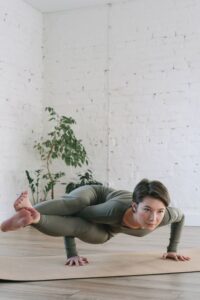
Prepare with plank, chaturanga, dolphin, crow and the forearm supported headstand. From tripod headstand, Ashtanga’s third series enters eight-angle pose, Sage Koundinya’s poses, Galavasana, one-legged crane and upward rooster, and Yoga Journal notes a whole family of transitions that grow from it, including lowering into chaturanga.

A simple way to practise it. Build tripod headstand gradually: a week or more of the dolphin-like stage and the knee perch before lifting the legs, then short holds with the legs up, close to a wall. Practise coming down slowly to the perch, which builds the control the pose needs, and keep total time upside down modest at first. Many people find it useful to practise tripod headstand after the forearm headstand is comfortable for a minute or more.

You will meet tripod headstand in Iyengar, Ashtanga and advanced vinyasa and power yoga classes.
Preparatory poses

Follow-up poses and transitions

Counterposes

Related poses

More inversion poses

Frequently asked questions

Is tripod headstand easier than supported headstand?

Some find the wider base more stable, but the hands and wrists take weight and the neck is easier to overload. Most teachers teach the forearm headstand first.

Where do my hands go in tripod headstand?

Shoulder-width apart and behind the head, so hands and head form an even triangle, with the elbows over the wrists.

Why is tripod headstand used for arm balances?

From the tripod the legs can lower onto the arms with control, which is how the Ashtanga third series enters several arm balances.

Sources

  1. Kathryn Budig Challenge Pose: Salamba Sirsasana II (Tripod Headstand), Yoga Journal (accessed October 6, 2026)
  2. Eka Pāda Bakāsana A (tripod entry: crown and hands in an equilateral triangle), AshtangaYoga.info (Dr. Ronald Steiner) (accessed October 6, 2026)
  3. Aṣṭāvakrāsana A (tripod entry), AshtangaYoga.info (Dr. Ronald Steiner) (accessed October 6, 2026)
  4. I8 Teaching Syllabi (asanas with Light on Yoga plate numbers), Iyengar Yoga (UK) (accessed October 6, 2026)
  5. Headstand (contraindications), Sivananda Ashram Yoga Ranch (accessed October 6, 2026)

Facts checked on October 6, 2026