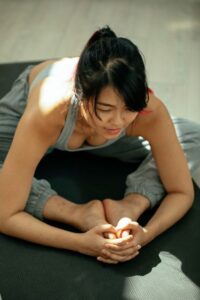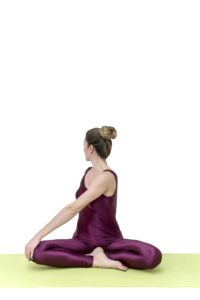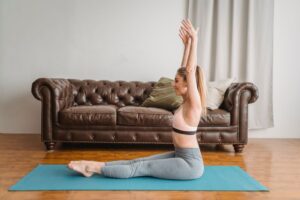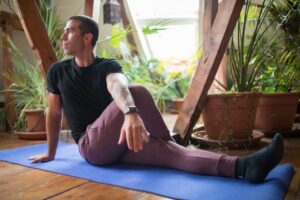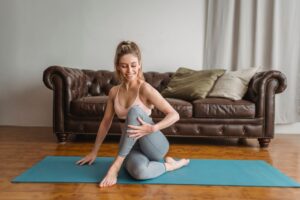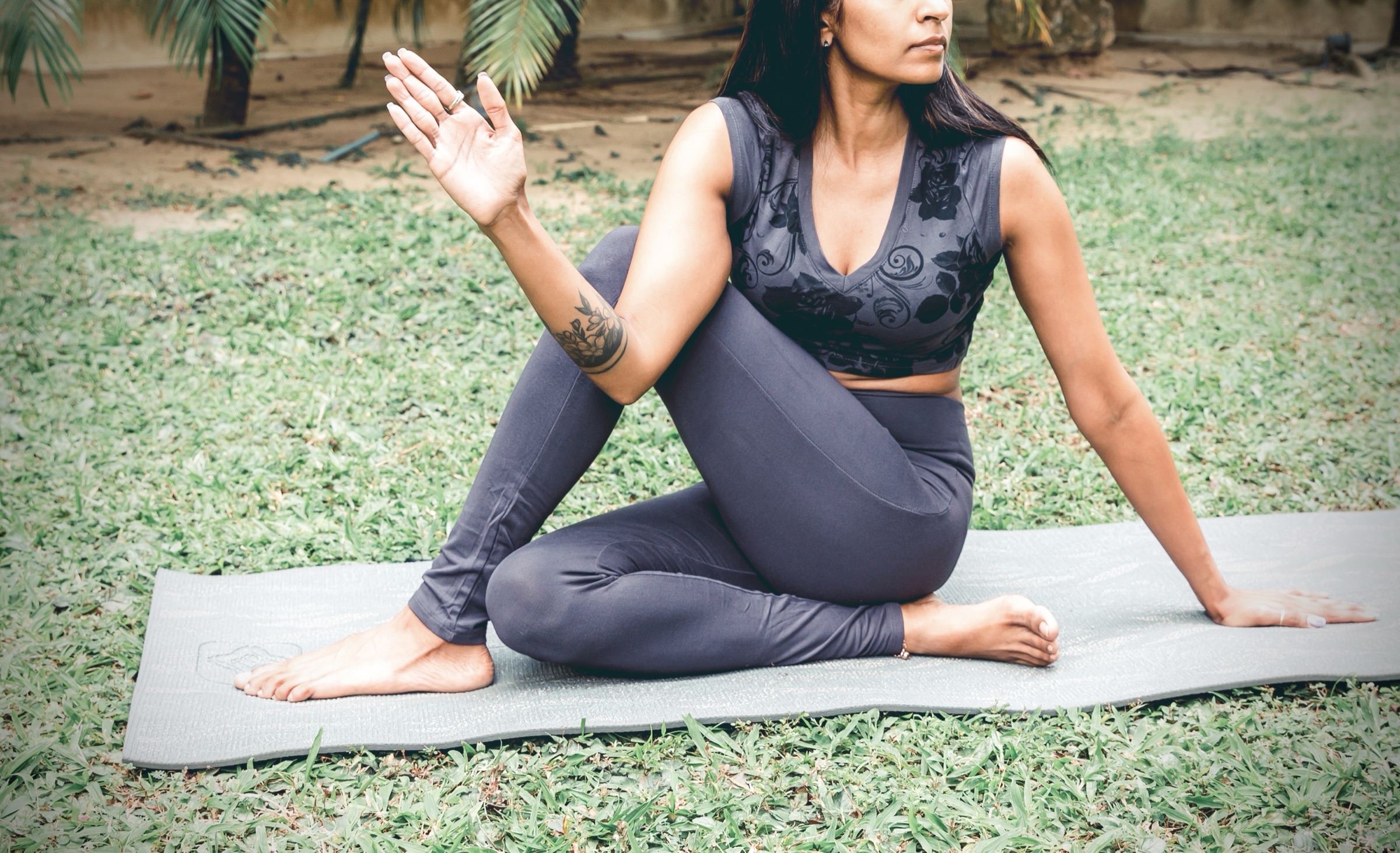
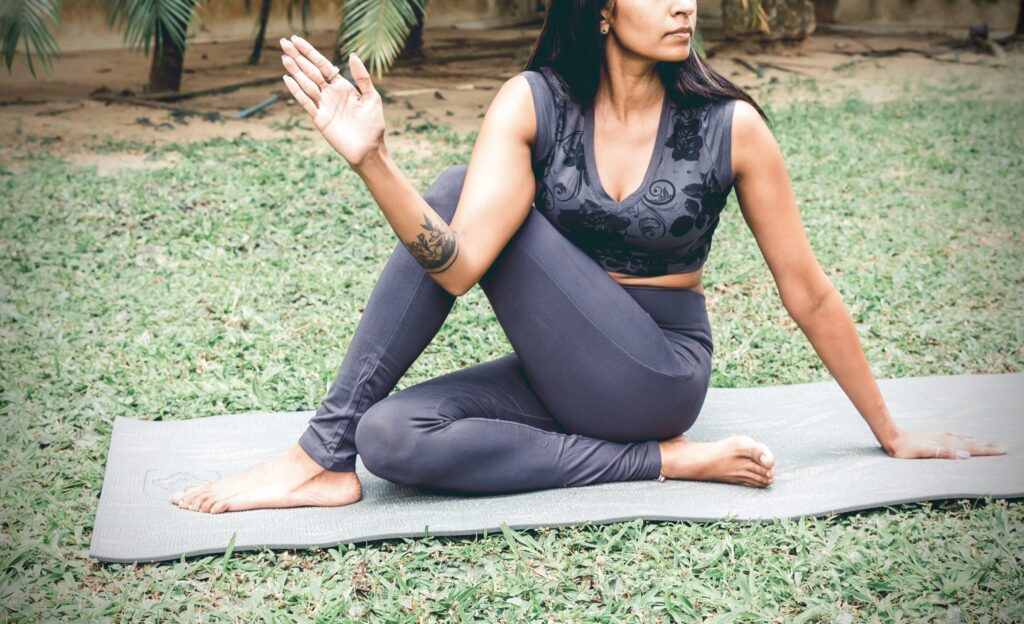
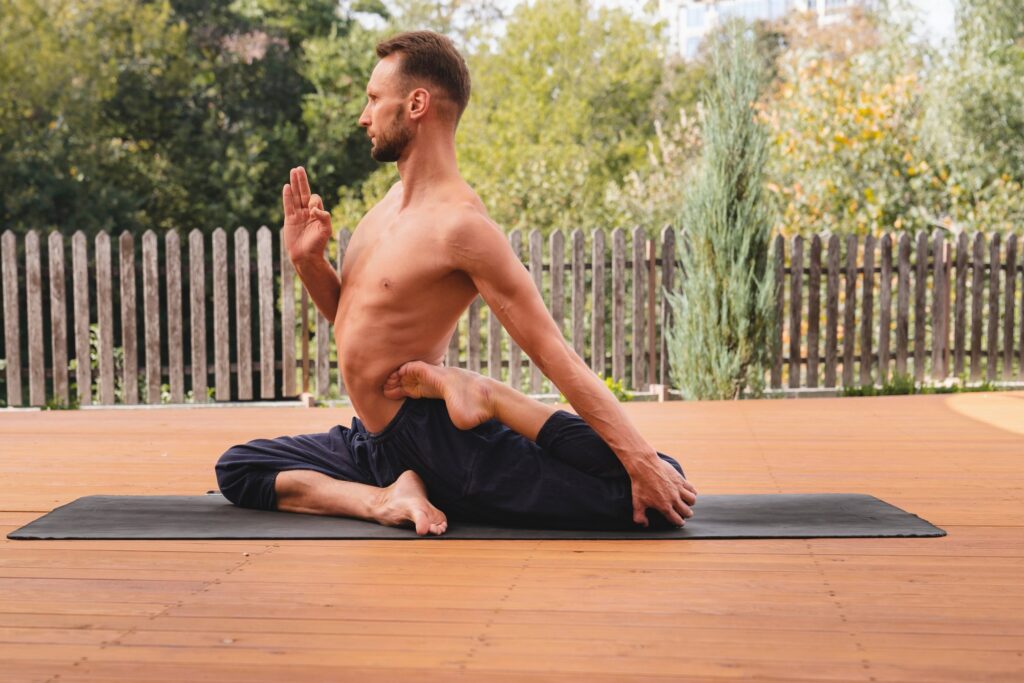
In short: Bharadvaja’s twist is a gentle seated twist with both knees bent to one side. You sit with the feet beside one hip, turn the chest the other way, and use one hand on the knee and the other on the floor behind you to lengthen and turn. Because the legs are relaxed on the floor, it is one of the most accessible twists, and it works well on a chair too. A second version, Bharadvajasana II, adds a half-lotus leg.
Both versions are described, with these numbers, in B.K.S. Iyengar’s Light on Yoga (asanas 112 and 113). Version I is common in Iyengar-style and general classes, and the half-lotus form is part of the Ashtanga intermediate series. Below we explain the name, both versions (each in its own section), the cues and the precautions.
What the name means
Bharadvājāsana is dedicated to Bharadvāja, one of the seven great sages (rishis) of Hindu tradition, credited with composing hymns collected in the Vedas. AshtangaYoga.info adds that the word also names a bird, the skylark. As a posture it is modern: the twist known by this name is described in the 20th-century teaching of Krishnamacharya’s pupils, B.K.S. Iyengar and Pattabhi Jois. In Light on Yoga Iyengar dedicates the pose to Bharadvaja as the father of Drona, the military teacher in the Mahabharata. The two traditions use the plain name for slightly different shapes, which is why this page has two sections.
Making the twist work
Because both feet sit beside one hip, the pelvis tends to tilt, with one buttock lifting. Yoga Journal’s fix is to sit on a folded blanket under the buttock on the side the feet point away from, so both sitting bones can drop evenly. Judith Hanson Lasater, writing in Yoga Journal in 1982, adds that the pelvis should be allowed to turn with the spine, so the twist does not strain the sacroiliac joint. Then lengthen first: inhale and lift through the crown of the head. Exhale and turn the chest, keeping the opposite sitting bone heavy. Yoga Journal warns against twisting “head first”, tightening the back of the neck; the head should be the last thing to turn, and the back of the neck should stay soft. Hold for several breaths and repeat on the other side.
Bharadvaja’s Twist I (Bharadvajasana I)
Start in staff pose, lean onto the right hip and swing both bent legs to the left, so both feet lie outside the left hip with the left ankle resting in the arch of the right foot. Place the left hand under or on the outer right knee and the right hand on the floor behind the right hip, then turn the torso to the right, looking over the right shoulder. To deepen it, Yoga Journal suggests swinging the right arm behind the back to hold the left upper arm, or a strap around it; in Light on Yoga this arm bind is part of the full pose, held for about half a minute with deep breathing. This is the version most people learn first, and the chair version (sitting sideways on a chair and turning toward the backrest) is a common adaptation for anyone who cannot sit on the floor. Level: beginner.
Bharadvaja’s Twist II (Bharadvajasana II)
In the second version one leg is folded back in half hero (the foot beside the hip, shin on the floor) and the other leg is in half lotus, the foot in the opposite hip crease. You turn toward the half-lotus side, reach the hand on that side behind the back to hold the half-lotus foot if it is within reach, and place the other hand on or under the half-lotus knee. This is the shape Light on Yoga numbers Bharadvajasana II (held half a minute to a minute) and essentially the shape practised as Bharadvajasana in the Ashtanga intermediate series, held for five breaths per side. The half-lotus leg makes it an intermediate pose: only practise it with a pain-free half lotus, use blankets under the hips and knee as needed, and stop at any knee pain.
Precautions in plain words
Twist gently with disc problems, sacroiliac pain or a recent back injury, and ask your doctor or physiotherapist first. Keep the neck relaxed. For knee problems, use the chair version or sit on blankets so the knees are not strained, and avoid version II. In pregnancy, prefer gentle open twists and keep the belly free. This page is general information, not individual advice.
Preparation and what comes next
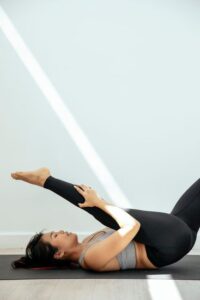
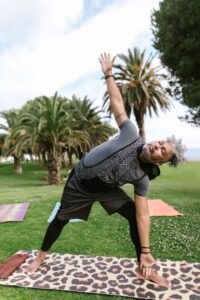
Yoga Journal lists bound angle pose as preparation, along with simpler twists like revolved easy seat. From here you can move on to Marichi’s twist and half lord of the fishes. Counterposes include bound angle, reclining hand-to-big-toe pose and triangle pose.
You will meet Bharadvaja’s twist in Iyengar, hatha, Ashtanga (version II) and chair yoga classes.