Eagle Pose (Garudasana): steps, knee care and variations

Eagle pose (Garudasana) is a standing balance with the legs and arms wrapped. Steps, how to protect the knees, block and chair versions, and where the pose is taught.

Not yet reviewed by a qualified teacher Names and shape checked against 4 sources

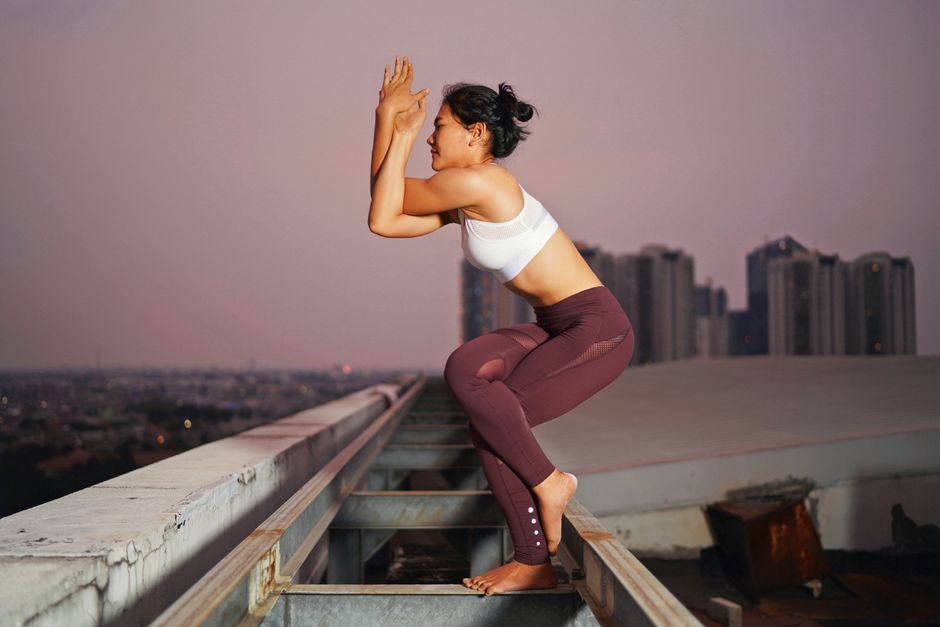
A woman performs yoga on a rooftop during sunset with a cityscape backdrop, showcasing balance and concentration.
Sanskrit name
Garuḍāsana गरुडासन (source)
Also called
Eagle
Other spellings
Garudasana
Pose family
Balancing, Standing
Starting position
Standing
Movement
Balance
Taught in
Hatha Yoga: The Historical Term and the Modern Class, Vinyasa Yoga: Flow, Breath and What to Expect, Hot Yoga: What It Is, Room Temperatures and Who It Suits, Chair Yoga: Seated and Chair-Supported Practice
Difficulty
Intermediate
Prerequisite skills
Steady tree pose and chair pose; knees comfortable in a bend with the thighs crossed.
Body areas
Feet and ankles, Hips, Legs, Shoulders
Props
Block, Chair, None, Wall
Practised
Solo

Names in different traditions

TraditionName usedNote
Iyengar (Light on Yoga)GaruḍāsanaAsana 23, plate 56; hold 15 to 20 seconds each side.
Bihar School of YogaGarudasanaAsana Pranayama Mudra Bandha: the standing leg bends until the toe of the wrapped leg touches the floor.
Hot Yoga 26+2Garudasana (Eagle Pose)Fourth posture of the series (Bikram Yoga Works posture guide).

Step by step

Coming into the pose

  1. Stand in mountain pose. Bend both knees slightly, as if beginning chair pose.
  2. Shift your weight onto the left foot. Lift the right leg and cross the right thigh over the left thigh, as high as you can.
  3. If it reaches, hook the right foot behind the left calf. If not, rest the right toes on the floor or on a block outside the left foot.

In the pose

  1. Bring the arms forward at chest height and cross the left elbow over the right (the opposite arm on top to the leg). Bend the elbows and bring the palms, or the backs of the hands, together.
  2. Lift the elbows to shoulder height and draw the forearms slightly away from the face. Squeeze the thighs together and keep the standing knee over the middle of the foot.
  3. Sink a little deeper into the standing leg, keep the spine long and fix your gaze on one point for several breaths.

Coming out

  1. Unwind the arms and legs, stand in mountain pose for a breath or two, then repeat with the left leg and right arm on top.

Breathing

Breathe evenly through the nose. Light on Yoga asks for deep breathing during a hold of about 15 to 20 seconds. Many people find a slightly slower exhale helps them settle lower into the standing leg.

Alignment cues

  • Bend the standing knee before you cross the legs.
  • Cross thigh over thigh high up; the foot hook is optional.
  • Standing knee points forward over the middle of the foot.
  • Elbows lift to shoulder height, forearms move away from the face.
  • Hips stay level and square to the front.

Common alignment errors

  • Forcing the foot behind the calf and twisting the knee.
  • Keeping the standing leg straight, which makes the wrap and balance much harder.
  • Dropping the elbows onto the chest and rounding the shoulders.
  • Letting the standing knee drift inward.

Modifications and easier variations

  • Cross the thighs only and rest the toes of the top leg on the floor. none
  • Arms: hold opposite shoulders, or bring the backs of the hands together, instead of the full wrap. none

Advanced variations

  • Folding forward in the wrap, elbows toward the top knee, keeping the balance.

Props and chair adaptations

  • Rest the top foot on a block placed outside the standing foot. block
  • Sit on a sturdy chair, cross the legs and wrap the arms; balance is taken out of the pose. chair
  • Stand with the back near a wall for confidence while you learn the balance. wall

Precautions

  • Stop if you feel strain in either knee; cross the thighs only or use a chair.
  • Knee injury, knee surgery or knee arthritis: skip the full wrap and check with your doctor or physical therapist.
  • Shoulder injury: hold opposite shoulders instead of wrapping the forearms.
  • Unsteady balance, dizziness or pregnancy: practise near a wall or seated.

Learn it with a teacher: Ask a teacher to look at your standing-knee alignment if the wrap causes any knee discomfort, or if you are returning to practice after a knee injury.

General information, not medical advice. Poses do not cure illness. If you are pregnant, injured or have a health condition, check with your doctor and tell your teacher before you practise.

In short: eagle pose is a standing balance on one bent leg, with the other thigh crossed over it and the arms wrapped in front of the chest. It asks for balance, a deep bend of the standing knee and room in the shoulders. Wrap only as far as the knees allow; a toe on the floor or on a block is a perfectly good eagle.

Eagle pose looks like a knot, and it can feel like one the first few times. Once the steps are clear, it becomes a compact, focused balance that works the legs and stretches the upper back and shoulders. Below we explain the name, the cues that make the wrap possible, and how to protect the knees.

The name

Garuḍa is the king of birds in Hindu mythology and the mount of Vishnu; the name is usually translated as eagle. Light on Yoga (1966) describes Garuḍāsana with the left leg wound around the right, the left foot hooked just above the inner right ankle and the arms entwined with the palms joined. Yoga Journal teaches the same shape. The posture also appears under the same name in the Bihar School’s Asana Pranayama Mudra Bandha and as the fourth posture of the Hot Yoga 26+2 series. The name is consistent across these schools, though the depth of the standing-knee bend and the arm position vary a little.

Making the wrap work

Bend the standing knee first. It is much easier to cross a thigh over a bent knee than over a straight one, and the bend lowers your centre of gravity. Cross high, thigh over thigh, before you try to hook the foot; if the foot does not reach behind the calf, leave the toes on the floor beside the standing foot or on a block. Squeezing the thighs together connects the legs and steadies the balance. Keep the standing knee pointing forward over the middle of the foot.

For the arms, cross one elbow over the other at chest height and bring the palms or the backs of the hands together. Lift the elbows to shoulder height and move the forearms slightly away from the face; that is where the stretch across the upper back appears. If the hands do not meet, simply hold opposite shoulders. Sit a little deeper into the standing leg, keep the spine long, and look at one fixed point.
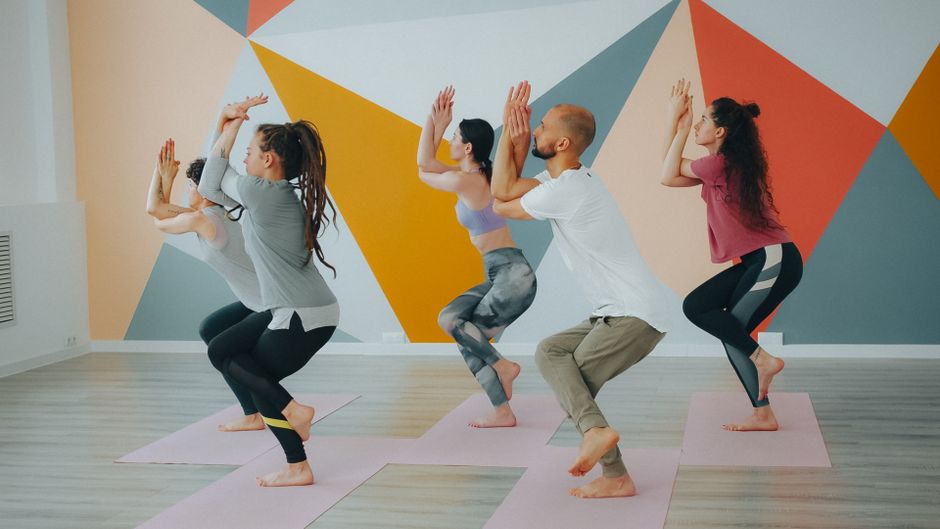
Five adults practicing yoga in a stylish studio with geometric wall design.

Precautions in plain words

The wrap puts a twist through both knees. Yoga Journal’s instruction is that you should not feel strain in either knee; if you do, cross only the thighs and leave the foot on the floor or a block. People with a knee injury, recent knee surgery or knee arthritis should skip the full wrap or practise it seated on a chair. With a shoulder injury, hold opposite shoulders instead of wrapping the forearms. If balance is unreliable, stand near a wall. This page is general information, not individual advice; check with your doctor or physical therapist if you have a joint condition.

Preparation and what comes next

Prepare with chair pose for the bent standing leg, tree pose for one-leg balance, and cow face pose for crossed legs and open shoulders. Afterward, stand in mountain pose and let the legs and arms unwind. Other balances that follow well are standing figure four and warrior III.

Where it is taught

Eagle is common in hatha, Iyengar and vinyasa classes and is part of the fixed hot yoga 26+2 order. A seated chair version is used in chair yoga. Find more standing balances in the pose library.
Preparatory poses

Follow-up poses and transitions

Counterposes

Related poses

More balancing poses

Frequently asked questions

Is eagle pose bad for the knees?

It should not hurt. If you feel strain in either knee, cross only the thighs and leave the top foot on the floor or a block, or do the pose seated on a chair.

What if I cannot hook my foot behind my calf?

Leave the toes on the floor or on a block. Crossing the thighs and bending the standing knee is the heart of the pose; the hook comes later, or not at all.

Which arm goes on top in eagle pose?

Usually the arm opposite to the top leg: right leg over, left elbow over. Switch both on the second side.

What does Garudasana mean?

Garuda is the king of birds in Hindu mythology and the mount of Vishnu, usually translated as eagle; asana means posture.

Sources

  1. Eagle Pose: How to Practice Garudasana, Yoga Journal (accessed October 6, 2026)
  2. B.K.S. Iyengar, Light on Yoga (1966), asana 23 Garudasana, plate 56, Allen & Unwin (Internet Archive record) (accessed October 6, 2026)
  3. Swami Satyananda Saraswati, Asana Pranayama Mudra Bandha: Garudasana, Bihar School of Yoga (Internet Archive) (accessed October 6, 2026)
  4. Garudasana | Eagle Pose (26+2 posture guide), Bikram Yoga Works (accessed October 6, 2026)

Facts checked on October 6, 2026