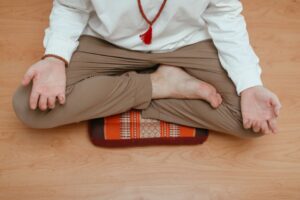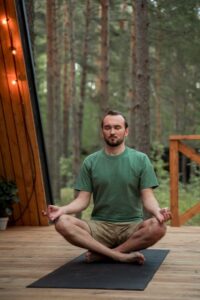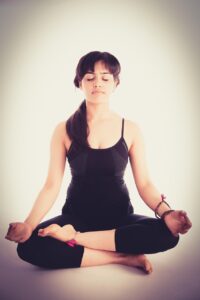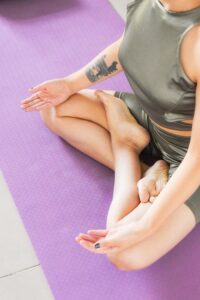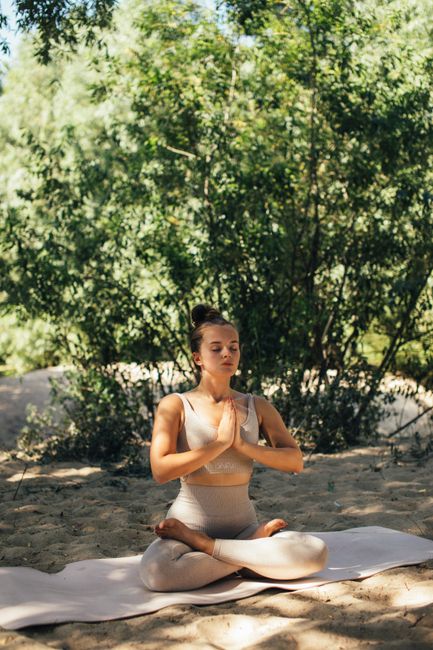
In short: easy pose is the simple cross-legged seat: each foot rests on the floor under the opposite knee or thigh, the spine is upright and the hands rest on the knees or in the lap. Sit on a folded blanket or cushion so the hips are higher than the knees; that one change makes the pose far more comfortable. It is the usual starting seat for breathing practice and meditation.
Despite the name, easy pose does not feel easy to everyone. Years of sitting on chairs teach the pelvis to roll back and the lower back to slump, so sitting upright on the floor takes some work at first. Yoga Journal makes the point that a well-arranged Sukhasana creates the conditions for a relaxed yet alert state. Below we cover the name, how to set the seat up, precautions and where to go from here.
The name
Sukha is usually translated as easy or comfortable, and can also mean pleasant or happy; āsana means seat or posture (see asana). The Bihar School’s Asana Pranayama Mudra Bandha describes Sukhāsana as folding each foot under the opposite thigh with the head, neck and back straight, and calls it the ideal meditative pose for beginners who find the classical seats difficult. Yoga Journal teaches the same cross-legged seat. In English it is also called easy seat or simply sitting cross-legged.
Setting up the seat
Height is everything. Sit on the front edge of a folded blanket, a firm cushion or a block, so the pelvis can tip slightly forward and the spine rises without effort. If the knees float well above the hips, add height or support each knee with a block or rolled blanket. Yoga Journal suggests finding the centre of the sitting bones, neither sinking back nor tipping the belly forward, then lifting through the sides of the body and broadening the collarbones so the breath has room. The Bihar School notes that a cloth tied around the back and knees helps for longer sits.
Cross the legs at the shins, not at the ankles, and switch which shin is in front from one practice to the next so the hips are worked evenly. Rest the hands on the knees, palms up or down, or in the lap. Let the chin rest level and the shoulders drop. If the legs fall asleep, change the cross or stretch the legs out for a moment.
Three ways to explore the seat
Easy pose looks still, but there is plenty to do inside it. A Yoga Journal guide by Iyengar teacher Nikki Costello suggests three short explorations that teach the body how to sit tall. Try each for a few breaths, then change the cross of your legs and repeat.
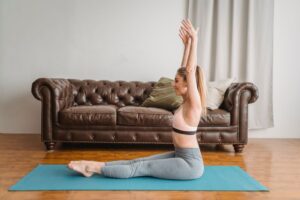
- Arms overhead. Interlace your fingers, turn the palms away from you and stretch the arms up. Feel the sides of the waist and ribs lengthen, then try to keep that length when you lower the arms. Repeated a few times, this also helps release tension in the neck and shoulders.
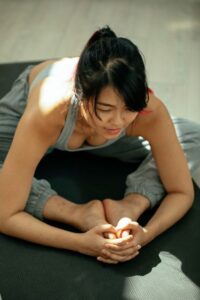
- Forward fold on blocks. Walk the hands forward onto blocks and let the chest move toward the floor while the sitting bones stay heavy. Notice the back of the ribs spreading as you breathe, and keep that feeling of width when you sit up again. Rest the forehead on the floor or a blanket if it reaches.
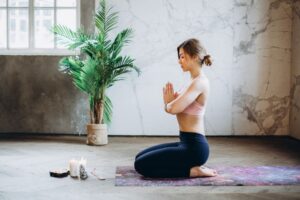
- Palms at the chest. Press the palms together at the center of the chest, widen the collarbones and let the elbows drop. Check that the cross of the shins lines up with the navel and breastbone, so you are not leaning to one side.
A few small props solve most complaints. If the knees ache, roll up a pair of socks and place them behind the knees before you cross the shins, or rest the outer shins on folded blankets. If the lower back tires, sit with your back against a wall. If the hips feel tight, add another blanket so the knees are level with or below the hips, and widen the knees a little. Finally, relax the face: soft eyes, a loose jaw and a quiet tongue make it easier to settle into the breath.
Precautions in plain words
Easy pose is gentle, but long sitting can still strain knees, hips or the lower back. Raise the seat until the knees are comfortable, support the knees if needed, and change position when you feel numbness or tingling. With a knee or hip injury, or after hip or knee replacement, a chair is a perfectly good meditation seat; ask your doctor or physical therapist which positions are safe for you. This page is general information, not individual advice.
Preparation and next seats
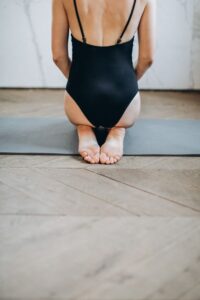
Staff pose teaches upright sitting with straight legs, and bound angle pose opens the hips for cross-legged sitting. When easy pose is comfortable, other classical seats are half lotus, auspicious pose and accomplished pose. Kneeling in thunderbolt pose or hero pose on a block suits people whose hips dislike crossing.
Where it is used
Easy pose opens and closes many hatha, vinyasa and kundalini classes, and it is the default seat for breathing practices and meditation. Our guide on how to meditate covers seated posture in more detail, and a firm meditation cushion makes the seat much easier.