Firefly Pose (Tittibhasana): steps, the name and precautions

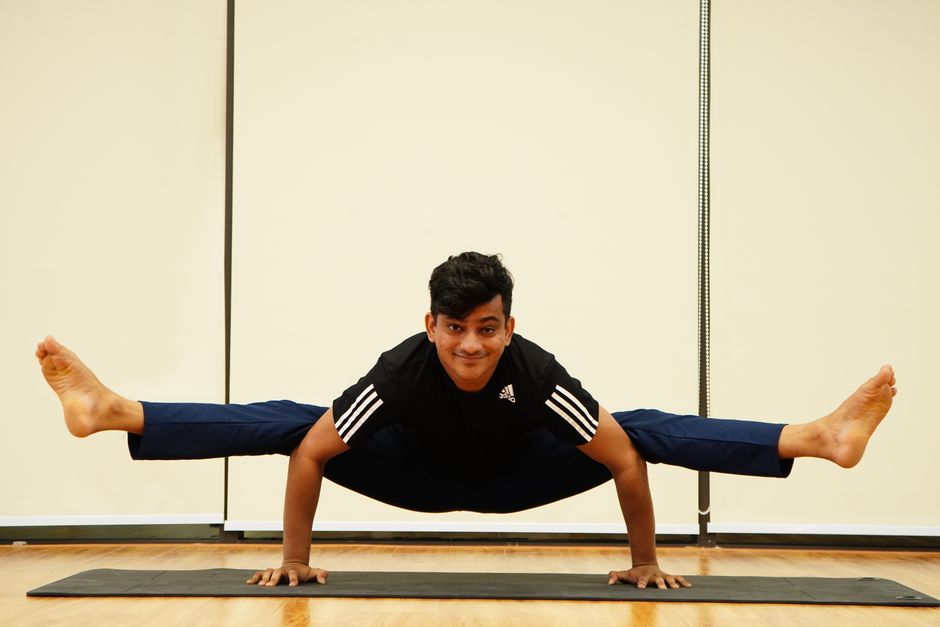
Firefly pose (Tittibhasana) is an arm balance with the thighs on the upper arms and both legs extended forward and up. An advanced pose usually learned from shoulder-pressing pose.

Not yet reviewed by a qualified teacher Names and shape checked against 4 sources

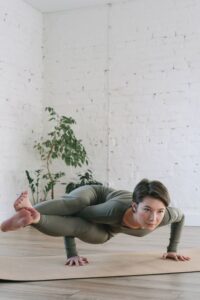
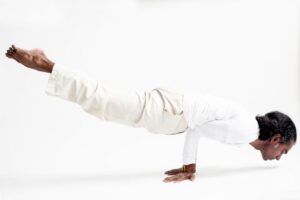
Firefly Pose: Adult man practicing an advanced yoga pose on a mat indoors, showcasing balance and strength.
Sanskrit name
Ṭiṭṭibhāsana टिट्टिभासन (source)
Also called
Insect Pose
Other spellings
Tittibhasana, Titibhasana, Tittibhasana A
Pose family
Arm balance
Starting position
Hands-supported
Movement
Balance, Forward fold
Taught in
Vinyasa Yoga: Flow, Breath and What to Expect
Difficulty
Advanced
Prerequisite skills
Shoulder-pressing pose or crow, open hamstrings and inner thighs, and wrists that tolerate full body weight.
Body areas
Arms and wrists, Core, Hamstrings, Hips, Shoulders
Props
Block, Mat
Practised
Solo

Names in different traditions

TraditionName usedNote
Ashtanga vinyasa (Pattabhi Jois lineage)Ṭiṭṭibhāsana A, B, CIntermediate series. A is the arm balance on this page (five breaths); B and C are standing forward-bend shapes with the same name (AshtangaYoga.info).
Iyengar (Light on Yoga)TittibhāsanaPlate 395; taught from Uttanasana and, at higher levels, from Dwi Pada Sirsasana (Iyengar Yoga UK I8 Teaching Syllabi).

Step by step

Coming into the pose

  1. Stand with the feet a little less than shoulder-width apart, toes slightly out, knees slightly bent, and fold forward.
  2. Take the right hand through the legs to clasp the right calf and settle the right shoulder behind the right knee; place the right hand on the floor behind the heel, fingers forward. Repeat on the left.
  3. Tilt the chest forward and lower the backs of the thighs onto the upper arms, sitting back as if onto a shelf.

In the pose

  1. Inhale, lift the feet and straighten the legs forward and up, feet pointed or flexed. Hold for about 15 seconds or longer (Yoga Journal) or five breaths (Ashtanga).

Coming out

  1. Bend the knees and lower the feet to the floor with an exhale.

Breathing

Inhale as the legs straighten; keep the breath steady while the core works. Come down if you start holding the breath.

Alignment cues

  • Shoulders well behind the knees before you lift.
  • Thighs as high on the arms as possible, close to the shoulders.
  • Press the floor away; reach through the feet.
  • Let the pelvis sink as the legs rise, like a see-saw.

Common alignment errors

  • Trying to straighten the legs before the thighs are high on the arms.
  • Attempting it cold, without warming hamstrings and hips.
  • Locking the elbows and hunching the shoulders.

Modifications and easier variations

  • Bent-knee low firefly: keep the legs bent and low to the ground. none
  • Seated version: legs wide at about 90 degrees, heels on blocks, palms pressing the floor between the legs. block

Advanced variations

Props and chair adaptations

  • Hands on a pair of blocks for more lift. block

Precautions

  • Shoulder, elbow, wrist or low back injury: avoid or limit, or take a variation (Yoga Journal).
  • Recent hamstring injury: avoid.
  • Pregnancy: ask your health care provider before arm balances.

Learn it with a teacher: Learn the floating Ashtanga entry and the Iyengar entry from Dwi Pada Sirsasana only with an experienced teacher.

General information, not medical advice. Poses do not cure illness. If you are pregnant, injured or have a health condition, check with your doctor and tell your teacher before you practise.

In short: firefly is an arm balance in which the backs of the thighs rest on the upper arms, the hands are planted behind the heels and both legs straighten forward and up, roughly in a V, while the pelvis hangs between the arms. It asks for open hamstrings, strong hip flexors and core, and wrists that carry the whole body, so it is an advanced pose.

The pose is often learned from shoulder-pressing pose: once you can lift there, straightening the legs forward turns it into firefly.

The name

Ṭiṭṭibha is the name of a small bird; AshtangaYoga.info’s word table adds that it is sometimes used for an insect, which is where the English “firefly” and “insect pose” come from. Yoga Journal uses Firefly Pose (Tittibhasana). The Iyengar Yoga (UK) syllabus lists Tittibhāsana at plate 395 of Light on Yoga, taught at first from a standing forward bend and later from the legs-behind-the-head pose. Ashtanga has three versions in the intermediate series: Ṭiṭṭibhāsana A is this balance on the hands; B and C keep the name but are standing forward bends with the shoulders behind the knees: in B the hands clasp behind the back, in C they hold the ankles.

Making the pose work

The shoulders have to get well behind the knees before anything lifts. Yoga Journal’s steps work one side at a time: take the hand through the legs, clasp the calf and settle the shoulder behind the knee, then place the hand on the floor behind the heel, fingers forward. Tilt the chest forward and lower the thighs onto the backs of the upper arms, then lift the feet and straighten the legs on an inhalation. AshtangaYoga.info describes the same see-saw: as the pelvis sinks, the legs rise; lay the thighs as close to the shoulders as you can and point the feet.

Yoga Journal suggests holding for about 15 seconds or longer; the Ashtanga version stays for five breaths. It is a pose for a well-warmed body: Yoga Journal recommends several rounds of sun salutations with lunges and twists, and a few breaths in garland pose first.

Precautions in plain words

Yoga Journal advises that people with shoulder, elbow, wrist or low back injuries avoid or limit the pose or take an easier variation. The strong hamstring stretch under load can strain a recently injured hamstring. Keep a blanket under you in case you sit down suddenly. In pregnancy, ask your health care provider before arm balances. This page is general information, not individual advice.

Preparation and what comes next

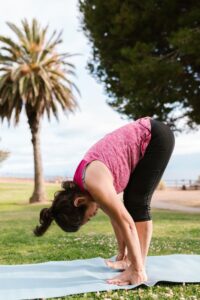
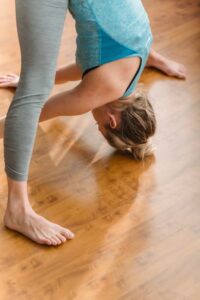
Prepare with standing forward bend, wide-legged forward bend, seated wide-angle pose, bound angle, garland pose and chaturanga. A seated version without the balance, with the legs wide, the heels on blocks and the palms pressing the floor between the legs, rehearses the shape. Afterwards, counter with downward dog or child’s pose. Related poses are tortoise, which uses the same shoulders-under-knees position on the floor, and eight-angle pose.

A simple way to practise it. A practical way to build firefly is to work from the floor up. Sit with the legs wide and the heels on blocks and press the palms down between the legs to feel the lift without balancing. Then practise shoulder-pressing pose until the feet lift easily. Next, from that shape, straighten one leg at a time while the other foot stays down, and only then lift both legs together. Keep each attempt short, rest the wrists between tries, and finish with downward dog or a gentle forward bend to release the hamstrings.

You will meet firefly in Ashtanga (intermediate series), Iyengar, vinyasa and power yoga classes.
Preparatory poses

Follow-up poses and transitions

Counterposes

Related poses

More arm balance poses

Frequently asked questions

Why is it called firefly pose?

Tittibha is the name of a small bird and is sometimes used for an insect; English books chose "firefly" or "insect pose". The extended legs are often compared to an insect’s antennae.

Is firefly harder than crow?

Usually, yes. It needs the same arm strength plus open hamstrings and strong hip flexors to hold the legs straight. Learn shoulder-pressing pose first.

Is Tittibhasana B the same pose?

No. In Ashtanga, Tittibhasana B and C are standing forward-bend shapes; only Tittibhasana A is the arm balance shown here.

Sources

  1. Firefly Pose: How to Do Tittibhasana, Yoga Journal (accessed October 6, 2026)
  2. Ṭiṭṭibhāsana A: Kiebitz, AshtangaYoga.info (Dr. Ronald Steiner) (accessed October 6, 2026)
  3. Nāḍi Śodhana: the second series of Ashtanga Yoga (pose list), AshtangaYoga.info (accessed October 6, 2026)
  4. I8 Teaching Syllabi (asanas with Light on Yoga plate numbers), Iyengar Yoga (UK) (accessed October 6, 2026)

Facts checked on October 6, 2026