Dancing Warrior: a flowing warrior sequence, one breath per movement

A newly designed 10-minute Dancing Warrior flow: Warrior II, reverse warrior, side angle and Warrior I linked one breath per movement, with sides, counts and easier options.

Not yet reviewed by a qualified teacher Needs verification: names and instructions not yet confirmed by two sources

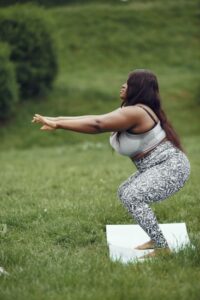
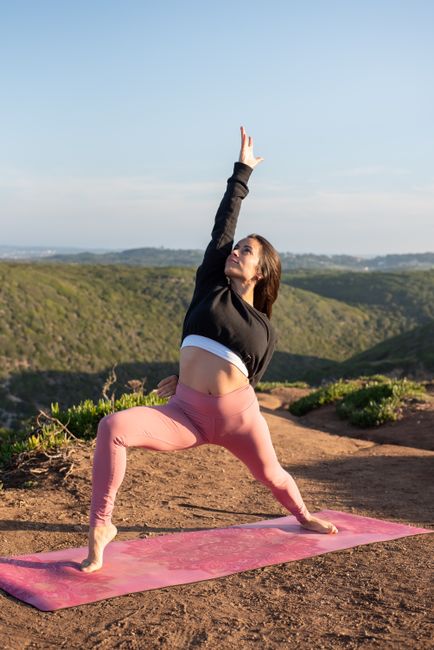
Woman performing yoga on a mat in a scenic outdoor location, embracing nature.
Also called
Dancing Warrior Flow, Peaceful Warrior flow
Tradition
Modern vinyasa (name used by many teachers; no single source)
Order
Newly designed educational flow
Level
Intermediate
Approximate duration
about 10 minutes
Focus
Strength
Audience
Experienced
Props
Block, Mat
Styles
Vinyasa Yoga: Flow, Breath and What to Expect, Hatha Yoga: The Historical Term and the Modern Class
Body areas
Core, Hips, Legs, Shoulders

A newly designed educational flow, not a traditional sequence. Teachers order these poses in many ways.

Printable view

Origin and source

A modern vinyasa teaching name with no fixed published order. This page is a newly designed educational flow by YogaVacation (2026). Individual warrior poses: Light on Yoga (Iyengar); reverse warrior is a modern name.

Who it is for

Knows Warrior I, Warrior II, reverse warrior and extended side angle as separate poses; comfortable in a wide stance for a minute or more.

The steps in order

Version shown: YogaVacation dancing warrior: Warrior II, reverse warrior, extended side angle, Warrior II, Warrior I, Warrior II, one breath each, each side

#StepBreathSideHoldCues and options
1Mountain
Tāḍāsana
Free breathing5 breaths
YogaVacation (suggested)

Transition: Stand at the front of the mat; step the left foot back into a wide stance.

Easier option: Feet hip-width.

2Warrior II, right knee bent
Vīrabhadrāsana II
InhaleRight1 breath
YogaVacation (suggested)

Transition: Bend the right knee over the ankle, arms out at shoulder height.

Easier option: Bend the knee less; hands on the hips.

3Reverse warriorInhaleRight1 breath
YogaVacation (suggested)

Transition: Turn the front palm up and reach it overhead and back; back hand rests on the back leg.

Easier option: Small lean; front hand on the hip.

4Extended side angle
Utthita Pārśvakoṇāsana
ExhaleRight1 breath
YogaVacation (suggested)

Transition: Sweep the top arm over and fold forward, forearm to the front thigh, top arm along the ear.

Easier option: Forearm on the thigh; top hand on the hip.

5Warrior II
Vīrabhadrāsana II
InhaleRight1 breath
YogaVacation (suggested)

Transition: Press into the front foot and lift back to Warrior II.

6Warrior I
Vīrabhadrāsana I
InhaleRight1 breath
YogaVacation (suggested)

Transition: Turn the hips toward the front, arms overhead.

Easier option: Lift the back heel; or replace with a high lunge.

7Warrior II
Vīrabhadrāsana II
ExhaleRight1 breath
YogaVacation (suggested)

Transition: Open the hips and arms back to the side. Repeat the pass twice more.

Easier option: Hold here for three breaths if you need a rest.

8Mountain
Tāḍāsana
Free breathing3 breaths
YogaVacation (suggested)

Transition: Step the back foot forward.

9Repeat the pass three times with the left foot forwardFree breathingLeft1 breath per movement
YogaVacation (suggested)

Transition: Step the right foot back; same six movements on the left.

Easier option: Do one pass only if the legs tire.

10Wide-legged forward fold (rest)
Prasārita Pādottānāsana
Exhale5 breaths
YogaVacation (suggested)

Transition: Turn both feet parallel and fold with soft knees.

Easier option: Hands on blocks.

11Mountain
Tāḍāsana
Free breathing

Transition: Hands to the hips, come up with a long spine, step the feet together.

Left and right

Right foot forward first (three passes), then left foot forward (three passes).

Repetitions and counting

One pass = six movements (about six breaths). Three passes per side; right side then left side = one round. Two rounds suggested.

Props and adaptations

Shorter stance; hands on the hips throughout; forearm on the thigh in side angle; high lunge instead of Warrior I; hold poses instead of flowing; a block under the hand in side angle.

Precautions

  • Knees: front knee over the ankle in every bent-knee movement.
  • High blood pressure: arms lower, breathe freely, no breath holding.
  • Shoulder injury: hands on the hips.
  • Pregnancy, injury or dizziness: ask a qualified teacher or health professional first.

Learn it with a teacher: A teacher can check that the front knee stays aligned while the arms move, and help with the hip turn between Warrior II and Warrior I.

General information, not medical advice. Poses do not cure illness. If you are pregnant, injured or have a health condition, check with your doctor and tell your teacher before you practise.

Beginner and chair alternatives

Chair Yoga Sequence: a 20-minute seated routine, Warrior Flow: a standing sequence through Warriors I, II and III

Dancing warrior is the name many vinyasa teachers give to a short standing flow that moves between the warrior poses on the breath, one movement per inhale or exhale, so the legs stay strong while the arms and chest keep moving. There is no universally fixed order: the name is used for several different flows, and no school publishes one standard version. What you see on this page is a newly designed educational version by YogaVacation, built from Warrior II, reverse warrior, extended side angle and Warrior I, about 10 minutes long.

If you prefer to hold each pose and learn the shapes first, start with our slower warrior flow. Dancing warrior assumes you already know Warrior I, Warrior II, reverse warrior and extended side angle on their own.

The name

“Dancing warrior” is a modern English name with no Sanskrit equivalent. The warrior poses themselves are named after Virabhadra (Virabhadrasana I and II appear in B.K.S. Iyengar’s Light on Yoga); reverse warrior is a modern name. Some teachers use “dancing warrior” for a flow that also includes Warrior III or a lunge twist; others mean only the Warrior II to reverse warrior swing. When you join a class, expect the teacher’s own version.

How the counting and sides work

The feet stay in the same wide stance for the whole side; only the front knee, the arms and the trunk move. Inhale as you lift and open (Warrior II, reverse warrior, Warrior I), exhale as you fold or settle (extended side angle, back to Warrior II). One pass through the six movements takes about six breaths. Do three passes on the right side with the right foot forward, step to the front of the mat, then three passes with the left foot forward. That is one round. Two rounds, with a pause in mountain pose between them, make a 10-minute practice. The repetitions are our suggestion, not a tradition’s rule.

The pass, movement by movement

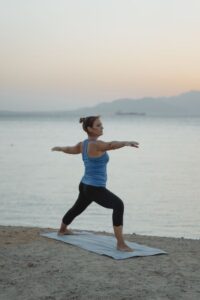
From mountain pose at the front of the mat, step the left foot back into a wide stance. Bend the right knee over the ankle and open the arms to shoulder height: this is Warrior II, the home base you return to. Turn the front palm up and reach that arm overhead and back while the back hand rests lightly on the back leg, for reverse warrior. Then sweep the top arm over as you fold forward, bringing the front forearm to the front thigh and the top arm alongside the ear, for extended side angle. Press into the front foot and lift back up to Warrior II.

The last part of the pass is the turn: rotate the hips toward the front of the mat and raise both arms overhead for Warrior I, then open the hips and arms back to the side into Warrior II. That completes one pass. Let one breath carry each movement, and if two lifting movements come one after the other, allow a short out-breath to settle you between them. The legs barely move during a pass, which is why the flow builds so much heat in the thighs.

In a longer practice, dancing warrior fits well after a few rounds of sun salutation, when the body is warm, and before slower standing poses or floor work. Finish with the wide-legged forward fold in the step list to let the legs rest.
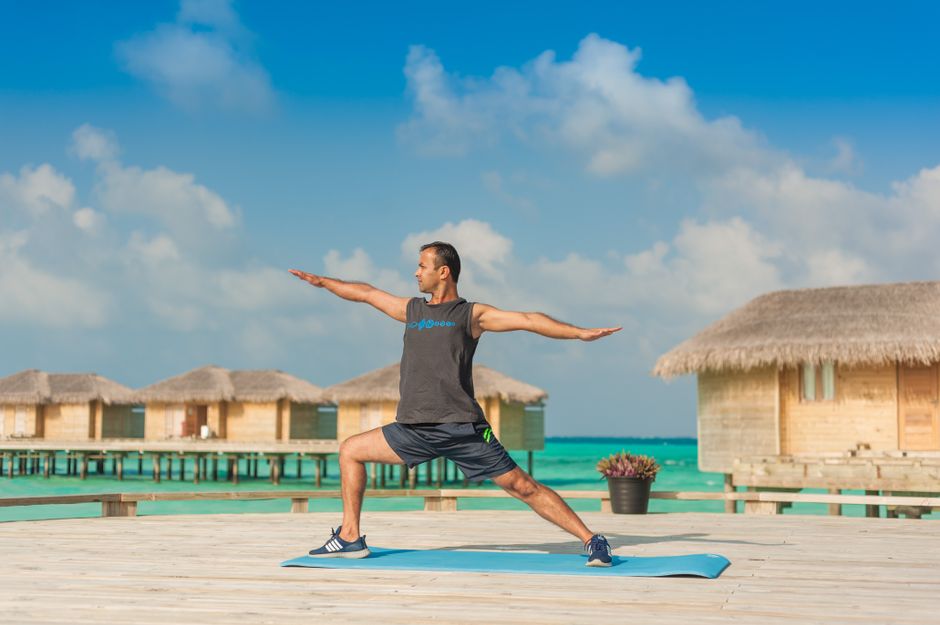
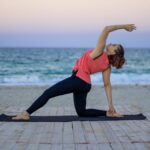
Man stretching in yoga pose on a deck with tropical huts and ocean view.

How to make it work

  • Keep the front knee over the ankle in every bent-knee movement. The knee should not swing inward as the arms move.
  • The back foot stays flat and turned slightly in; press its outer edge down when you lean back into reverse warrior.
  • Turning from Warrior II (hips open to the side) into Warrior I (hips facing forward) asks a lot of the back hip. Lift the back heel, or shorten the stance, rather than twisting the knee.
  • Move slowly enough that every shape is recognisable. If the breath becomes short, hold a pose for a few breaths and rejoin the rhythm.

How to practise it safely

  • Knee, hip or ankle pain: shorten the stance and bend the front knee less, or practise the arm movements standing with the feet hip-width apart.
  • High blood pressure: keep the arms below shoulder height and never hold the breath.
  • Shoulder injury: keep the hands on the hips in reverse warrior and Warrior I.
  • Pregnancy, recent surgery or dizziness: ask a qualified teacher or health professional first; a wider, shorter stance is usually steadier.

This flow has not yet been reviewed by a qualified teacher.

Easier alternatives

Hold each pose for three breaths instead of flowing (our warrior flow); take the back knee down and move only the arms; or practise the same arm movements seated in the chair yoga sequence. A high lunge is a good replacement for Warrior I if the back hip resists.
Frequently asked questions

Is there one official Dancing Warrior sequence?

No. The name is used by many vinyasa teachers for different flows. This page shows our own educational version and says so.

What is the difference between Dancing Warrior and a warrior flow?

On this site, the warrior flow holds each pose for several breaths; Dancing Warrior links the same family of poses with one breath per movement.

Is Dancing Warrior good for beginners?

It is easier once you know each warrior pose on its own. Beginners can hold each pose for three breaths instead of flowing.

Sources

  1. B.K.S. Iyengar, Light on Yoga: Virabhadrasana I and II, Internet Archive (catalogue record) (accessed October 6, 2026)
  2. Yoga: Effectiveness and Safety, National Center for Complementary and Integrative Health (NIH) (accessed October 6, 2026)

Facts checked on October 6, 2026