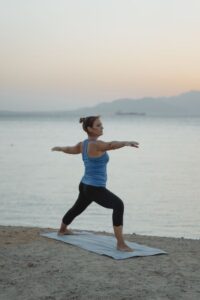
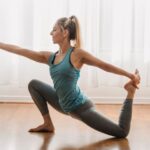
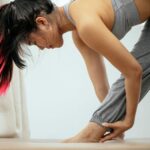
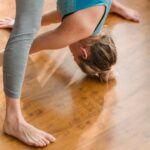
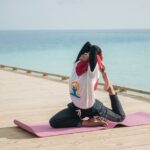
This yoga for flexibility sequence is a 20-minute routine that warms the body first and then holds stretches for the hamstrings, hips, groin, shoulders and spine: cat-cow, downward dog, low lunge, half split, pyramid, wide-legged forward bend, pigeon, cow face arms, seated forward bend and a reclining twist. It is a newly designed educational sequence by YogaVacation; there is no traditional flexibility sequence.
How the sequence is built
Stretching cold muscles is less comfortable, so the first five minutes are movement: cat-cow, downward dog and lunges. Then each area gets one or two held poses, moving from standing to kneeling to seated to lying down. Hamstrings come first (half split, pyramid, wide-legged fold), then the outer hips (pigeon), the shoulders (cow face arms), and finally the whole back of the body (seated forward bend). A reclining twist and rest close the practice.
The sequence, step by step
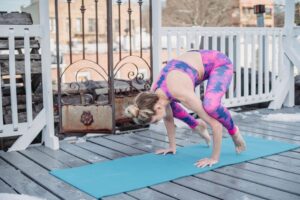
Warm-up (about 5 minutes). Start on hands and knees with eight rounds of cat-cow, arching as you breathe in and rounding as you breathe out. Lift the hips into downward dog and pedal the feet, bending one knee and then the other, for about eight breaths. Step the right foot forward into a low lunge with the back knee down and let the hips move forward to open the front of the back hip.
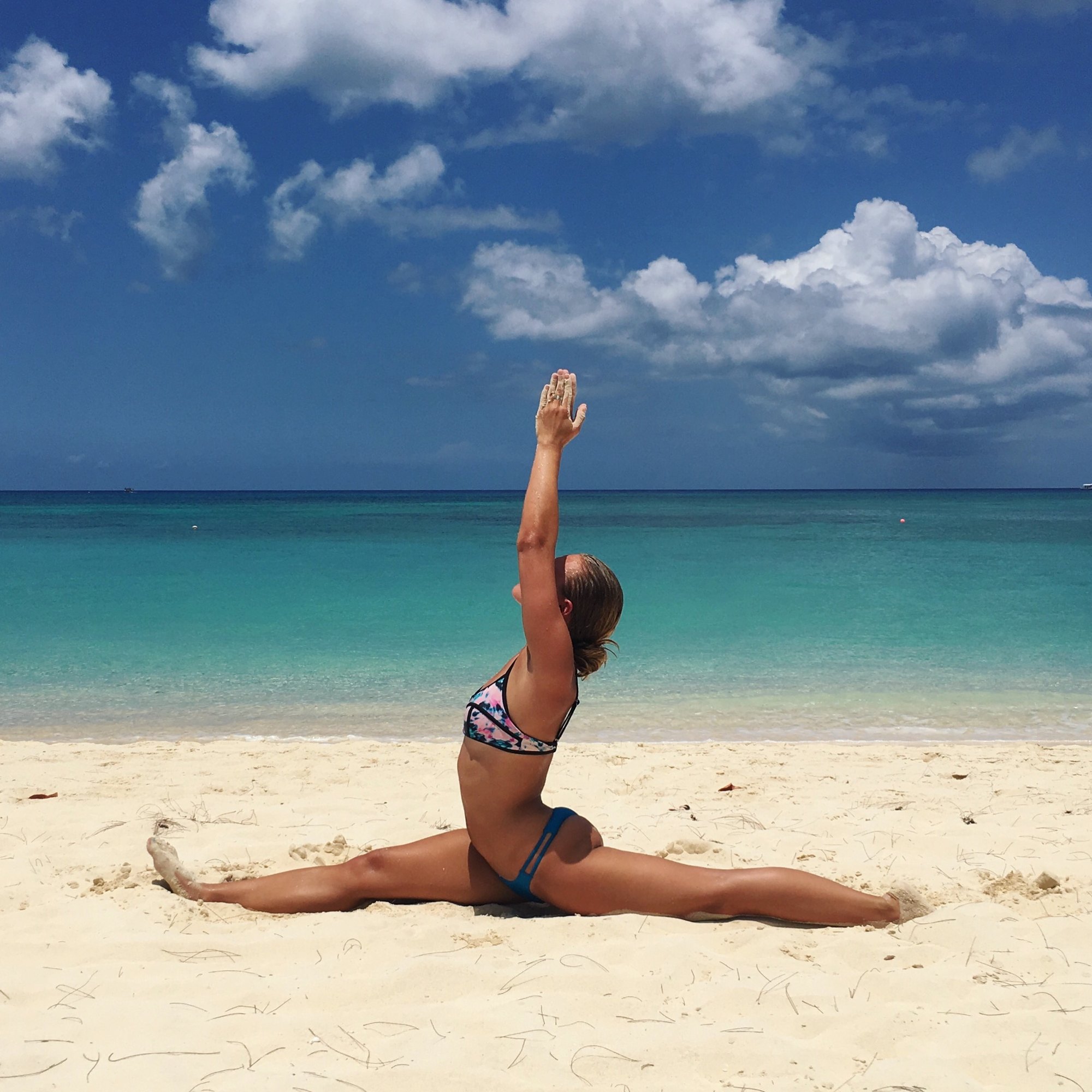
Backs of the legs. From the lunge, shift the hips back over the back knee and straighten the front leg with the toes up: this is the half split. Repeat the lunge and half split on the left. Then stand in a short stance with the right foot forward and fold over the front leg with a long spine in pyramid, on both sides. Turn to face the long side of the mat, set the feet wide and parallel and fold from the hips in the wide-legged forward bend.
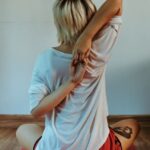
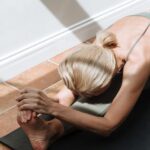
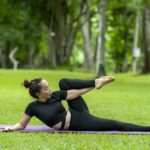
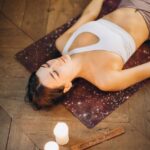
Hips, shoulders and spine. Come back to downward dog and bring the right knee forward behind the right wrist for pigeon, back leg long; then the left side. Sit for cow face arms: one arm bends up behind the head, the other reaches up the back, and the hands move toward each other. Stretch the legs out for a seated forward bend, folding from the hips. Lie down for a reclining twist, knees to the left and then to the right, and finish with two to three minutes of rest in corpse pose.
Why bent knees still count
Many people with tight hamstrings round the back to get the hands lower in a forward bend. It looks deeper but works less. Yoga Journal makes the point in its big toe pose instructions: hunching into a forward bend is not safe for the lower back and does nothing to lengthen the hamstrings. Bending the knees, or bringing the floor up with blocks, lets the pelvis tip forward so the stretch arrives where you want it, at the back of the thighs. The same idea runs through the whole sequence: keep the spine long, go to a clear but comfortable sensation and let the breath stay slow.
Pigeon deserves its own word of care. Yoga Journal advises that people with knee or sacroiliac discomfort are best off avoiding it; in that case reclining figure four stretches the same outer hip while you lie on your back. Our pigeon pose page explains the setup in detail.
How the holds and sides work
Warm-up steps follow the breath. Held stretches stay for five to eight slow breaths, about 30 to 45 seconds; you can repeat a pose a second time and often go a little further. One-sided poses (lunge, half split, pyramid, pigeon, cow face arms, twist) are done on the right, then the left. Stretch to a clear but comfortable sensation; flexibility changes slowly, over weeks of regular practice, not in one session. The holds are our suggestion.
When to practise: because it begins with a warm-up, the sequence works at any time of day. Many people like it in the evening, when the body is already warm from moving around. If you practise early in the morning, give the warm-up a little longer.
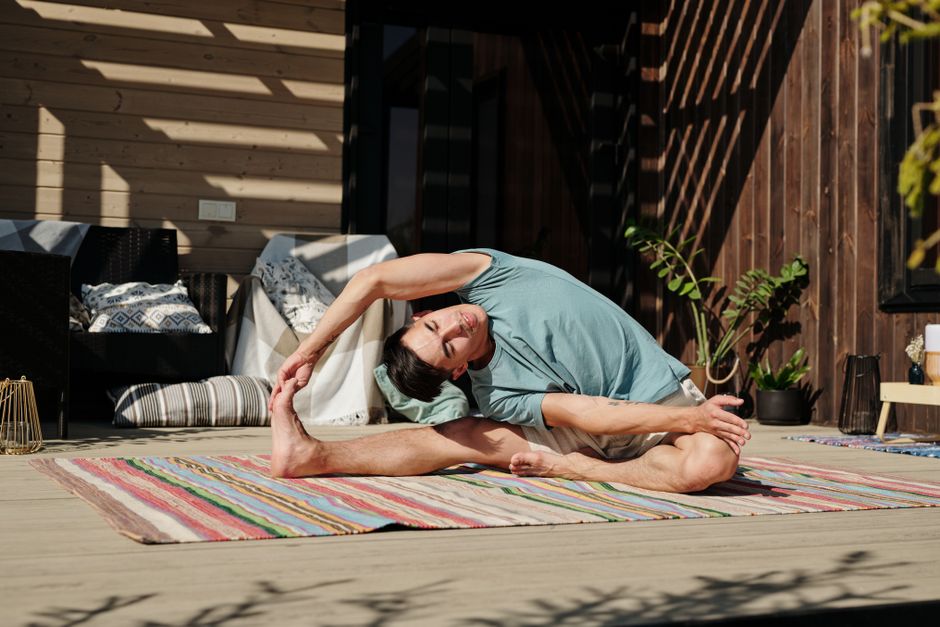
How to practise it safely
- Never bounce into a stretch, and never stretch into sharp or joint pain.
- Hamstring injury: keep the knees bent in all forward bends and skip the half split.
- Knees: in pigeon, keep the front foot near the opposite hip and pad under the hip; if the knee complains, use reclining figure four.
- Lower back: bend from the hips with a long spine in forward bends; sit on a cushion when seated.
- Pregnancy and hypermobility: avoid pushing to the end of the range; ask a qualified teacher or health professional.
This sequence has not yet been reviewed by a qualified teacher.
Easier alternatives
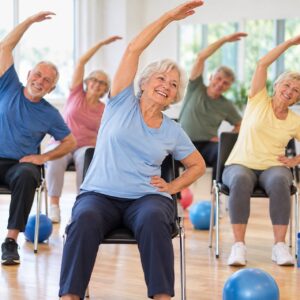
Use blocks under the hands in every standing fold, a strap in the seated forward bend, and reclining figure four instead of pigeon. For long passive holds try the yin sequence; seated stretches are in the chair yoga sequence.