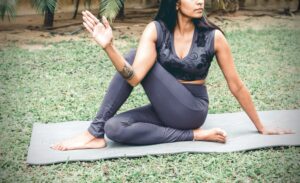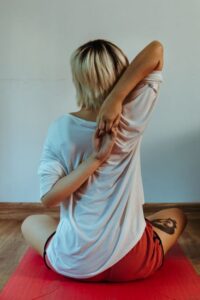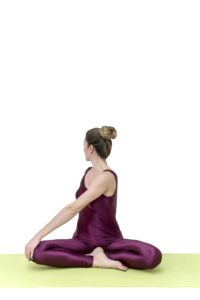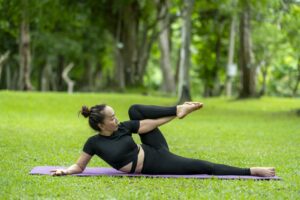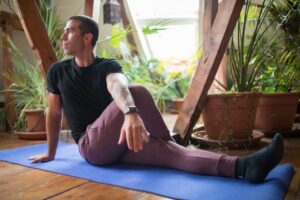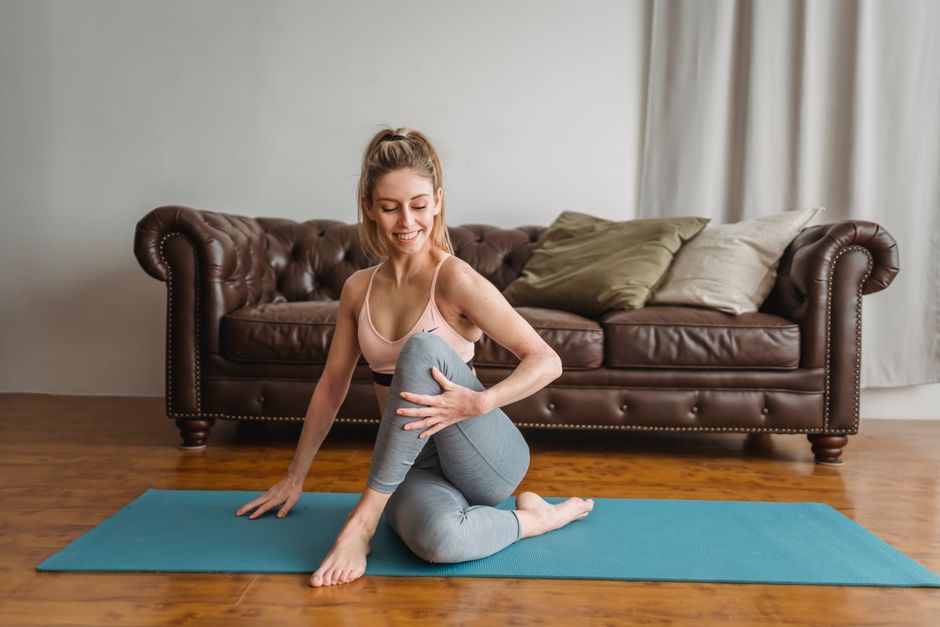
In short: half lord of the fishes is the classic seated spinal twist. One leg is folded on the floor with the foot beside the opposite hip, the other foot is planted outside the folded knee, and you turn the torso toward the raised knee, using the opposite arm against or around it and the other hand on the floor behind you. Sit tall first, then twist; with a straight bottom leg or a hug around the knee it suits most people.
It is one of the Sivananda 12 basic asanas, where it is called the half spinal twist, it is part of the Ashtanga intermediate series, and almost every hatha and vinyasa class uses a version of it. Below we explain the name and its old roots, the cues that make the twist work, the precautions and where it fits.
The name and the story
Ardha Matsyendrāsana joins ardha (half), Matsyendra (lord or king of the fishes, from matsya, fish, and indra, lord) and āsana. Matsyendra, or Matsyendranath, is remembered as one of the founding teachers of hatha yoga; in the well-known legend, a fish overheard Shiva teaching yoga and was transformed into the sage. The Hatha Yoga Pradipika, the 15th-century hatha manual, already describes a seated twist named after him, Matsyendrasana, with one foot placed at the root of the opposite thigh and the body turned. It also credits that posture with kindling the digestive fire and destroying diseases; those are the text’s claims, not medical facts. The “half” version taught today is a simpler form; the full version, with the bottom leg in half lotus, is on our full lord of the fishes page.
Making the twist work
Length first, twist second. Sit evenly on both sitting bones; if the lower back rounds or one hip lifts, sit on a folded blanket. The Sivananda centres enter the pose from kneeling, dropping the buttocks to one side of the heels, which places the bottom leg neatly; Yoga Journal starts from a cross-legged seat. Either way, plant the top foot flat outside the bottom knee. Place the hand on the twisting side on the floor behind you, close to the spine, and use it to lift.
Then reach the opposite arm up on an inhalation and bring it to the outside of the raised knee on the exhalation. If the shoulders are tight, simply hug the knee into the chest instead, as Yoga Journal suggests. Turn from the belly and ribs; the head turns last and only as far as is comfortable for the neck. Each inhalation lengthens the spine, each exhalation turns a little more. The Sivananda centres hold for at least 30 seconds on each side; the Ashtanga intermediate series holds five breaths.
Precautions in plain words
Yoga Journal advises avoiding or modifying the pose with knee, hip or back pain or injuries. Twist gently with a disc problem or sacroiliac pain, and ask your doctor or physiotherapist first. In pregnancy, an open twist (turning away from the bent knee, with the belly free) is usually preferred over this closed twist. Do not lever yourself into the twist with the arm. This page is general information, not individual advice.
Preparation and what comes next
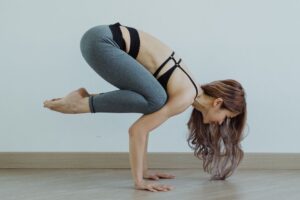
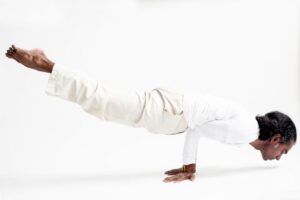
Gentle twists such as revolved easy seat, Bharadvaja’s twist and reclining spinal twist prepare the spine; cow face pose prepares the hips. In the Sivananda sequence the half spinal twist comes after the backbends (cobra, locust and bow), followed by crow or peacock. Marichi’s twist is a close relative with the bottom leg straight. After twisting, a simple seated forward bend or child’s pose evens out the spine.
You will meet the pose in Sivananda, hatha, Ashtanga, Iyengar and vinyasa classes.