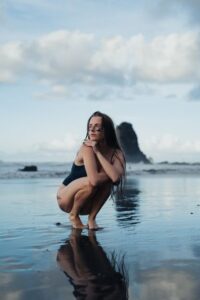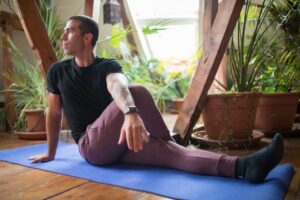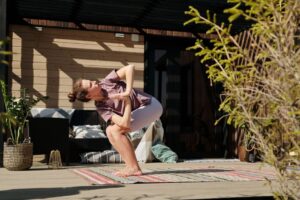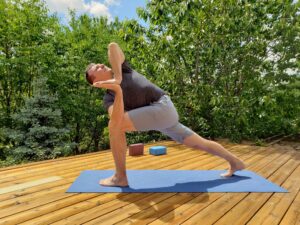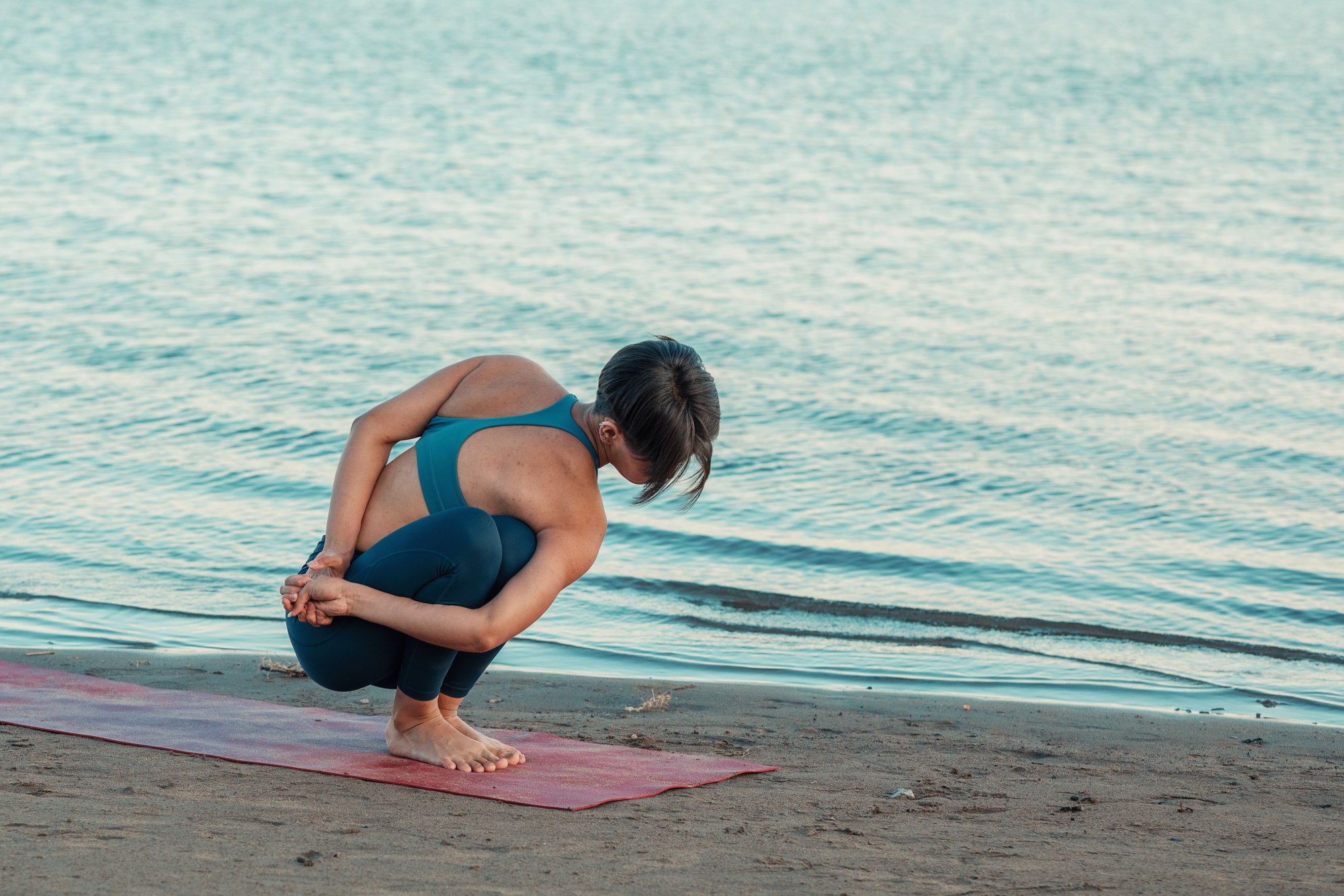
In short: noose pose is a deep squatting twist with a bind. You squat with the feet and knees together and heels down, turn the torso so the back of one arm presses against the outside of the opposite knee, wrap that arm around the shins and clasp the other hand behind the back, so the arms form a loop around the legs. It asks for ankle flexibility, a deep squat, spinal rotation and open shoulders all at once, so it is an advanced pose.
Pasasana is the first pose of the Ashtanga intermediate series and is taught in other styles as a peak twist. A squat with the heels supported and no bind is a good place to start.
The name: noose, rope or snare
Pāśāsana comes from pāśa and āsana. A pāśa is a cord or binding: AshtangaYoga.info translates it as snare, fetter or rope, and Yoga Journal’s editors, consulting Sanskrit teachers, list meanings from snare, noose and lasso to tie, bond and web. “Noose pose” is the most common English name, but because of its troubling associations Yoga Journal now calls it Rope Pose. The name describes the loop the arms make around the legs. You will see all of these names used for the same posture.
Making the pose work
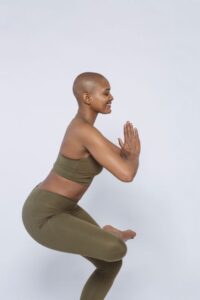
Begin with the squat. Feet together, knees together, heels on the floor; if the heels lift, roll a blanket under them, which Yoga Journal also suggests. Then draw the knees slightly to one side and turn the torso the other way, closing the gap between the side of the waist and the tops of the thighs. Press the back of the front arm and shoulder against the outer knee and use that pressure to lengthen the side of the torso along the thighs. AshtangaYoga.info describes a step-by-step way to get the arm far enough round: push both knees diagonally with the back hand, reach the front arm past the thighs, and repeat until the shoulder blade is firmly against the outer thigh. Only then reach the back hand behind and clasp the wrist. The gaze goes over the back shoulder. Ashtanga holds five breaths each side.
Note the Ashtanga side convention: AshtangaYoga.info says Pattabhi Jois taught the side turning to the left, with the right arm in front, as the first (right) side.
Precautions in plain words
Deep squats load the knees and ankles; with knee or ankle injuries, stay with a supported squat or the chair version. Twist gently with back problems and ask your doctor or physiotherapist first. Skip the bind with a shoulder injury, and avoid the pose during pregnancy because of the deep closed twist and compression of the belly. Never force the clasp. This page is general information, not individual advice.
Preparation and what comes next
Garland pose (the yogic squat) builds the squat; revolved chair pose, revolved side angle pose and Marichi’s twist teach the twist and bind; AshtangaYoga.info uses the same arm technique in those poses. In the Ashtanga intermediate series the next pose is heron pose.
A simple way to practise it. Separate the elements. Practise the squat with the feet together and a blanket under the heels until you can stay there comfortably for several breaths. Practise the twist from the squat with the hands in prayer, the back of the upper arm against the outer knee. Then add the arm wrap without the clasp, and finally the clasp or a strap. Ashtanga practitioners usually meet Pasasana only after the primary series is established.
You will meet noose pose in Ashtanga (intermediate series) and in advanced vinyasa classes.