Seated Wide-Angle Forward Bend (Upavistha Konasana): steps and props

Seated wide-angle forward bend (Upavistha Konasana) is a wide-legged seated fold that stretches the hamstrings and inner thighs. Steps, blanket and bolster support, precautions and the yin dragonfly.

Not yet reviewed by a qualified teacher Names and shape checked against 4 sources

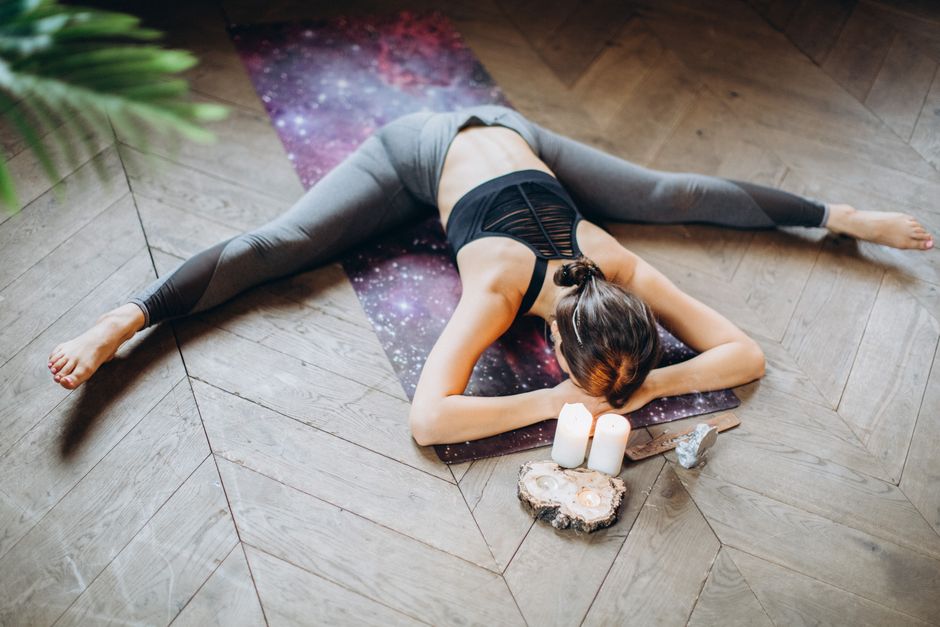
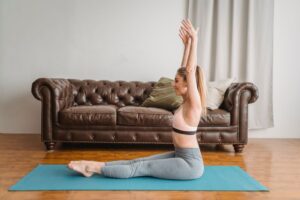
Woman in yoga pose indoors with candles and yoga mat, promoting relaxation and mindfulness.
Sanskrit name
Upaviṣṭha Koṇāsana उपविष्टकोणासन (source)
Also called
Wide-Angle Seated Forward Bend, Seated Wide Angle, Wide-Angled Seated Forward Bend, Revolved Seated Wide Angle, Parivrtta Upavistha Konasana (modern usage), Parsva Upavistha Konasana (side seated wide angle)
Other spellings
Upavistha Konasana, Upavishta Konasana
Pose family
Forward bend, Hip opener and leg extension, Seated
Starting position
Seated
Movement
Forward fold
Taught in
Hatha Yoga: The Historical Term and the Modern Class, Vinyasa Yoga: Flow, Breath and What to Expect
Difficulty
Intermediate
Prerequisite skills
Comfortable staff pose; a folded blanket to sit on.
Body areas
Hamstrings, Hips, Legs, Spine
Props
Blanket, Block, Bolster, Chair
Practised
Solo

Names in different traditions

TraditionName usedNote
Iyengar (Light on Yoga)Upaviṣṭha KoṇāsanaAsana 66, plates 148-152.
Ashtanga (AshtangaYoga.info Primary Series sheet)Upaviṣṭha KoṇāsanaPrimary Series, after Baddha Konasana, before Supta Konasana.
Yin yogaDragonfly (Straddle)Similar wide-legged shape held passively: separate record.

Step by step

Coming into the pose

  1. Sit in staff pose on the edge of a folded blanket.
  2. Open the legs out to the sides, one at a time, as wide as you can while the kneecaps and toes still point straight up. Flex the feet.

In the pose

  1. Press the thighs down and the heels out. Place the hands on the floor behind or in front of you, or hold the big toes, and lift the spine.
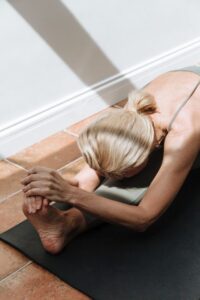
  2. Inhale to lengthen; exhale to hinge forward from the hips, walking the hands forward. Keep the legs from rolling inward.
  3. Stop where the spine begins to round. Rest the forearms, a bolster or blocks under the chest if you like. Stay for 30 seconds to a minute.

Coming out

  1. Inhale and walk the hands back to lift the torso. Bring the legs together with the hands under the thighs and return to staff pose.

Breathing

Breathe evenly. Lengthen on each inhale and let the torso extend a little further on each exhale, without forcing. Light on Yoga holds the full fold 30 to 60 seconds with normal breathing.

Alignment cues

  • Seat raised so the pelvis can tilt forward.
  • Kneecaps and toes point to the ceiling throughout.
  • Fold from the hips with a long spine.
  • Legs and sitting bones stay put as the chest moves forward.

Common alignment errors

  • Opening the legs so wide that they roll inward.
  • Rounding the back to bring the head down.
  • Bouncing into the stretch.
  • Sitting flat on the floor with the pelvis tucked.

Modifications and easier variations

  • Legs narrower; lean forward only as far as the hips allow, hands on the floor in front. none

Advanced variations

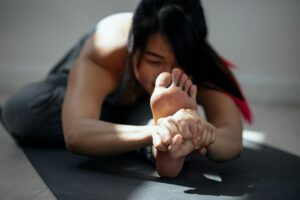
  • Chest and chin to the floor holding the feet (Light on Yoga final stage).
  • Chin to each knee in turn, holding the foot with both hands (Light on Yoga).

Props and chair adaptations

  • Sit on one or more folded blankets. blanket
  • Rolled blankets under slightly bent knees. blanket
  • Bolster or blocks under the chest or forehead for a longer, supported hold. bolster
  • On a sturdy chair: legs open to the sides, hold the front edge of the seat, straighten the legs with the feet flexed. chair
  • Sit with the back against a wall to work on the upright stage. wall

Precautions

  • Hamstring tear, groin strain, sacroiliac or lower back problem: legs narrower, seat higher, stay upright; ask your doctor or physical therapist.
  • Pulling at the sitting bones or behind the knees: bend the knees slightly.
  • Disc problems: avoid rounded-back folding.
  • Do not bounce or force the fold.

Learn it with a teacher: Can be learned with props from clear instructions. Ask a teacher before the deep floor-to-chest version, or if the sitting bones or inner knees ache.

General information, not medical advice. Poses do not cure illness. If you are pregnant, injured or have a health condition, check with your doctor and tell your teacher before you practise.

The yin yoga version

Yin yoga version: Dragonfly / Straddle (Yin Yoga): the wide-legged seated fold

The shapes look alike, but yin yoga holds them for several minutes with the muscles soft and props for support, while the active version is held with muscular engagement for a few breaths. The instructions and the intention differ, so follow the page for the version you are practising.

In short: in this pose you sit with the legs spread wide, kneecaps and toes pointing up, and fold forward from the hips between the legs. It stretches the hamstrings and inner thighs. Sit on a folded blanket, open the legs only as wide as you can keep the kneecaps facing up, and lengthen the spine before you fold.

The wide-legged seated fold is a staple of slow and alignment-based classes. Yoga Journal calls it good preparation for most seated forward bends, twists and wide-leg standing poses. The shape is simple; the challenge is that tight hamstrings tip the pelvis back and the spine rounds. Below we explain the names, how to make the fold come from the hips, the precautions and the yin version.

The name

Upaviṣṭha means seated and koṇa angle. In B.K.S. Iyengar’s Light on Yoga (1966), Upaviṣṭha Koṇāsana begins with the legs spread as wide as possible, the big toes held and the spine erect and concave; then the head and finally the chest come toward the floor, and in a last stage the chin rests on one knee and then the other. Yoga Journal teaches the same pose as Wide-Angle Seated Forward Bend. It is also part of the Ashtanga Primary Series, after bound angle pose, on the AshtangaYoga.info practice sheet. “Seated wide angle” and “wide-angle seated forward bend” are the same record on this site.

How to make it work

Start tall. Sit on a folded blanket so the pelvis can tilt forward; Yoga Journal’s Natasha Rizopoulos explains that short hamstrings pull the back of the pelvis down, so raising the hips gives the spine room to lengthen. Open the legs only as wide as you can keep the kneecaps and toes pointing straight up; if the legs roll in or out, bring them closer. Press the thighs down and the heels out.

Inhale to lengthen the spine, exhale to hinge forward from the hips, walking the hands ahead. As you reach forward, keep the legs from rolling toward the floor with you. Stop where the spine starts to round, and stay there; the fold deepens over weeks, not breaths. If bending forward is hard, bend the knees a little and support them on rolled blankets, kneecaps still pointing up. A bolster or blocks under the chest or forehead make a longer, restful hold possible.

Precautions in plain words

Do not bounce or force the fold. With a hamstring tear, an inner-thigh (groin) strain or a sacroiliac or lower back problem, keep the legs narrower, sit higher, stay upright and ask your doctor or physical therapist. If you feel pulling at the sitting bones or behind the knees, bend the knees slightly. With a disc problem, folding with a rounded back is usually discouraged; keep the spine long or skip the fold. This page is general information, not individual advice.

Preparation, next poses and the yin version

Begin in staff pose; bound angle and wide-legged standing forward bend prepare the inner thighs. From here, the Ashtanga order moves on to reclining angle pose (Supta Koṇāsana) in the Primary Series; in other classes head-to-knee pose or seated forward bend often follow. In yin yoga, a similar wide-legged shape held passively for minutes with the spine rounding is called dragonfly; it has its own page because the instructions and intention differ.

Revolved Seated Wide Angle: twisting and side-bending with wide legs

With the legs set wide as in this pose, many classes add a turn toward one leg. “Revolved seated wide angle” is a modern descriptive name; you may see Parivrtta Upavistha Konasana in modern classes and apps, but we have not found it in the classic manuals, so we treat it as modern usage, and teachers use it for two slightly different shapes. In the twisting version, you sit tall, turn the chest to face the right leg, place the left hand on the outside of the right leg or foot and the right fingertips behind you, and lengthen before folding a little over the leg; Iyengar teacher Marla Apt teaches a similar move as Parsva Upavistha Konasana (side seated wide angle). In the side-bending version, you face away from the leg and lean sideways along it, the lower forearm inside the leg and the top arm over the ear, much like revolved head-to-knee pose with both legs straight. In both, keep the kneecaps pointing up, sit on a blanket if the lower back rounds, and turn from the belly and ribs. Keep it gentle with back, sacroiliac or hamstring injuries. Both are intermediate variations; prepare with the forward bend on this page and with revolved easy seat.

Where it is taught

You will meet it in Ashtanga, Iyengar, hatha and vinyasa classes, and in a supported form in restorative yoga. Yoga Journal also describes a version seated on a chair. Browse more forward bends in the pose library.
Preparatory poses

Follow-up poses and transitions

Counterposes

Related poses

More forward bend poses

Frequently asked questions

How wide should my legs be?

Only as wide as you can keep the kneecaps and toes pointing up. Wider is not better if the legs roll in.

Why can I not fold forward in this pose?

Tight hamstrings tip the pelvis back. Sit on a folded blanket, bend the knees slightly and fold from the hips with a long spine instead of rounding.

Is this the same as yin dragonfly?

The shape is similar, but dragonfly is a yin pose held passively for minutes with the spine allowed to round. It has its own page.

Sources

  1. Wide-Angle Seated Forward Bend (Upavistha Konasana), Yoga Journal (accessed October 6, 2026)
  2. B.K.S. Iyengar, Light on Yoga (1966), asana 66 Upavistha Konasana, plates 148-152, Allen & Unwin (Internet Archive record) (accessed October 6, 2026)
  3. Yoga Cikitsa, 1st Series practice sheet (Upavistha Konasana), AshtangaYoga.info (accessed October 6, 2026)
  4. Monier-Williams Sanskrit-English Dictionary: upaviṣṭa (p. 207), koṇa (p. 313), Cologne Digital Sanskrit Dictionaries, University of Cologne (accessed October 6, 2026)

Facts checked on October 6, 2026