Standing Split (Urdhva Prasarita Eka Padasana): steps and props

Standing split (Urdhva Prasarita Eka Padasana) is a one-leg forward bend with the other leg lifted high behind. Steps, block and wall options, cues for level hips and precautions.

Not yet reviewed by a qualified teacher Names and shape checked against 4 sources

Standing Split yoga pose
Sanskrit name
Ūrdhva Prasārita Ekapādāsana ऊर्ध्व प्रसारित एकपादासन (source)
Also called
Standing Splits
Other spellings
Urdhva Prasarita Eka Padasana, Urdhva Prasarita Ekapadasana
Pose family
Balancing, Forward bend, Standing
Starting position
Standing
Movement
Balance, Forward fold
Taught in
Vinyasa Yoga: Flow, Breath and What to Expect
Difficulty
Intermediate
Prerequisite skills
A comfortable standing forward bend with the hands near the floor or on blocks; steady one-leg balance.
Body areas
Hamstrings, Hips, Legs
Props
Block, Chair, Wall
Practised
Solo

Names in different traditions

TraditionName usedNote
Iyengar (Light on Yoga)Ūrdhva Prasārita EkapādāsanaAsana 21, plate 49: hand holds the standing ankle; about 20 seconds.
Bihar School of YogaBakasana (the crane pose)Asana Pranayama Mudra Bandha: standing forward bend holding the toes with one leg raised behind; a name collision with the arm balance Bakasana.

Step by step

Coming into the pose

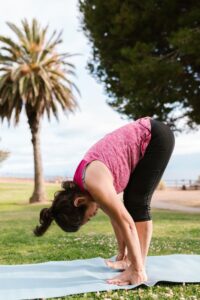
  1. Stand in mountain pose, or start in a low lunge with the right foot forward. Place blocks in front of your feet if the floor is far.
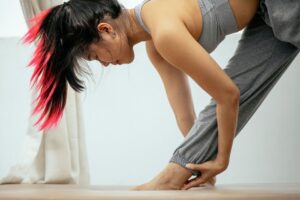
  2. Fold forward over the right leg and place the hands on the floor or blocks on either side of the right foot.
  3. Walk the hands slightly forward and shift your weight onto the right foot.

In the pose

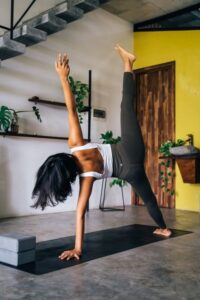
  1. Inhale and slowly straighten the right leg as you lift the left leg back and up. Keep the left toes pointing toward the floor.
  2. Turn the right kneecap to face forward; rotate the left thigh slightly inward to keep the pelvis level. Let the torso move toward the standing leg; if steady, hold the back of the right ankle with one hand.
  3. Stay for several breaths, up to about 30 seconds.

Coming out

  1. Exhale and lower the left leg with control. Come up to standing with a long back, then repeat on the other side.

Breathing

Breathe evenly. Inhale to lift the leg; on the exhales let the torso settle toward the standing leg. Light on Yoga suggests about 20 seconds with even breathing; Yoga Journal 30 seconds to 1 minute.

Alignment cues

  • Weight over the standing foot before the back leg lifts.
  • Standing kneecap faces forward; knee straight but not locked.
  • Lifted thigh rotates slightly inward; pelvis stays level.
  • Torso descends as the leg rises; height of the leg is secondary.

Common alignment errors

  • Opening the lifted hip toward the ceiling to get the leg higher.
  • Rolling the standing knee inward.
  • Rounding the upper back to reach the floor instead of using blocks.
  • Holding the breath.

Modifications and easier variations

  • Keep a slight bend in the standing knee and the lifted leg at hip height. none

Advanced variations

Props and chair adaptations

  • Blocks under the hands. block
  • Hands on a chair seat while you lift the leg back. chair
  • Press the sole of the lifted foot into a wall, or hook the ankle over the back of a chair. wall

Precautions

  • High blood pressure, glaucoma, detached retina or dizziness in forward bends: keep the torso high on blocks or a chair, or skip it, and ask your doctor.
  • Hamstring, lower back or hip injury: ask your doctor or physical therapist first.
  • Do not force the standing-leg hamstring; bend the knee if the stretch is sharp.
  • Later pregnancy: deep folds with the head down are usually avoided.

Learn it with a teacher: Most practitioners can learn it with blocks from clear instructions. Ask a teacher if you feel pulling at the sitting bone, or before working toward the floor split.

General information, not medical advice. Poses do not cure illness. If you are pregnant, injured or have a health condition, check with your doctor and tell your teacher before you practise.

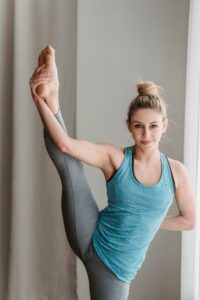
In short: standing split is a one-leg standing forward bend: you fold over the standing leg, hands on the floor, a block or the ankle, and lift the other leg high behind you. It stretches the hamstrings of the standing leg and asks for balance and strength in the lifted leg. Blocks under the hands make it reachable; the height of the back leg matters less than keeping the hips level.

Standing split is a common pose in flow classes, often entered from downward-facing dog or a lunge, and it is also a classical Iyengar standing pose. As Kathryn Budig points out in Yoga Journal, it is related to the floor split, Hanumanasana, but needs more muscle work and less help from gravity. Below we explain the name, the cues behind the steps and the precautions.

The name

Ūrdhva means upward, prasārita extended or stretched out, eka one and pāda foot. In Light on Yoga (1966), Ūrdhva Prasārita Ekapādāsana starts from mountain pose: you fold forward, hold the back of the standing ankle with one hand, place the other hand on the floor, rest the head toward the knee and lift the free leg as high as possible, with both knees straight and the lifted toes pointing straight back rather than tilting sideways. Yoga Journal teaches the same shape under the English name Standing Split, entering from a lunge.

Be careful with one name overlap: the Bihar School’s Asana Pranayama Mudra Bandha describes a similar standing forward bend with the leg raised behind under the name Bakāsana, which in most other schools means the arm balance crane pose.

How to make it work

Shift the weight fully onto the standing foot before the back leg lifts; walking the hands slightly forward helps. The standing knee tends to roll inward, so turn the thigh slightly outward until the kneecap faces straight ahead. The lifted leg tends to roll open, lifting that hip and tilting the pelvis; Yoga Journal’s cue is to rotate the lifted thigh inward to keep the front of the pelvis level with the floor. Think of pressing down through the standing leg to send energy up into the raised leg, and let the torso move toward the standing leg as the back leg rises, rather than chasing height.

How you lift the leg matters as much as how high it goes. Lizzie Brooks (Yoga International) suggests that from low lunge you walk the hands slightly forward and shift more weight into the front leg, then, instead of kicking the back leg up, bend the back knee to bring the heel toward the sitting bone and the knee slightly in toward the belly. Pause there for a breath, then extend the leg. She finds this lets more muscles help the lifting leg, and it often rises higher with that support.

The lifted leg should stay “neutral”: kneecap and toes pointing down toward the floor, not turned out to the side. Allison Ray Jeraci (Yoga International) names standing split and warrior III as simpler poses for learning this neutral back leg before the floor split, because a back leg that turns out in the full split brings a twist into the backbend of the lower spine. In Light on Yoga, Iyengar asks for the same thing in his own words: the toes of the lifted leg point straight and do not tilt sideways.

Props, holds and easier versions

Yoga Journal offers several supports: blocks under the hands, a chair to hold, the back foot against a wall, or the lifted ankle resting over the back of a chair. The wall version is a good way to feel a level pelvis without having to balance. Yoga Journal suggests staying for 30 seconds to a minute; Light on Yoga gives about 20 seconds with even breathing. While you learn, a few steady breaths are plenty. Lower the leg with control, bring the feet together and roll up slowly so the head is not rushed above the heart.

Precautions in plain words

The head hangs below the heart, so people with uncontrolled high blood pressure, glaucoma or a detached retina, or who feel dizzy in forward bends, should keep the torso higher on blocks or a chair, or skip the pose, and check with their doctor. Do not force the hamstrings of the standing leg; bend the knee a little if the stretch is sharp. With a hamstring, lower back or hip injury, ask a doctor or physical therapist first. In later pregnancy, inversions of the head and deep folds are usually avoided. This page is general information, not individual advice.

Preparation and next poses

Prepare with standing forward bend, pyramid pose, low lunge and warrior III. From the standing split you can step back into a lunge, move to half moon by opening the hips, or work toward the floor split, Hanumanasana, with plenty of support.

Standing split is also a stepping stone toward handstand: Yoga Journal lists standing splits among the preparatory poses, and its handstand steps lift one leg into a standing split before taking small hops off the bent leg. So the balance and the strong, neutral back leg you build here carry over directly.

Where it is taught

You will meet the standing split in vinyasa and power yoga flows and in Iyengar classes under its Sanskrit name. Find related poses in the pose library.
Preparatory poses

Follow-up poses and transitions

Counterposes

Related poses

More balancing poses

Frequently asked questions

How high should my leg go in a standing split?

As high as you can lift it while the hips stay level. Yoga Journal advises focusing on the stretch rather than the height; the torso moving toward the standing leg matters more.

Is a standing split the same as Hanumanasana?

No. Hanumanasana is the full split on the floor. The standing split is related but balances on one leg and uses more muscular work.

What can I do if my hands do not reach the floor?

Put blocks under the hands, or rest them on a chair seat, and keep a slight bend in the standing knee.

Sources

  1. Standing Split, Yoga Journal (accessed October 6, 2026)
  2. B.K.S. Iyengar, Light on Yoga (1966), asana 21 Urdhva Prasarita Ekapadasana, plate 49, Allen & Unwin (Internet Archive record) (accessed October 6, 2026)
  3. IYAC/ACYI Syllabi for Candidates (plate 49 Urdhva Prasarita Ekapadasana), Iyengar Yoga Association of Canada (accessed October 6, 2026)
  4. Swami Satyananda Saraswati, Asana Pranayama Mudra Bandha: Bakasana (standing form), Bihar School of Yoga (Internet Archive) (accessed October 6, 2026)

Facts checked on October 6, 2026