Yoga Seal Pose (Yoga Mudrasana): the lotus forward fold and a kneeling version

Yoga seal (Yoga Mudrasana) is a seated forward fold with the arms behind the back: in full lotus in Ashtanga, or kneeling in other schools. It is an asana, despite the word mudra.

Not yet reviewed by a qualified teacher Names and shape checked against 3 sources

Sanskrit name
Yoga Mudrāsana योगमुद्रासन (source) (varies by tradition, see below)
Also called
Lotus Forward Fold, Yogic Seal, Psychic Union Pose
Other spellings
Yoga Mudra, Yogamudrasana, Yoga Mudrasana
Pose family
Forward bend, Seated
Starting position
Seated
Movement
Forward fold, Hip external rotation
Taught in
Hatha Yoga: The Historical Term and the Modern Class
Difficulty
Advanced
Prerequisite skills
Lotus version: a comfortable full lotus and bound lotus. Kneeling version: sitting on the heels without knee pain.
Body areas
Feet and ankles, Hips, Shoulders, Spine
Props
Blanket, Block, Mat, Strap
Practised
Solo

Names in different traditions

TraditionName usedNote
Ashtanga vinyasa (Pattabhi Jois lineage)Yoga MudrāsanaFinishing sequence, from Baddha Padmasana: full lotus, arms crossed behind holding the big toes, chin to the floor, five breaths (AshtangaYoga.info).
Yoga in Daily Life (Paramhans Swami Maheshwarananda)Padma Yoga Mudra (in lotus, wrist hold); Yoga MudraFrom Vajrasana: hold a wrist behind the back, forehead to the floor, buttocks on heels; three repetitions (yogaindailylife.org, level 4).

Step by step

Coming into the pose

  1. Ashtanga version: sit in full lotus. Cross the arms behind the back and hold the big toe of the foot on each opposite thigh (bound lotus). Inhale and lengthen the spine.
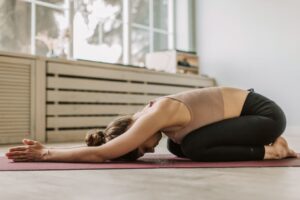
  2. Kneeling version instead: sit on the heels, take the arms behind the back and hold one wrist with the other hand.

In the pose

  1. Exhale and tip forward from the pelvis, keeping the back long, until the chin (lotus) or forehead (kneeling) approaches or rests on the floor. Keep the hold.
  2. Stay for five breaths (Ashtanga) or as long as is comfortable, breathing slowly.

Coming out

  1. Inhale and come up with a long spine, release the hands and then the legs. In the kneeling version, the Yoga in Daily Life system repeats the fold three times.

Breathing

Exhale to fold, inhale to rise. In the fold the belly is compressed; breathe slowly into the back of the ribs and keep the breath smooth.

Alignment cues

  • Fold from the pelvis with a long back; do not collapse the chest.
  • Keep the knees quiet in lotus; never use the fold to push them down.
  • Relax the neck and face; the head goes down as far as the hips allow.

Common alignment errors

  • Forcing full lotus to do the pose.
  • Rounding hard through the upper back to get the head down.
  • Lifting the buttocks off the heels in the kneeling version.

Modifications and easier variations

  • Kneeling version from thunderbolt pose, hands holding a wrist behind the back. none
  • Cross-legged (easy seat) version: fold forward over crossed legs with the hands clasped behind or resting on the floor. none

Advanced variations

Props and chair adaptations

  • Use a strap between the hands behind the back; place a block or bolster under the forehead. strap
  • In the kneeling version, a folded blanket under the shins or between calves and thighs eases the knees. blanket

Precautions

  • Lotus version: only with a pain-free full lotus; stop at any knee pain.
  • High blood pressure or dizziness: avoid (Yoga in Daily Life caution); also avoid with glaucoma or after recent eye surgery.
  • Pregnancy: avoid deep forward folds.
  • Shoulder injury: rest the hands on the lower back or floor instead of binding.

Learn it with a teacher: The kneeling version can be practised alone. Learn the lotus version with an experienced teacher, as part of learning full lotus.

General information, not medical advice. Poses do not cure illness. If you are pregnant, injured or have a health condition, check with your doctor and tell your teacher before you practise.

In short: yoga seal is a seated forward fold with the arms behind the back. In the Ashtanga version you sit in full lotus, cross the arms behind you to hold the big toes, and fold forward until the chin or forehead approaches the floor. Other schools teach a gentler version sitting on the heels. Despite the word “mudra” in its name, it is a posture (asana), not a hand gesture.

Yoga Mudrasana is one of the closing postures of the Ashtanga finishing sequence, and versions of “Yoga Mudra” appear in several Indian schools. Because the lotus version puts strong demands on the knees, it is an advanced pose; the kneeling version is much more accessible.

The name: an asana called a mudra

Yoga Mudrāsana joins yoga, mudrā (seal or sign) and āsana (posture): the posture of the yoga seal. In yoga, “mudra” usually means a gesture, often of the hands, or a sealing practice that directs attention or energy; we explain those on our mudras page. Here, though, the “seal” is a whole-body shape, and you practise it like any other posture. Some schools simply call it Yoga Mudra, and the name is also used for different seated folds, so check which version a teacher means.

Two versions

Ashtanga (in lotus). In the finishing sequence you first sit in bound lotus: full lotus with the arms crossed behind the back, each hand holding the big toe of the foot on the opposite thigh. Then, on an exhalation, you tip forward from the pelvis until the chin touches the floor in front of the shins, keep hold of the toes and stay for five breaths. AshtangaYoga.info describes it as an outward rotation of the hips combined with a long stretch through the shoulders.

Kneeling (Yoga in Daily Life system). The Yoga in Daily Life system teaches Yoga Mudra from thunderbolt pose: sit on the heels, take the arms behind the back and hold one wrist with the other hand, then exhale and fold forward with a straight back until the forehead touches the floor, buttocks staying on the heels. You stay as long as is comfortable and repeat three times. It cautions against this version with high blood pressure or dizziness. The same system also teaches the fold in lotus, called Padma Yoga Mudra (yoga mudra in lotus), holding a wrist behind the back instead of the toes, and advises against it in pregnancy, with high blood pressure or with hip pain.

In both, fold from the hips rather than collapsing the chest, keep the neck relaxed and breathe slowly.

Precautions in plain words

The lotus version is only for people with a comfortable, pain-free full lotus; never force the legs, and come out at any knee pain. The kneeling version presses the knees and ankles deeply; use a blanket under the shins or between calves and thighs if needed. Because the head goes down, avoid both with high blood pressure, dizziness, glaucoma or recent eye surgery, and avoid deep forward folds during pregnancy. With a shoulder injury, rest the hands on the lower back or floor instead of binding. This page is general information, not individual advice.

Preparation and what comes next

For the lotus version you need a comfortable lotus pose and bound lotus, and the hip work of half-bound lotus forward bend. For the kneeling version, thunderbolt pose and child’s pose are enough. In the Ashtanga finishing sequence, yoga seal is followed by lotus and the lifted lotus, then rest in corpse pose. The pose is often paired with quiet breathing; see our guide to diaphragmatic breathing.

Choosing a version. If you do not sit comfortably in full lotus, choose the kneeling version or a cross-legged version: they keep the essence of the pose, a quiet fold with the arms drawn behind the back, without strain on the knees. If kneeling is uncomfortable, a cushion between the calves and thighs often helps. Whatever the version, move into and out of the fold slowly, especially if you tend to feel light-headed when you sit up.

You will meet yoga seal in Ashtanga practice (lotus version) and in some hatha classes (kneeling or cross-legged versions).
Preparatory poses

Follow-up poses and transitions

Counterposes

Related poses

More forward bend poses

Frequently asked questions

Is Yoga Mudra a mudra or a pose?

In this sense it is a pose (asana): a seated forward fold with the arms behind the back. Hand-gesture mudras are a separate practice, explained on our mudras page.

Do I need full lotus?

Only for the Ashtanga version. The kneeling version from thunderbolt pose, or a cross-legged version, gives a similar fold without lotus.

Who should avoid it?

People with high blood pressure, dizziness, glaucoma or knee problems (for the lotus or kneeling versions), and pregnant students for the deep fold.

Sources

  1. Yoga Mudrāsana: Yogasiegel (yoga seal), AshtangaYoga.info (Dr. Ronald Steiner) (accessed October 6, 2026)
  2. Padma Yoga Mudra (Yoga Mudra in Lotus), Level 8, Yoga in Daily Life system (accessed October 6, 2026)
  3. Yoga Mudra (forward bend sitting on heels), Level 4, Yoga in Daily Life system (accessed October 6, 2026)

Facts checked on October 6, 2026