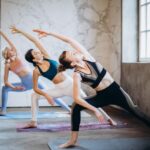
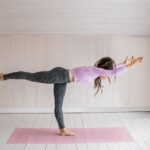
Warrior Flow: a standing sequence through Warriors I, II and III

A newly designed 15-minute warrior flow: Warrior I, Warrior II, reverse warrior, extended side angle and Warrior III on each side, with suggested holds and easier options.

Not yet reviewed by a qualified teacher Needs verification: names and instructions not yet confirmed by two sources

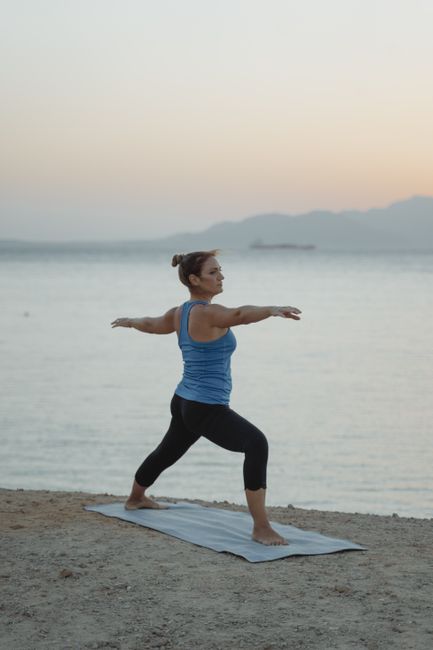
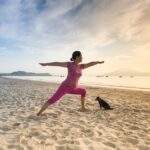
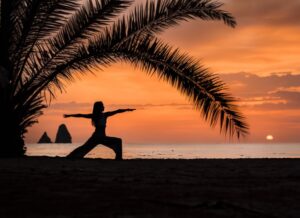
Woman performing Warrior 2 pose on the beach during twilight, combining fitness and tranquility.
Also called
Warrior Sequence, Virabhadrasana sequence
Tradition
YogaVacation educational flow (modern hatha/vinyasa poses)
Order
Newly designed educational flow
Level
Beginner, Intermediate
Approximate duration
about 15 minutes
Focus
Strength
Audience
Beginners, Experienced
Props
Block, Mat, Wall
Styles
Hatha Yoga: The Historical Term and the Modern Class, Vinyasa Yoga: Flow, Breath and What to Expect
Body areas
Core, Hips, Legs, Shoulders

A newly designed educational flow, not a traditional sequence. Teachers order these poses in many ways.

Printable view

Origin and source

Newly designed by YogaVacation in 2026. Warrior flows have no universally fixed order; individual warriors are described in Light on Yoga (Iyengar); reverse warrior is a modern name.

Who it is for

Comfortable standing on both legs in a wide stance; some balance for Warrior III (or use blocks or a wall).

The steps in order

Version shown: YogaVacation warrior flow: Warrior I, II, reverse warrior, extended side angle, Warrior III, each side

#StepBreathSideHoldCues and options
1Mountain
Tāḍāsana
Free breathing5 breaths
YogaVacation (suggested)

Transition: Stand at the front of the mat.

Easier option: Feet hip-width.

2Warrior I, right foot forward
Vīrabhadrāsana I
InhaleRight3-5 breaths
YogaVacation (suggested)

Transition: Step the left foot back, heel down at an angle, bend the right knee, arms up.

Easier option: Shorter stance, back heel lifted; hands on the hips.

3Warrior II, right
Vīrabhadrāsana II
ExhaleRight3-5 breaths
YogaVacation (suggested)

Transition: Open the hips and chest to the side, arms out at shoulder height, gaze over the front hand.

Easier option: Bend the front knee less.

4Reverse warrior, rightInhaleRight3 breaths
YogaVacation (suggested)

Transition: Front arm reaches up and back, back hand slides down the back leg.

Easier option: Smaller lean.

5Extended side angle, right
Utthita Pārśvakoṇāsana
ExhaleRight3-5 breaths
YogaVacation (suggested)

Transition: Forearm to the front thigh (or hand to a block), top arm overhead.

Easier option: Forearm on the thigh.

6Warrior III, standing on the right leg
Vīrabhadrāsana III
InhaleRight3 breaths
YogaVacation (suggested)

Transition: Hands down, step to the front leg and lift the back leg level with the hips.

Easier option: Hands on blocks or a wall; back toes stay on the floor.

7Mountain
Tāḍāsana
Free breathing

Transition: Step the feet together; pause.

Easier option: Shake out the legs.

8Repeat Warrior I to Warrior III with the left foot forwardFree breathingLeft3-5 breaths per pose
YogaVacation (suggested)

Transition: Same chain on the left side.

Easier option: Leave out Warrior III if balance is tired.

9Standing forward fold
Uttānāsana
Exhale5 breaths
YogaVacation (suggested)

Transition: Fold with soft knees to release the legs.

Easier option: Hands on blocks or thighs.

10Mountain
Tāḍāsana
Free breathing

Transition: Roll up slowly.

Easier option: Rest.

Left and right

Right foot forward first, then left.

Repetitions and counting

One round = the chain on the right, then on the left. Two rounds suggested.

Props and adaptations

Shorter stances; hands on the hips; forearm on the thigh in side angle; blocks or a wall in Warrior III; back knee down for Warrior I (low lunge).

Precautions

  • Knees: front knee over the ankle, tracking the second toe.
  • Warrior III is a demanding balance; use support.
  • High blood pressure: arms lower, breathe freely.
  • Injury or pregnancy: ask a qualified teacher or health professional.

Learn it with a teacher: A teacher can check knee and hip alignment in the warriors; Warrior III benefits from guidance.

General information, not medical advice. Poses do not cure illness. If you are pregnant, injured or have a health condition, check with your doctor and tell your teacher before you practise.

Beginner and chair alternatives

Chair Yoga Sequence: a 20-minute seated routine

A warrior flow links the warrior poses into one standing sequence. There is no universally fixed order: every teacher builds their own, and the name simply tells you that the warriors are the backbone. This page offers a newly designed educational flow by YogaVacation, about 15 minutes long, that moves from mountain pose through Warrior I, Warrior II, reverse warrior, extended side angle and Warrior III on each side, and back to standing. It builds leg strength, steadiness and focus without any floor work beyond an optional downward dog.

The warrior poses carry the name of Virabhadra, a fierce warrior of Hindu mythology; Warrior I, II and III (Virabhadrasana I-III) are described in B.K.S. Iyengar’s Light on Yoga. Reverse warrior is a modern name with no established Sanskrit. See the individual pages: Warrior I, Warrior II, Warrior III, reverse warrior.

How the flow is built

We start with the most stable pose and end with the least. Warrior I faces forward with the hips squared; turning the hips and arms open gives Warrior II; leaning back over the straight leg gives reverse warrior; folding forward over the bent knee gives extended side angle. Then you step forward and balance in Warrior III, the hardest of the set, before returning to mountain pose. One side, then the other.

The transitions, one by one

Most of the skill in a warrior flow is in the moves between the poses, so here they are in plain words, right side first.

  • Mountain to Warrior I. Step the left foot back, set the back heel down with the foot angled out, bend the right knee and, breathing in, raise the arms.
  • Warrior I to Warrior II. Breathing out, turn the hips and chest to face the long side of the mat and open the arms to shoulder height. Keep the front knee where it is, over the ankle. If the stance now feels short, widen it a little.
  • Warrior II to reverse warrior. Breathing in, turn the front palm up, lift the front arm and arc it back, letting the back hand rest lightly on the back leg. Keep the front knee bent.
  • Reverse warrior to extended side angle. Breathing out, swing the torso forward over the bent knee, forearm to the thigh or hand to a block, top arm reaching overhead.
  • Extended side angle to Warrior III. Bring both hands down beside the front foot (on blocks if needed), shift the weight onto the front leg and, breathing in, lift the back leg level with the hips as the standing leg straightens. Move slowly here; there is no need to jump.
  • Warrior III to mountain. Lower the back foot beside the front foot and stand up. Pause, shake out the legs and begin the left side.

Counting, holds and sides

Hold each pose for three to five breaths; these holds are our suggestion, not a tradition’s rule. For comparison, Light on Yoga holds each warrior for about 20 to 30 seconds on its own, with deep, even breathing. Do the full chain with the right foot forward, return to mountain, then do it with the left foot forward. That is one round, about seven minutes. Two rounds, the second one a little slower, make a good 15-minute practice; on the second round you can link the poses with one breath each instead of holding them.
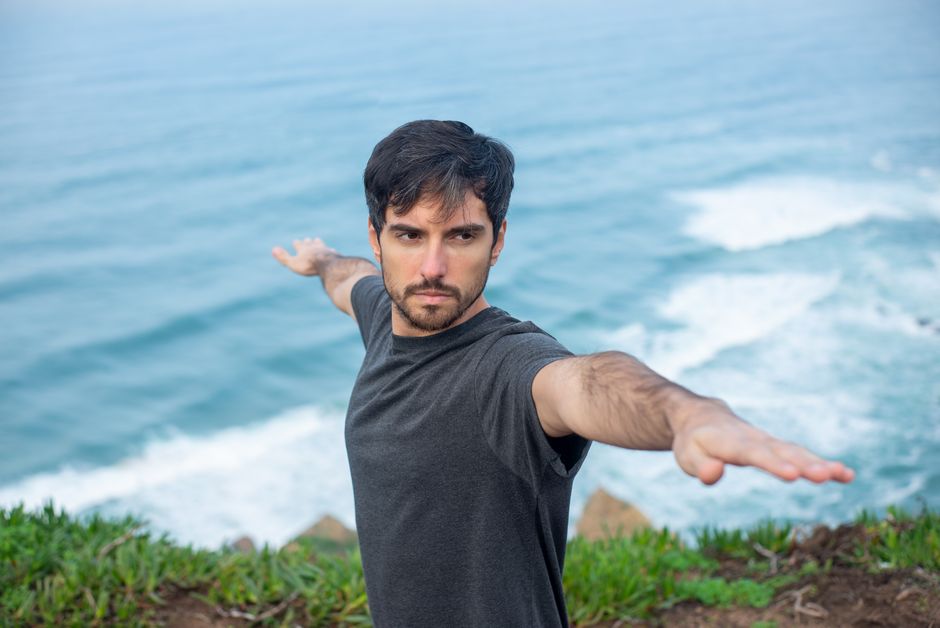
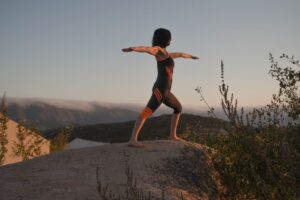
Man performing warrior yoga pose on scenic cliffs by the ocean in Portugal.

How to practise it safely

  • Keep the front knee over the ankle and pointing toward the second toe in every bent-knee pose; shorten the stance if it drifts inward.
  • In Warrior I, a shorter stance and a lifted back heel make squaring the hips easier on the lower back.
  • Warrior III is a demanding balance: keep the hands on blocks or on a wall, or lift the back leg only a little. It is not a beginner pose for most people.
  • With high blood pressure, keep the arms lower (hands on the hips) and do not hold the breath.
  • Knee, hip or ankle injuries, or pregnancy: ask a qualified teacher or health professional first.

This flow has not yet been reviewed by a qualified teacher.

Easier alternatives

Leave out Warrior III and finish with a high lunge; take Warrior I as a low lunge with the back knee down; or practise the arms only, seated, in our chair yoga sequence. For a flowing version with one breath per movement, see dancing warrior.
Frequently asked questions

Is there a standard warrior flow?

No. Teachers build their own sequences around the warrior poses. This page is our own educational version.

Is Warrior III suitable for beginners?

It is a demanding balance. Beginners can use blocks under the hands or a wall, or leave it out and finish with a high lunge.

Sources

  1. B.K.S. Iyengar, Light on Yoga: Virabhadrasana I, II, III, Internet Archive (catalogue record) (accessed October 6, 2026)
  2. Yoga: Effectiveness and Safety, National Center for Complementary and Integrative Health (NIH) (accessed October 6, 2026)

Facts checked on October 6, 2026