Wheel Pose Preparation: a peak-pose sequence for Urdhva Dhanurasana

A newly designed 30-minute peak-pose sequence for wheel (Urdhva Dhanurasana): hip and shoulder openers, cobra, locust, bow, camel, bridge, wheel and counterposes.

Not yet reviewed by a qualified teacher Needs verification: names and instructions not yet confirmed by two sources

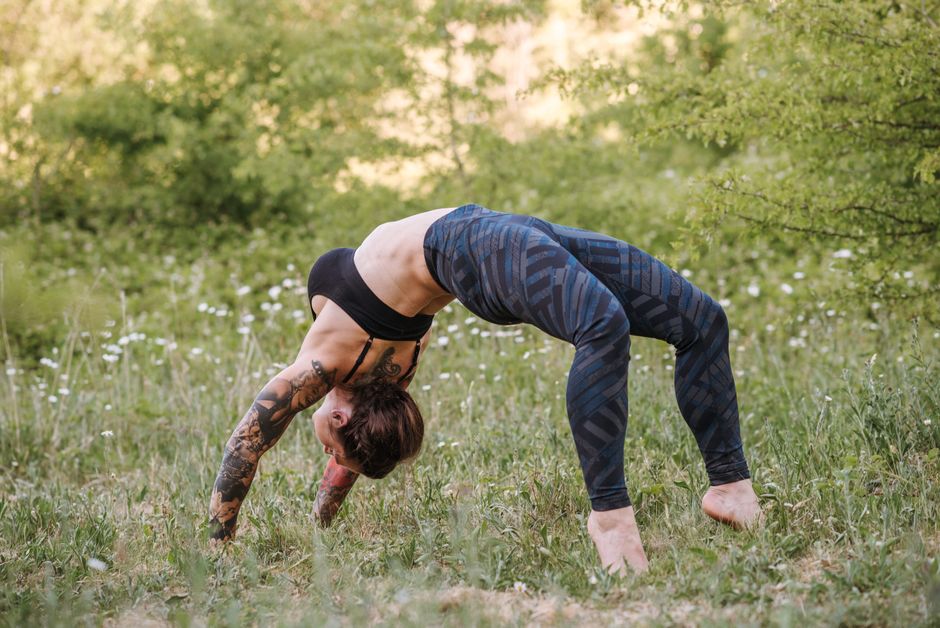
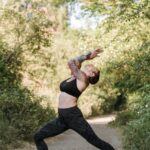
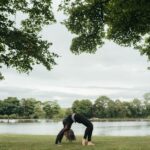
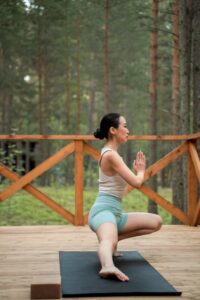
Side view of unrecognizable flexible female in sportswear standing in Urdhva Dhanurasana pose while practicing yoga on meadow
Also called
Peak Pose: Wheel, Urdhva Dhanurasana preparation
Tradition
Modern hatha (YogaVacation peak-pose sequence)
Order
Newly designed educational flow
Level
Advanced, Intermediate
Approximate duration
about 30 minutes
Focus
Strength
Audience
Experienced
Props
Block, Mat, Strap, Wall
Styles
Hatha Yoga: The Historical Term and the Modern Class, Vinyasa Yoga: Flow, Breath and What to Expect
Body areas
Chest, Hips, Legs, Shoulders, Spine

A newly designed educational flow, not a traditional sequence. Teachers order these poses in many ways.

Printable view

Origin and source

Newly designed by YogaVacation (2026). Wheel (Urdhva Dhanurasana) is described in Light on Yoga; the preparation order is ours.

Who it is for

Comfortable in bridge, cobra and camel; arms straight overhead without strain; no back, neck or wrist injury.

The steps in order

Version shown: YogaVacation wheel preparation: warm-up, lunges, cobra, locust, bow, camel, bridge, wheel, counterposes

#StepBreathSideHoldCues and options
1Cat-cow
Marjaryasana-Bitilasana
Free breathing8 rounds
YogaVacation (suggested)

Transition: Hands and knees; inhale arch, exhale round.

2Downward dog
Adho Mukha Śvānāsana
Free breathing5 breaths
YogaVacation (suggested)

Transition: Lift the hips; press the chest gently towards the thighs to open the shoulders.

Easier option: Knees bent.

3Low lunge, arms up
Āñjaneyāsana
InhaleEach side5 breaths each side
YogaVacation (suggested)

Transition: Right foot forward, back knee down, hips forward, arms overhead. Then left.

Easier option: Hands on the front thigh.

4High lungeInhaleEach side5 breaths each side
YogaVacation (suggested)

Transition: Lift the back knee, arms up, tailbone long.

Easier option: Back knee down.

5Cobra
Bhujaṅgāsana
Inhale3-5 breaths, twice
YogaVacation (suggested)

Transition: Lie on the belly, hands under the shoulders, lift the chest.

Easier option: Low cobra.

6Locust
Śalabhāsana
Inhale3-5 breaths, twice
YogaVacation (suggested)

Transition: Lift the chest, arms and legs.

Easier option: Half locust (one leg at a time).

7Bow
Dhanurāsana
Inhale3-5 breaths
YogaVacation (suggested)

Transition: Bend the knees, hold the ankles, kick the feet into the hands to lift.

Easier option: Strap around the ankles; or half bow.

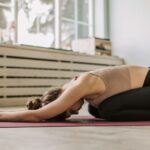
8Child pose
Bālāsana
Free breathing5 breaths
YogaVacation (suggested)

Transition: Press back to rest the lower back.

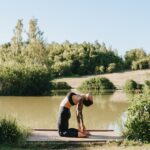
9Camel (or half camel)
Uṣṭrāsana
Inhale3-5 breaths
YogaVacation (suggested)

Transition: Kneel, hands on the lower back, lift the chest, then reach for the heels if comfortable.

Easier option: Hands stay on the back; toes tucked.

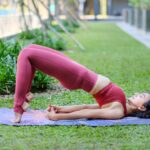
10Bridge
Setu Bandha Sarvāṅgāsana
Inhale5 breaths, twice
YogaVacation (suggested)

Transition: Lie on the back, feet hip-width near the hips, lift the pelvis.

Easier option: Block under the sacrum.

11Wheel set-up and top-of-the-head stageInhale2-3 breaths
YogaVacation (suggested)

Transition: Hands beside the ears, fingers towards the shoulders, elbows in; press up and rest the crown lightly on the floor, weight in hands and feet.

Easier option: Stay in bridge.

12Wheel
Ūrdhva Dhanurāsana
Free breathing3-5 breaths, 1-3 times
YogaVacation (suggested)

Transition: Straighten the arms, lift the head, keep knees parallel. Lower the chin to the chest and come down slowly.

Easier option: Hands on blocks against a wall.

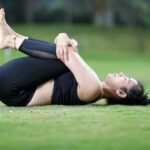
13Knees to chest (counterpose)
Pavanamuktāsana
Free breathing8 breaths
YogaVacation (suggested)

Transition: Hug the knees, rock gently.

14Reclining twist (counterpose)Free breathingEach side5 breaths each side
YogaVacation (suggested)

Transition: Knees to one side, then the other.

15Seated forward bend (counterpose)
Paścimottānāsana
Exhale8 breaths
YogaVacation (suggested)

Transition: Sit up and fold gently, knees soft.

Easier option: Knees bent.

16Rest
Śavāsana
Free breathing3 minutes
YogaVacation (suggested)

Transition: Lie down.

Left and right

Lunges right then left; all backbends symmetrical.

Repetitions and counting

One pass; wheel 1-3 times with rest between.

Props and adaptations

Blocks under the hands against a wall in wheel; strap in bow; hands on the back in camel; block under the sacrum in bridge; stop at bridge or the top-of-the-head stage.

Precautions

  • Deep backbend: not a beginner pose; learn wheel with a teacher.
  • Back, neck, shoulder or wrist injury: do not attempt wheel.
  • High blood pressure, heart conditions, glaucoma, pregnancy: ask a health professional.
  • Lower back pinching: come down; keep knees and feet parallel.
  • Never hold the breath to push up.

Learn it with a teacher: Learn the press-up and the safe way down with a teacher; a teacher can also judge whether your shoulders are ready.

General information, not medical advice. Poses do not cure illness. If you are pregnant, injured or have a health condition, check with your doctor and tell your teacher before you practise.

Beginner and chair alternatives

Yoga for Flexibility: a 20-minute stretching sequence

This wheel pose preparation sequence leads up to wheel (Urdhva Dhanurasana), the full backbend in which hands and feet press into the floor and the whole body arches up. It opens the front of the hips, the chest and the shoulders, strengthens the legs and back, rehearses the shape in bridge, and finishes with counterposes that bring the spine back to neutral. It is a newly designed educational peak-pose sequence by YogaVacation, about 30 minutes long. There is no traditional wheel preparation order.

How the sequence is built

Wheel asks for open hip flexors, mobile shoulders that lift the arms fully overhead, and strong legs and arms to press up. Backbends are safest when the body is warm and when they grow gradually: low lunge and high lunge open the hips; cobra, locust and bow work the back muscles; camel or bridge rehearse the shape with less load; then wheel is tried once to three times. The counterposes at the end (knees to chest, a gentle twist, a seated forward bend) are part of the sequence, not optional.

The order follows what the main references say about backbends, even though no school prints this exact list. Yoga Journal’s wheel page says to practice wheel at the end of class once the back of the body is warm, not to skimp on the gentler backbends first, and to follow it with forward bends. Its suggested preparation poses include cobra, bridge, locust and bow, and its counterposes include seated forward bend and child’s pose. The Bihar School manual Asana Pranayama Mudra Bandha says its wheel (Chakrasana) should be practiced only after the earlier and intermediate backbends are mastered, and suggests easier poses such as bridge as preparation.

How the counting and sides work

Only the lunges have sides: do the right leg forward first, then the left, with the same number of breaths. Every backbend is symmetrical. The holds on this page are counted in breaths and are our suggestions, so slow them down or shorten them as you need. For wheel itself, the sources give different numbers. Light on Yoga (B.K.S. Iyengar) holds it for half a minute to a minute with normal breathing. The Bihar manual says up to three rounds. In the Ashtanga primary series, AshtangaYoga.info gives five breaths, repeated three to five times. Our page asks for one to three tries of three to five breaths, with rest in between, which sits inside those ranges.

Pressing up: the cues that matter

Yoga Journal’s instructions are a good checklist. Lie on your back with the feet hip-width apart and parallel, right under the knees. Place the hands beside the ears, fingers pointing toward the shoulders. On an exhale, lift the hips and come onto the crown of the head without putting weight on it. Draw the elbows toward each other, then press into the hands and feet as you inhale and lift. Keep the feet from turning out. To come down, tuck the chin and lower the whole back to the floor, not onto the head. If the knees splay, Yoga Journal suggests a strap around the thighs just above the knees and a block between the feet. Practice on a mat that does not slide; the Bihar manual warns against a blanket, which may slip.

How to practise it safely

  • Wheel is a deep backbend, not a beginner pose. Learn it with a teacher before practising it alone.
  • Back, neck, shoulder or wrist injury: do not attempt wheel; stay with bridge.
  • High blood pressure, heart conditions, glaucoma, pregnancy: ask a health professional; deep backbends and the effort of pressing up are usually not advised.
  • Keep the knees and feet parallel and hip-width; splaying the feet pinches the lower back.
  • If you feel pinching in the lower back or a sharp pain anywhere, come down and stay with bridge.
  • Breathe throughout; do not hold the breath to push up.
  • Yoga Journal also lists low blood pressure, vertigo or dizziness, heartburn, an ear infection and eye conditions such as detached retina or recent cataract surgery as reasons to modify or avoid wheel. If your shoulders tend to dislocate, stay with bridge.
  • Build wrist strength first and spread the weight evenly between both hands. The Bihar manual also says not to practice wheel when you feel generally tired.

This sequence has not yet been reviewed by a qualified teacher.

Easier alternatives

Replace wheel with a strong bridge (arms clasped under the back) or a supported bridge on a block. A middle step is the “top of the head” stage: press up halfway, rest the crown lightly on the floor with most of the weight in the hands and feet, and come down. Many teachers prefer students to stay there for weeks before straightening the arms.

If pressing up from the floor is not possible yet, Yoga Journal describes lying back over a folding chair with the feet on the floor and the hands on blocks braced against a wall, then pressing up from the chair. Blocks under the hands against a wall also help when tight shoulders or groins limit the pose. Work at the stage where you can still breathe easily, and come back to it over many weeks.
Frequently asked questions

How do I prepare for wheel pose?

Warm up, open the hip flexors and shoulders, build back strength with cobra, locust and bow, rehearse in bridge, then try wheel with a teacher.

What should I do after wheel?

Counterposes that return the spine to neutral: knees to chest, a gentle twist and a soft forward bend, then rest.

Sources

  1. B.K.S. Iyengar, Light on Yoga: Urdhva Dhanurasana, Internet Archive (catalogue record) (accessed October 6, 2026)
  2. Yoga: Effectiveness and Safety, National Center for Complementary and Integrative Health (NIH) (accessed October 6, 2026)

Facts checked on October 6, 2026