Ashtanga Standing Sequence: the fundamental positions in order

The Ashtanga standing sequence (fundamental positions) in lineage order: big toe pose to Parsvottanasana, five breaths each, with sides, counts and easier options.

Not yet reviewed by a qualified teacher Names and order checked against 3 sources

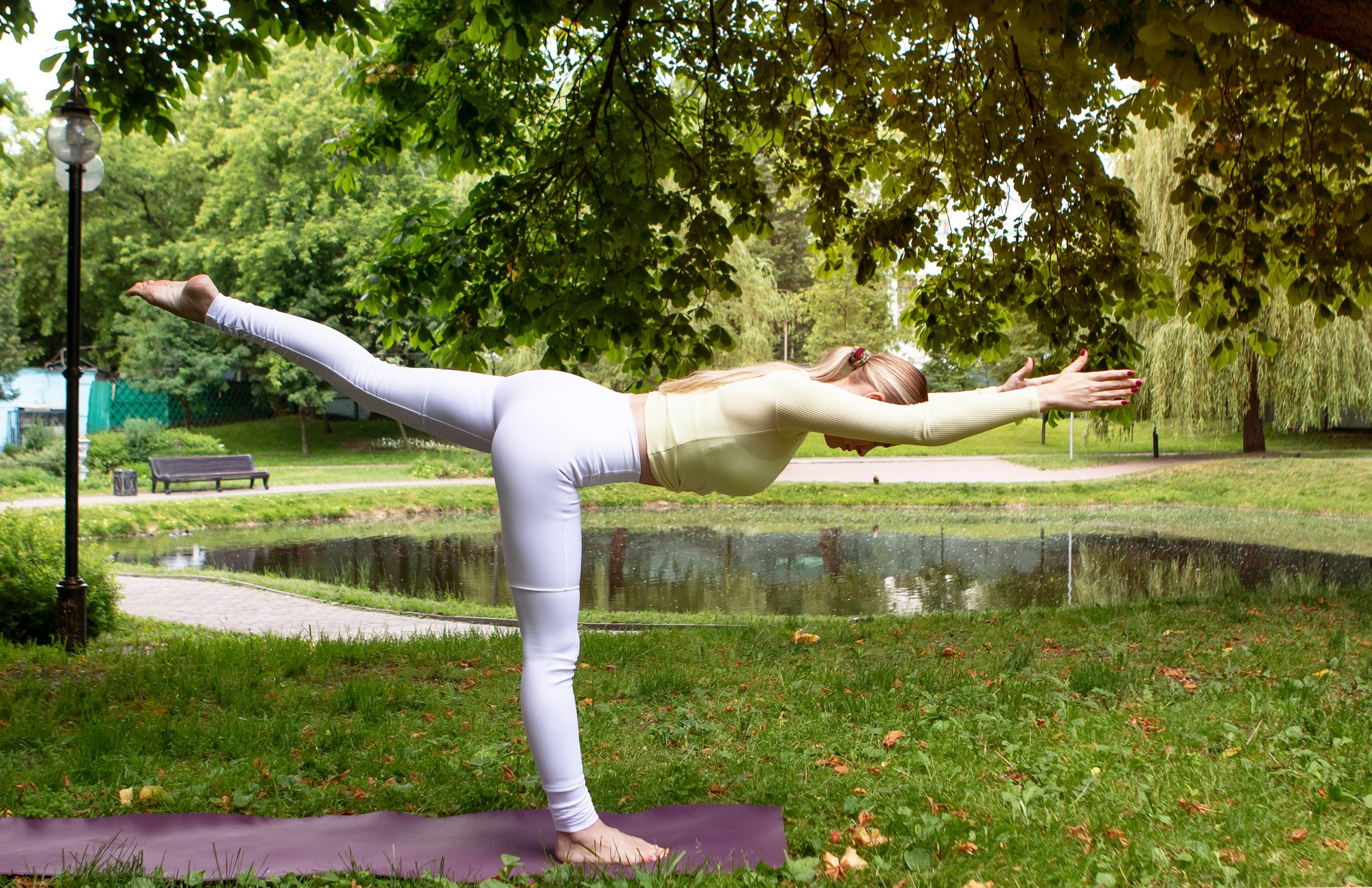
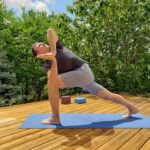
Warrior III balance in a park by a pond
Also called
Fundamental Positions, Standing Fundamentals
Part of
Ashtanga Vinyasa Series: how the practice is organised
Tradition
Ashtanga vinyasa (K. Pattabhi Jois lineage)
Order
Fixed, traditional order
Level
Intermediate
Approximate duration
about 15 minutes
Focus
Style-specific
Audience
Beginners, Experienced
Props
Block, Mat, Strap
Body areas
Hamstrings, Hips, Legs, Spine

Fixed order: the tradition named here practises these steps in this order.

Printable view

Origin and source

Part of every Ashtanga practice after the sun salutations; order per the AshtangaYoga.info Fundamental Positions sheet (Steiner, 2015).

Who it is for

Comfortable with the sun salutations; standing forward bends with bent knees.

The steps in order

Version shown: AshtangaYoga.info Fundamental Positions sheet (Dr. Ronald Steiner, 2015): Padangusthasana to Parsvottanasana, 5 breaths each

#StepBreathSideHoldCues and options
1Padangusthasana
Pādāṅguṣṭhāsana
Free breathing5 breaths
AshtangaYoga.info Fundamental Positions sheet

Transition: Jump or step the feet hip-width; fold and hold the big toes.

Easier option: Bend the knees; hold the shins.

2Padahastasana
Pādahastāsana
Free breathing5 breaths
AshtangaYoga.info Fundamental Positions sheet

Transition: Slide the hands under the feet, palms up.

Easier option: Bend the knees.

3Utthita Trikonasana
Utthita Trikoṇāsana
Free breathingEach side5 breaths each side
AshtangaYoga.info Fundamental Positions sheet

Transition: Step wide to the right, turn the right foot out, reach and hold the big toe.

Easier option: Hand on the shin or a block.

4Parivrtta Trikonasana
Parivṛtta Trikoṇāsana
Free breathingEach side5 breaths each side
AshtangaYoga.info Fundamental Positions sheet

Transition: Turn the hips forward, opposite hand to the outside of the front foot.

Easier option: Shorter stance; hand on a block.

5Utthita Parsvakonasana
Utthita Pārśvakoṇāsana
Free breathingEach side5 breaths each side
AshtangaYoga.info Fundamental Positions sheet

Transition: Wide stance, bend the front knee, hand to the floor outside the foot, top arm over the ear.

Easier option: Forearm on the thigh.

6Parivrtta Parsvakonasana
Parivṛtta Pārśvakoṇāsana
Free breathingEach side5 breaths each side
AshtangaYoga.info Fundamental Positions sheet

Transition: Twist, opposite hand to the floor outside the front foot.

Easier option: Back knee down; hands in prayer with the elbow on the knee.

7Prasarita Padottanasana A (hands on the floor)
Prasārita Pādottānāsana
Free breathing5 breaths
AshtangaYoga.info Fundamental Positions sheet

Transition: Feet wide and parallel, hands to the floor between the feet, crown towards the floor.

Easier option: Hands on blocks.

8Prasarita Padottanasana B (hands on the waist)
Prasārita Pādottānāsana
Free breathing5 breaths
AshtangaYoga.info Fundamental Positions sheet

Transition: Hands on the hips, fold.

Easier option: Smaller fold.

9Prasarita Padottanasana C (hands clasped behind)
Prasārita Pādottānāsana
Free breathing5 breaths
AshtangaYoga.info Fundamental Positions sheet

Transition: Interlace the fingers behind the back, fold, arms towards the floor.

Easier option: Hold a strap.

10Prasarita Padottanasana D (holding the big toes)
Prasārita Pādottānāsana
Free breathing5 breaths
AshtangaYoga.info Fundamental Positions sheet

Transition: Fold and hold the big toes.

Easier option: Hold the shins.

11Parsvottanasana (hands in reverse prayer)
Pārśvottānāsana
Free breathingEach side5 breaths each side
AshtangaYoga.info Fundamental Positions sheet

Transition: Hands in reverse prayer, step the right foot forward, fold over the front leg.

Easier option: Hold the elbows behind the back; hands on blocks.

Left and right

Right side first, then left, in triangles, side angles and Parsvottanasana.

Repetitions and counting

Each posture once (each side once for asymmetric postures).

Props and adaptations

Bent knees in forward bends; blocks under the hands; shorter stances; strap in Prasarita C; elbows held instead of reverse prayer.

Precautions

  • Tight hamstrings: bend the knees; do not round hard under load.
  • High blood pressure or glaucoma: keep the head higher in the forward bends; ask a health professional.
  • Knee hyperextension: micro-bend the knees in triangle and forward bends.

Learn it with a teacher: A teacher can show the counted entries and help with the revolved postures.

General information, not medical advice. Poses do not cure illness. If you are pregnant, injured or have a health condition, check with your doctor and tell your teacher before you practise.

Beginner and chair alternatives

Warrior Flow: a standing sequence through Warriors I, II and III

The Ashtanga standing sequence, also called the fundamental positions, follows the sun salutations in every Ashtanga vinyasa practice, whichever series comes after it. It is a fixed order of standing forward bends, triangles, side angles, wide-legged forward bends and an intense side stretch, each held for five breaths. This page follows the practice sheet of AshtangaYoga.info (Dr. Ronald Steiner, in the K. Pattabhi Jois lineage).

The order

Padangusthasana (big toe pose) and Padahastasana (hands under the feet), then Utthita and Parivrtta Trikonasana (triangle and revolved triangle), Utthita and Parivrtta Parsvakonasana (extended and revolved side angle), Prasarita Padottanasana A, B, C and D (four wide-legged forward bends, differing in the position of the hands), and Parsvottanasana (intense side stretch, hands in reverse prayer). Some teachers and books group the next postures (extended hand to big toe, half bound lotus forward bend, chair, Warriors A and B) with the standing sequence; the AshtangaYoga.info sheets put them at the start of the Primary Series sheet, and we follow that. They are listed on the Primary Series page.

The six groups, posture by posture

AshtangaYoga.info describes these as six standing basic positions that form the foundation of the practice, right after the sun salutations. Here is what each one asks of you, following the short descriptions on its pages.

  • 1. The two forward bends. In Pādāṅguṣṭhāsana the feet are about a hand-span apart and you fold forward to hold the big toes. In Pāda Hastāsana you fold the same way but slide the palms under the soles of the feet. See big toe pose and hands under feet pose.
  • 2. Triangle and revolved triangle. The legs form a triangle with the floor. In the revolved version the trunk turns so that the opposite hand reaches the floor beside the front foot. See triangle and revolved triangle.
  • 3. Side angle and revolved side angle. A wide stance with the front thigh almost horizontal. In the extended version the side of the trunk and the top arm make one straight line with the back leg; in the revolved version the pelvis stays across the mat and the trunk twists strongly over the bent front leg. See extended side angle and revolved side angle.
  • 4. Prasārita Pādottānāsana A to D. Feet very wide, trunk folded forward; only the hands change. In A the hands rest on the floor between the feet, in B on the hips, in C they clasp behind the back and stretch toward the floor, and in D two fingers hold the big toes. See wide-legged forward bend.
  • 5. Pārśvottānāsana. A forward bend over the front leg in a fairly short stance, with the palms pressed together behind the back. See pyramid pose.

How the counting and sides work

Each posture is entered from Samasthiti (standing) in a counted series of movements: in the sheet, a number marks the movement on which you arrive in the posture, with the left side in brackets. Asymmetric postures are done on the right first, then the left. You hold each final position for five breaths, then return to standing. Once the rhythm is familiar, postures flow into each other without returning to Samasthiti each time, but the movement numbers stay the same. Breathing is ujjayi throughout.

The sheet also gives a gaze point (drishti) for each posture, such as the tip of the nose, the point between the eyebrows or the raised hand, so that the eyes stay still while the body works. Each time you pass through standing, the sheet suggests a short connecting vinyasa can be added, which keeps the body warm, especially for beginners.

When to add it: the Fundamental Positions sheet says you may add these postures after Sun Salutations A and B once you are well familiar with the salutations. So a beginner’s first Ashtanga practice is often just the salutations, with the standing postures added one or two at a time.
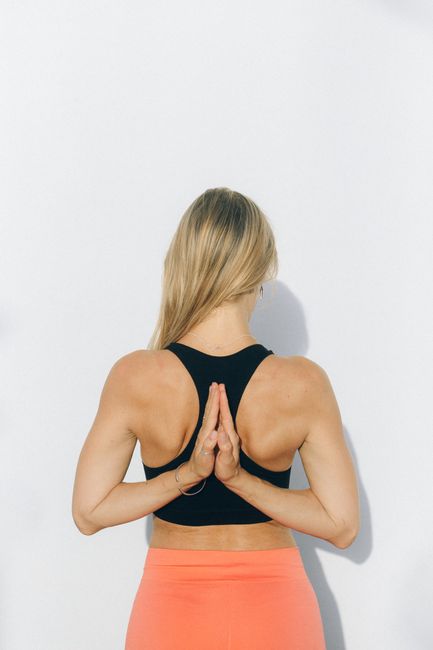
Back view of a woman in activewear doing the reverse prayer yoga pose against a plain background.

How to practise it safely

  • Bend the knees in the forward bends if the hamstrings are tight; hold the shins instead of the toes.
  • In the revolved postures, a shorter stance and a hand on a block keep the spine long.
  • Prasarita C (hands clasped behind, arms towards the floor) is hard on stiff shoulders: hold a strap.
  • High blood pressure or glaucoma: the head is below the heart in several postures; ask a health professional and keep the head higher.

This page has not yet been reviewed by a qualified teacher.

Easier alternatives

Use blocks under the hands, bend the knees, and shorten the stance. The same postures held for longer, with props, are taught in Iyengar yoga. Before this sequence come the opening sun salutations.

Frequently asked questions

Is the standing sequence the same for every Ashtanga series?

Yes. The sun salutations and the standing sequence open every Ashtanga practice, whichever series follows.

Where do the warriors belong?

Sources differ: some group extended hand to big toe through Warrior B with the standing sequence, others (AshtangaYoga.info) at the start of the Primary Series sheet.

Sources

  1. Fundamental Positions: practice sheet, AshtangaYoga.info (Dr. Ronald Steiner), 2015 (accessed October 6, 2026)
  2. Ashtanga Yoga Primary Series: teacher guide (standing sequence order), Yoga-Sequencing.com (accessed October 6, 2026)
  3. Yoga Cikitsa, 1st Series sheet (where Utthita Hasta Padangusthasana to Virabhadrasana B are placed), AshtangaYoga.info (Dr. Ronald Steiner), 2015 (accessed October 6, 2026)

Facts checked on October 6, 2026