Cat-Cow: the paired spinal movement explained

How to do cat cow with the breath: the tabletop setup, steps, alignment cues, knee, wrist and chair options, common mistakes and cautions.

Not yet reviewed by a qualified teacher Names and shape checked against 5 sources

Cat-Cow yoga pose
Sanskrit name
Marjaryasana-Bitilasana (source)
Also called
Cat and cow, Cat pose, Cow pose, Cat-cow stretch
Other spellings
Marjaryasana, Bitilasana, Bidalasana
Pose family
Backbend, Forward bend, Kneeling
Movement
Backbend, Forward fold
Taught in
Chair Yoga: Seated and Chair-Supported Practice, Kundalini Yoga: Practices, Origins and What a Class Involves, What Is Yin Yoga? Long Holds, Slow Pace and a Typical Class
Difficulty
Beginner
Body areas
Arms and wrists, Core, Neck, Shoulders, Spine
Props
Blanket, Block, Chair, Mat
Practised
Solo

Step by step

  1. Start in tabletop with a neutral spine.
  2. Cow: inhale and let the belly lower toward the floor. Lift the chest forward and up, broaden across the collarbones and lift the gaze a little, keeping the back of the neck long.
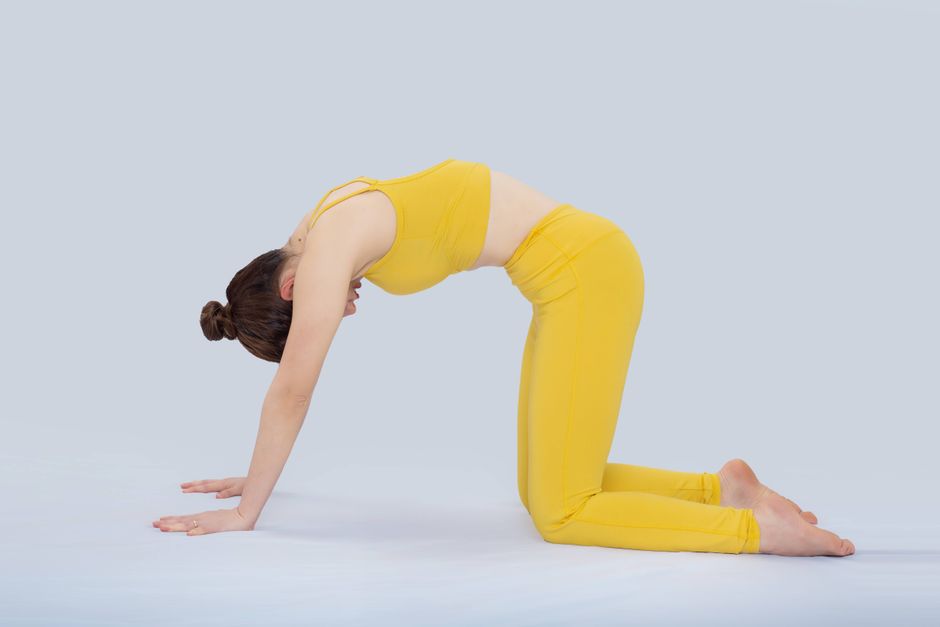
  3. Cat: exhale and round the spine up toward the ceiling, releasing the head and tailbone toward the floor. Push the floor away so the space between the shoulder blades widens, and draw the navel in. There is no need to force the chin to the chest.
  4. Keep the arms straight and the hips over the knees, so the movement happens in the spine.
  5. Repeat for five to 10 slow rounds, letting each breath set the pace.
  6. Finish in neutral tabletop.

Alignment cues

  • Start the movement from the pelvis. Tilt the tailbone first and let the wave travel up the spine; the head moves last.
  • Shoulders away from the ears in both directions.
  • Arms straight, not locked, so the stretch stays in the back.
  • Cow is a gentle arch. Keep a little tone in the belly so the lower back does not sag into the movement.

Common alignment errors

  • Moving mostly with the head and neck instead of the whole spine.
  • Throwing the head back in cow or yanking the chin down in cat.
  • Bending the elbows so the arms do the moving.
  • Letting the hips drift forward or back instead of staying over the knees.
  • Racing through the rounds, out of step with the breath.

Modifications and props

  • Sensitive knees: slide a folded blanket under them, or fold the mat over. blanket
  • Sore wrists or hands: bring the forearms down onto blocks, or onto the floor. Warming up first, by circling the wrists and making and releasing fists, also helps. block
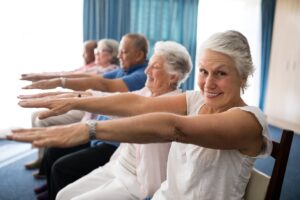
  • Seated cat-cow: sit toward the front of a chair, feet under the knees and hands on the thighs. Inhale to lift the chest and arch; exhale to round. Good at a desk or when getting down to the floor is difficult. chair
  • Standing cat-cow: feet hip-width apart, knees slightly bent, hands on the thighs, with the same rounding and arching. none

Precautions

  • Neck injury: keep the head in line with the spine.
  • Diastasis recti: avoid or reduce the cow arch.
  • Pregnancy or postpartum: check with your health care provider.
  • Back pain: see a clinician first; the movement is not a treatment.

General information, not medical advice. Poses do not cure illness. If you are pregnant, injured or have a health condition, check with your doctor and tell your teacher before you practise.

In short: cat cow is a gentle movement on hands and knees that alternates between rounding the spine (cat) and arching it (cow), usually with the breath: exhale into cat, inhale into cow. It is one of the simplest ways to warm up the back at the start of a practice, and it adapts easily for sore knees, wrists or a chair.

Strictly speaking, cat and cow are two poses, but they are almost always taught together, so we treat cat-cow as one movement with one guide. It is often the first thing you do in a class, which makes it easy to rush. Done slowly, it is a good way to arrive in your body: you feel how each part of the spine moves, link the movement to the breath, and get the wrists and shoulders ready for poses like downward dog.

About the Sanskrit names

Yoga Journal names cat pose Marjaryasana and cow pose Bitilasana, and those are the names you will hear most in classes. The cat names are easy to trace: both mārjāra and biḍāla mean cat in the Monier-Williams Sanskrit dictionary, and āsana means posture (see asana). The cow name is less clear: the word bitila does not appear in Monier-Williams, so we do not offer a translation or a standard Devanagari spelling for it. Both are modern names. Neither pose is among the 15 postures of the 15th-century Hatha Yoga Pradipika; cat-cow belongs to modern practice, where it is used as a warm-up in almost every style, from hatha to vinyasa.

The tabletop setup

Everything starts from tabletop: on hands and knees, knees directly under the hips and hip-width apart, hands shoulder-width apart and slightly ahead of the shoulders. Turn the wrist creases parallel to the front of the mat, spread the fingers and press down through the knuckles so the weight does not sink into the heels of the hands. Find a neutral spine, neither rounded nor arched, with the neck long.

Moving through cat cow with the breath

Think of cat cow as a wave that starts at the tailbone. On the inhale the pelvis tips, the belly lowers and the chest moves forward; on the exhale the tailbone tucks, the back rounds and the head releases last. The arms stay straight and the hips stay over the knees, so the spine does the moving. Five to 10 slow rounds is plenty. The same movement works seated toward the front of a chair with your hands on your thighs, a handy version at a desk or when getting to the floor is hard (see chair yoga), or standing with the knees slightly bent.

Some teachers cue the breath the other way round, or ask you to move without linking the breath at all. What matters is that the breath stays slow and easy; our guide to diaphragmatic breathing is a good companion to this movement.

Neck, belly and back: cautions in context

Cat-cow is gentle, but keep the range small and pain-free. If you have a neck injury, keep the head in line with the spine rather than lifting or dropping it. Yoga Journal advises avoiding or modifying cow pose if you have diastasis recti, the separation of the abdominal muscles that is common during and after pregnancy; a smaller arch, or cat with a neutral spine instead of cow, is a reasonable adjustment. If you are pregnant or postpartum, check with your health care provider and see our guide to prenatal yoga. If you are moving because of back pain, see a clinician first and read yoga and back pain; poses are not treatments. This page is general information, not individual advice.

What comes next

From tabletop, the natural next step is to tuck the toes and lift into downward-facing dog. Cat-cow is also a good warm-up before backbends like cobra pose and hip openers like pigeon pose, and before arm balances such as crow pose, because it loads the wrists gradually.

You will find it in our morning yoga and bedtime yoga plans, and in the list of beginner yoga poses to learn first. Browse the full pose directory for more.

Frequently asked questions

Do you inhale or exhale in cat pose?

Most teachers cue an exhale as you round into cat and an inhale as you arch into cow. Some reverse it or do not link the breath. Keep the breath slow and comfortable either way.

How many rounds of cat-cow should I do?

Five to 10 slow rounds is a common warm-up. Let each breath set the pace, and stop earlier if anything feels uncomfortable.

What are the Sanskrit names for cat and cow pose?

Yoga Journal uses Marjaryasana for cat and Bitilasana for cow. Cat is also called Bidalasana; mārjāra and biḍāla both mean cat in Sanskrit. The word bitila is not found in the Monier-Williams dictionary, so the meaning of the cow name is uncertain.

Can I do cat-cow if my knees or wrists hurt?

Yes, with changes: a folded blanket under the knees, forearms on blocks or the floor for the wrists, or the seated version in a chair. If pain continues, stop and check with a health professional.

Is cat-cow safe during pregnancy?

It is a gentle movement, but check with your health care provider first. Yoga Journal advises avoiding or modifying the arch of cow pose if you have diastasis recti, which is common during and after pregnancy.

Sources

  1. Cat Pose: How to Practice Marjaryasana, Yoga Journal (accessed October 6, 2026)
  2. Cow Pose: How to Practice Bitilasana, Yoga Journal (accessed October 6, 2026)
  3. Monier-Williams Sanskrit-English Dictionary: mārjāra (p. 813), biḍāla (p. 731), āsana; no entry for bitila, Cologne Digital Sanskrit Dictionaries, University of Cologne (accessed October 6, 2026)
  4. Cat/Cow pose (alternative name Bidalasana), Wikipedia (accessed October 6, 2026)
  5. Hatha Yoga Pradipika, translated by Pancham Sinh (1914), chapter 1 on asanas, Internet Archive (accessed October 6, 2026)

Facts checked on October 6, 2026