Bound Lotus (Baddha Padmasana): steps, the Ashtanga finishing pose and cautions

Bound lotus (Baddha Padmasana) is full lotus with the arms crossed behind the back holding the big toes. Steps, the Ashtanga finishing sequence, easier options and knee and shoulder precautions.

Not yet reviewed by a qualified teacher Names and shape checked against 6 sources

Sanskrit name
Baddha Padmāsana बद्धपद्मासन (source)
Also called
Locked Lotus, Bound Lotus Pose
Other spellings
Baddha Padmasana
Pose family
Seated, Seated and meditation
Starting position
Seated
Movement
Hip external rotation
Taught in
Hatha Yoga: The Historical Term and the Modern Class
Difficulty
Advanced
Prerequisite skills
Full lotus comfortable on both sides with no knee pain; shoulders that allow the hands to reach behind the back toward the opposite hip.
Body areas
Chest, Feet and ankles, Hips, Shoulders
Props
Cushion, Strap
Practised
Solo

Names in different traditions

TraditionName usedNote
Iyengar (Light on Yoga)Baddha PadmāsanaAsana 55, plates 118-119.
Ashtanga (AshtangaYoga.info)Baddha PadmāsanaFinishing sequence; flows into Yoga Mudra.
Hatha Yoga Pradipika (Pancham Sinh translation)Padmāsana (first description)The text's first padmasana is this bound form.
Bihar School of YogaBaddha padmasana (the locked lotus pose)Listed in Asana Pranayama Mudra Bandha.

Step by step

Coming into the pose

  1. Sit in full lotus with the spine upright and no discomfort in the knees.
  2. Exhale and swing one arm behind the back, reaching the hand around toward the opposite hip to catch the big toe of the foot on top.

In the pose

  1. Inhale. On the next exhale, swing the other arm behind and catch the other big toe.
  2. Draw the shoulder blades toward each other and lift the chest. Keep the knees releasing; do not let the bind pull the feet deeper.
  3. Stay for a few breaths (five in the Ashtanga count).

Coming out

  1. Release the hands one at a time, then release the lotus slowly, one leg at a time, and stretch the legs out. Next time, cross the other leg first.

Breathing

Breathe slowly and evenly; exhale as each arm swings back. The Ashtanga finishing sequence counts five breaths here before folding into Yoga Mudra.

Alignment cues

  • Lotus first, comfortable and stable.
  • Catch the toe of the uppermost foot first (Light on Yoga).
  • Shoulder blades draw together to lengthen the reach.
  • Chest lifts; the bind never pulls the legs.

Common alignment errors

  • Trying the bind before lotus is comfortable.
  • Using the arms to drag the feet further across the thighs.
  • Rounding the shoulders forward to reach.
  • Staying through numbness or knee pain.

Modifications and easier variations

  • In lotus or half lotus, hold the elbows or forearms behind the back instead of the toes. none
  • Bind one side only, with the other foot on the floor (half-lotus bind). none

Advanced variations

Props and chair adaptations

  • Strap behind the back between the hands. strap
  • Cushion or folded blanket under the hips. cushion

Precautions

  • Knee, hip or ankle conditions, or sciatica: skip it and ask your doctor or physical therapist.
  • Shoulder injury: leave out the bind.
  • New to yoga: NCCIH advises avoiding the lotus position.
  • Numbness, tingling or knee pain: come out at once.

Learn it with a teacher: Learn bound lotus with a teacher, only once full lotus is comfortable. In Ashtanga, follow your teacher on when it is added.

General information, not medical advice. Poses do not cure illness. If you are pregnant, injured or have a health condition, check with your doctor and tell your teacher before you practise.

In short: bound lotus is full lotus with the arms crossed behind the back, each hand holding the big toe of the foot on the opposite thigh. It asks for a comfortable full lotus plus open shoulders, so it is an advanced pose. Learn it with a teacher, and never use the bind to pull the legs deeper.

Bound lotus is one of the oldest described postures: the Hatha Yoga Pradipika’s first description of padmasana is in fact this bound form. Today most practitioners meet it at the end of an Ashtanga practice. Below we explain the name, how the bind works, the precautions and the related poses.

The name and the texts

Baddha means bound or caught and padma lotus. In B.K.S. Iyengar’s Light on Yoga (1966) the body is described as caught between the crossed legs in front and the crossed arms behind, which gives the pose its name. In the Hatha Yoga Pradipika (15th century), in Pancham Sinh’s 1914 translation, the first padmasana places the feet on the opposite thighs, crosses the hands behind the back to hold the toes, rests the chin on the chest and directs the gaze to the tip of the nose. The text’s claims that this destroys diseases are traditional statements, not medical findings.

In the Ashtanga finishing sequence, as documented by AshtangaYoga.info, Baddha Padmāsana is taken from lotus, the hands catching the big toes from behind, and flows into Yoga Mudrā, the forward fold in the bind, before the seated lotus. AshtangaYoga.info notes that Pattabhi Jois taught a hold of several breaths here in the 1990s and that it later became a brief pause on the way into the fold, a small example of how a tradition changes.

How the bind works

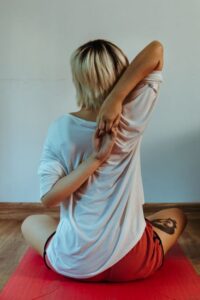
Settle into lotus first, with no knee discomfort. Then swing one arm behind the back on an exhale and reach the hand around toward the opposite hip to catch the big toe of the foot resting on that side; Light on Yoga advises catching first the toe of the foot that is on top. Repeat with the other arm. Drawing the shoulder blades toward each other gives the hands more reach. Keep the chest lifting and the knees releasing; the bind should never pull the feet further across the thighs. Many people need years of shoulder work before the second hand reaches; until then, hold a strap or the elbows behind the back.

Precautions in plain words

Everything that applies to lotus applies here, and more: the twist of the arms adds pressure that can draw the feet and knees deeper. The US National Center for Complementary and Integrative Health advises people new to yoga to avoid the lotus position, and a 2013 review of yoga injury case reports linked lotus variations to knee and nerve problems. Skip bound lotus with any knee, hip or ankle condition, a shoulder injury, or sciatica, and ask your doctor or physical therapist. Come out at once if the legs go numb or tingle or the knees hurt. This page is general information, not individual advice.

Preparation and next poses

The prerequisite is a comfortable full lotus, built through half lotus and hip openers. For the shoulders, cow face arms and reverse prayer help. The forward fold in the bind, Yoga Mudrā, is covered on our yoga seal pose page; half-bound lotus standing forward bend uses the same one-sided bind standing.

Where it is taught

Bound lotus is part of every Ashtanga finishing sequence and appears in Iyengar and traditional hatha teaching. Explore other seated poses in the pose library.
Preparatory poses

Follow-up poses and transitions

Counterposes

Related poses

More seated poses

Frequently asked questions

What if I cannot reach my toes in bound lotus?

Hold the elbows or forearms behind the back, or use a strap. Never let the bind pull the legs deeper into lotus.

Where does bound lotus come in Ashtanga?

In the finishing sequence, from lotus, followed by the Yoga Mudra forward fold and then a quiet sitting in lotus.

Is bound lotus mentioned in old texts?

Yes. In Pancham Sinh's translation of the Hatha Yoga Pradipika, the first description of padmasana has the hands crossed behind the back holding the toes.

Sources

  1. B.K.S. Iyengar, Light on Yoga (1966), asana 55 Baddha Padmasana, plates 118-119, Allen & Unwin (Internet Archive record) (accessed October 6, 2026)
  2. Baddha Padmasana: Gebundener Lotus (finishing sequence), Ronald Steiner, AshtangaYoga.info (accessed October 6, 2026)
  3. Hatha Yoga Pradipika, translated by Pancham Sinh (1914), chapter 1 on padmasana, Internet Archive (accessed October 6, 2026)
  4. Swami Satyananda Saraswati, Asana Pranayama Mudra Bandha: Baddha padmasana, Bihar School of Yoga (Internet Archive) (accessed October 6, 2026)
  5. Yoga: What You Need To Know, National Center for Complementary and Integrative Health (NIH) (accessed October 6, 2026)
  6. Adverse Events Associated with Yoga: A Systematic Review of Published Case Reports and Case Series (Cramer et al., PLOS ONE 2013), PubMed Central (accessed October 6, 2026)

Facts checked on October 6, 2026