This article contains affiliate links: if you buy through them we may earn a commission, at no extra cost to you. Read our affiliate disclosure.
The sun salutation is a short, flowing sequence of poses repeated in rounds, each movement paired with an inhale or an exhale. Known in Sanskrit as Surya Namaskar (सूर्यनमस्कार, sūryanamaskāra, “salute to the sun”), it opens classes in many styles and makes a complete mini-practice on days when you only have a few minutes.
In short: stand tall, reach up on an inhale, fold forward on an exhale, step or jump back to a plank, lower down, lift the chest, press back into downward-facing dog, then return to standing. Three to five slow rounds take about five to ten minutes. Beginners can lower the knees, bend the knees and use cobra instead of upward-facing dog.
| Level | Time | Equipment | Focus |
|---|---|---|---|
| Beginner to all levels | 5–10 minutes (3–5 rounds) | Non-slip mat; two blocks optional | Warming up, linking breath and movement |
Before you start
Practice on a mat that doesn’t slip, ideally on an empty stomach or a few hours after a meal. Move at the pace of your breath, not faster. If you have wrist, shoulder or lower-back problems, high blood pressure, or you are pregnant, check with your doctor first and use the gentler options below; see also our guide to prenatal yoga. Stop any movement that causes sharp pain.
Sun salutation A, step by step
This is the version taught as Surya Namaskara A in Ashtanga yoga and used, with small changes, in most vinyasa classes. The general rule: movements that lift or open happen on an inhale, movements that fold or lower happen on an exhale.
- Mountain pose (Tadasana). Stand with feet together or hip-width apart, weight even, arms by your sides or palms together at the chest. Take a few steady breaths. Exhale.
- Upward salute (Urdhva Hastasana). Sweep the arms out and up overhead, keeping the shoulders away from the ears. Inhale.
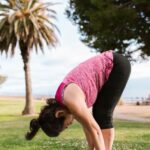
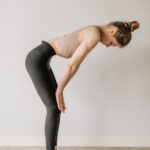
- Standing forward bend (Uttanasana). Hinge at the hips and fold forward, bending the knees as much as you need. Hands to the floor, shins or blocks. Exhale.
- Half lift (Ardha Uttanasana), used by many teachers. Lengthen the spine forward with hands on shins or blocks, eyes looking slightly ahead. Inhale.
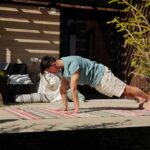
- Plank to four-limbed staff (Chaturanga Dandasana). Step (or, later, jump) back to a plank, then lower halfway with elbows close to the ribs. Knees down is a perfectly good option. Exhale.
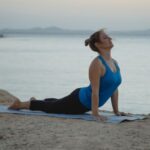
- Upward-facing dog (Urdhva Mukha Svanasana). Roll over the toes, press the hands down and lift the chest with the thighs off the floor. Beginners: lie down and use cobra pose instead. Inhale.
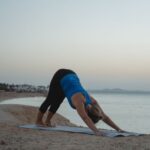
- Downward-facing dog (Adho Mukha Svanasana). Lift the hips up and back into an inverted V. Bend the knees to keep the back long. Stay for a few breaths; the number varies by teacher and style. Exhale.
- Step forward and half lift. Look between the hands, step the feet forward one at a time, and lengthen the spine. Inhale.
- Standing forward bend. Fold. Exhale.
- Upward salute. Rise with a long spine, arms overhead. Inhale.
- Mountain pose. Lower the arms and pause. Exhale.
That is one round. Take three to five rounds, resting in mountain pose or in child’s pose between them if you need to.
Sun salutation B
Surya Namaskara B is the second traditional sequence in Ashtanga yoga. It is longer and stronger because it adds two poses:
- It begins with chair pose (Utkatasana) instead of the upward salute: bend the knees and sweep the arms up on an inhale.
- After downward-facing dog, it adds Warrior I (Virabhadrasana I) on each side: step one foot forward, turn the back heel down, and rise with arms overhead on an inhale, then return through plank, chaturanga and upward dog.
- After the second side, it returns to downward-facing dog for a few breaths, then steps or jumps forward and comes back to standing, as in A.
B builds heat and leg strength. Learn A first, and add B once you can move through A smoothly without holding your breath.
Modifications and props
| If… | Try this instead |
|---|---|
| Your hamstrings are tight | Bend the knees generously in every forward fold; put your hands on blocks |
| Your wrists complain | Spread the fingers wide, press through the knuckles, and spend less time in plank; lower from the knees |
| Chaturanga is too strong | Lower knees, chest and chin to the floor (the “knees-chest-chin” pose, Ashtanga Namaskara, used in some traditions) |
| Upward-facing dog bothers your lower back | Use a low cobra with the hips on the floor |
| You can’t step forward in one go | Step one foot at a time, or walk the hands back toward the feet |
| Balance or blood pressure is a concern | Keep the head above the heart: do a chair yoga version, or skip the forward fold and rise slowly |
A grippy mat matters more in this sequence than almost anywhere else, because your hands and feet carry your weight in downward dog and plank. If you’re looking for long-lasting gear, these are two well-known researched options (not tested by us):
Manduka PRO Yoga Mat 6 mm
- 6 mm, latex-free PVC
- Closed-cell surface
- About $164, seen October 2026
Manduka Cork Yoga Block
- 100% cork
- 4 x 6 x 9 in
- About $26, seen October 2026
More options are in our yoga mat guide and yoga blocks guide.
Common mistakes
- Rushing. Matching every movement to a full, slow breath is the point. If you’re out of breath, slow down or rest.
- Collapsing in chaturanga. Letting the hips sag or the shoulders drop below the elbows strains the shoulders. Lower knees down, or only partway.
- Locked knees in the fold. Bent knees protect the lower back and hamstrings.
- Shoulders up by the ears when the arms go overhead. Reach up through the fingers while drawing the shoulder blades down.
- Skipping the rest. Finish with a few minutes in corpse pose or move on to the rest of your practice.
Where the sun salutation comes from
The sun salutation is younger than many people assume. Indian tradition links sun salutation exercises with the seventeenth-century saint Samarth Ramdas, without recording exactly which movements were used. In the 1920s, Bhawanrao Pant Pratinidhi, the Raja of Aundh, popularized a ten-position version in his book The Ten-Point Way to Health: Surya Namaskars, presenting it as an exercise routine. Around the same time, Tirumalai Krishnamacharya was teaching in the Mysore palace, and historians of modern yoga have traced how his students, including K. Pattabhi Jois and B.K.S. Iyengar, carried flowing transitions based on the sun salutation around the world. In other words, it is part of modern postural yoga, built on older Indian traditions of sun worship and physical training.
The mantra tradition
In some traditions, including Sivananda yoga, each of the twelve positions is paired with one of twelve names of Surya, the sun, recited before the movement, for example Oṃ Mitrāya Namaḥ (“Om, greetings to the one who is affectionate to all”). The twelve names are Mitra, Ravi, Surya, Bhanu, Khaga, Pushan, Hiranyagarbha, Marichi, Aditya, Savitr, Arka and Bhaskara. Some teachers also use short “seed” sounds (bija mantras) or associate steps with the chakras. These are devotional and traditional practices; you are welcome to learn them with respect for their meaning, or to practice the movements silently. For background on chanting and the subtle body, see our guides to chakras and Om.
How hard is it?
It depends on how you do it. Studies summarized in the scientific literature put the energy cost of sun salutations anywhere from light to vigorous exercise, with faster rounds and jumps at the vigorous end. Slow rounds with stepping are a gentle warm-up; quick rounds with jumps are a workout. You choose.
Where to go next
Learn each pose in depth in our pose directory, or use the sun salutation to open another practice plan such as morning yoga or yoga for flexibility. If you like linking breath and movement, read about ujjayi breathing, often used in flowing classes. New to yoga? Start with yoga for beginners.