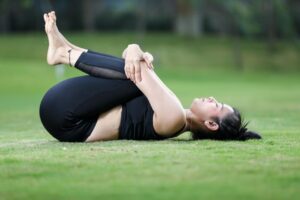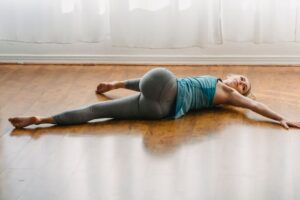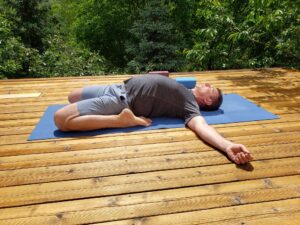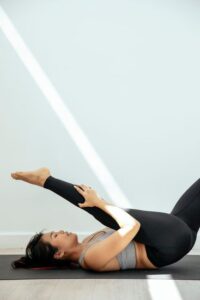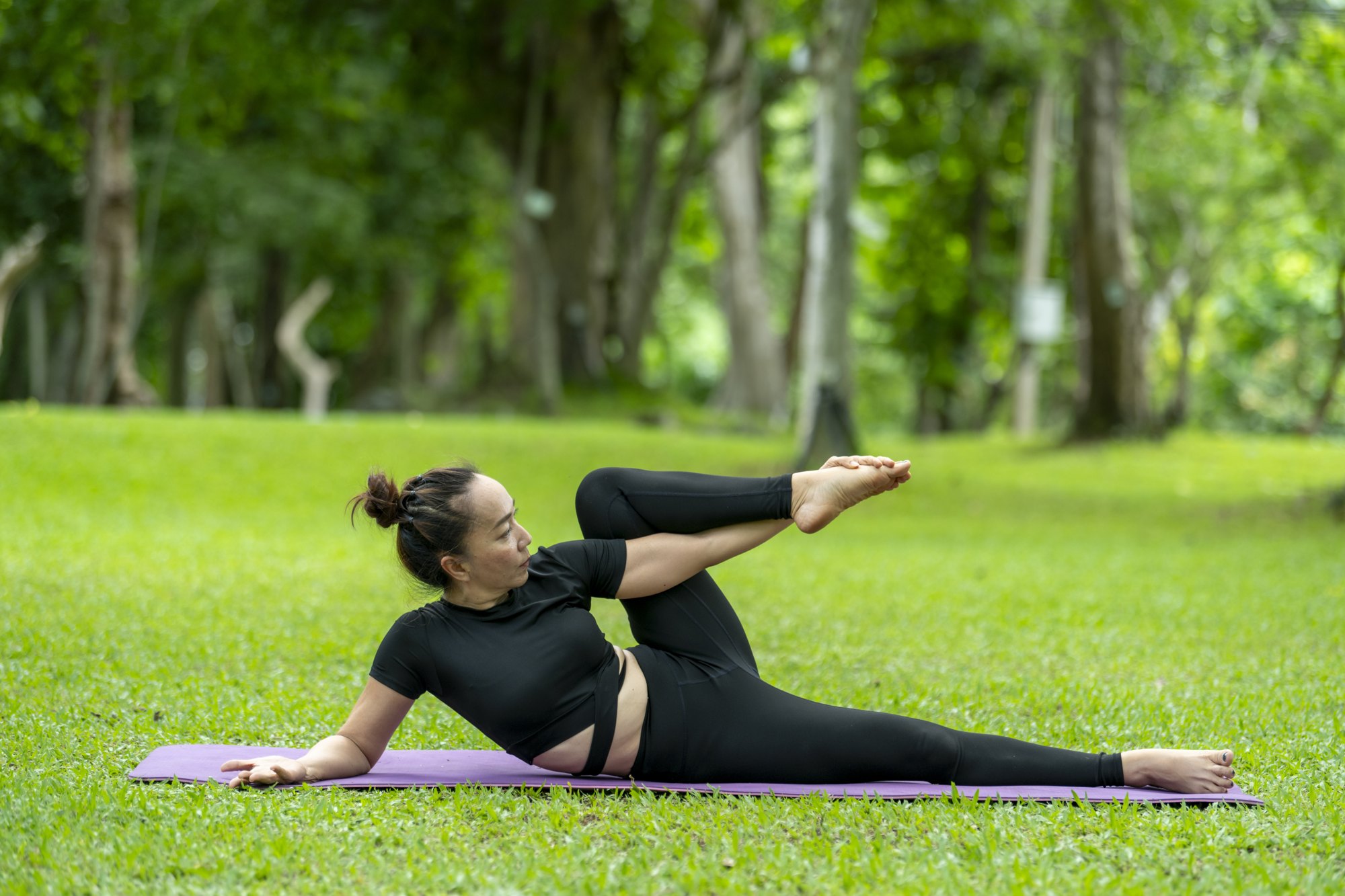
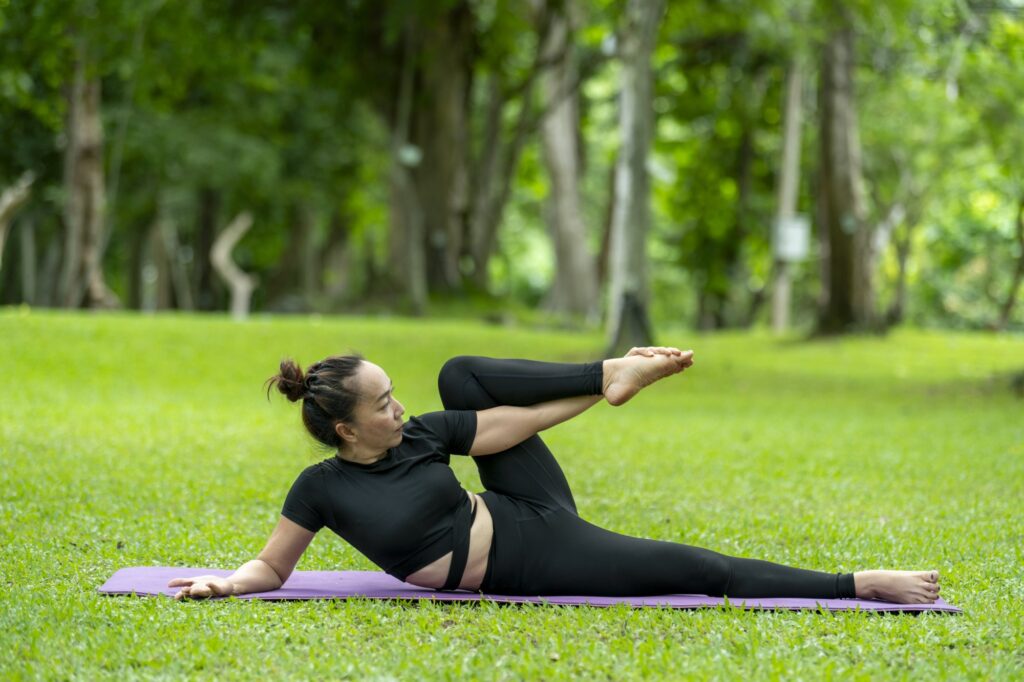
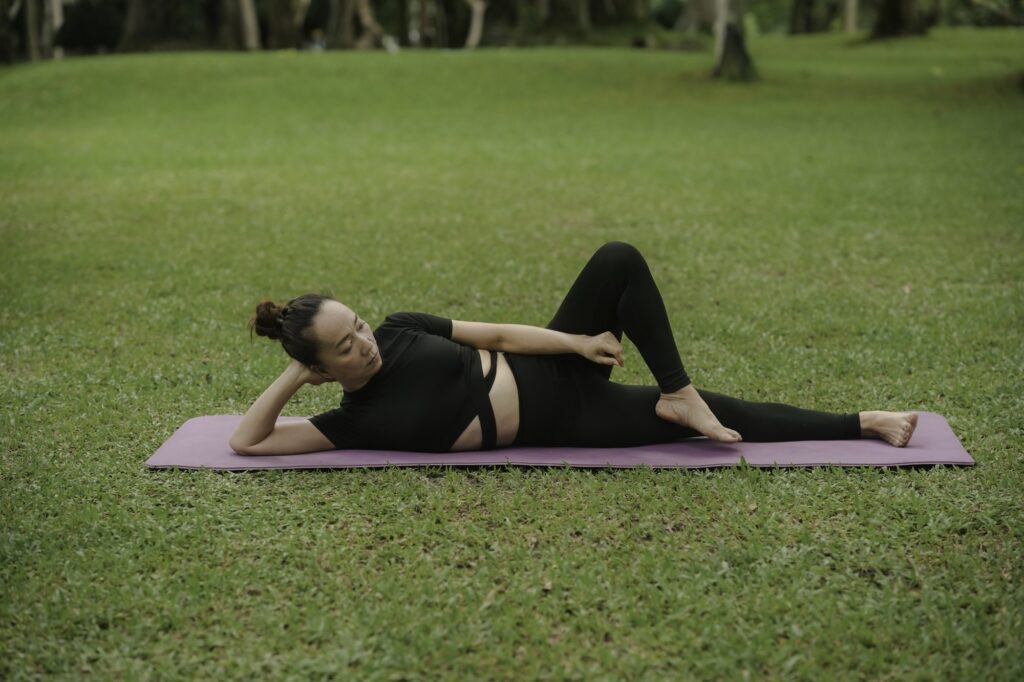
In short: the reclining spinal twist is a gentle twist lying on your back. You draw the knees in, let them fall to one side, open the arms and, if it is comfortable, turn the head the other way. The floor supports the whole body, so it is restful and easy to adapt with a pillow under the knees. It often closes a class just before corpse pose.
It goes by many names: supine twist, reclined twist, lying twist, knee-down twist. Below we explain those names (including the Sanskrit-style names you may hear), how to set it up comfortably, and how it differs from the stronger revolved abdomen pose.
About the name
“Reclining spinal twist” is a modern descriptive name. In modern classes you will also hear Sanskrit-style names for it. Yoga Journal calls a version with both knees to one side Supta Matsyendrasana, “reclining lord of the fishes”, by analogy with the seated twist; some schools use Jathara Parivartanasana for the bent-knee version (Yoga International’s “reclining abdominal twist” page, for example, gives that name’s pronunciation for knees bent to one side). The Bihar School of Yoga teaches the same family of shapes under its own names: Shava Udarakarshanasana, the “universal spinal twist”, with one knee crossed over a straight leg, and Supta Udarakarshanasana, both bent knees lowered side to side with the hands behind the head. We treat all of these as different schools’ names for this shape. as modern usage for this shape. In B.K.S. Iyengar’s tradition, Jathara Parivartanasana describes a stronger core exercise with straight legs lowered from side to side, which has its own page: revolved abdomen pose. If a teacher uses that name, it is worth checking whether they mean the relaxed twist or the straight-leg version.
Setting it up comfortably
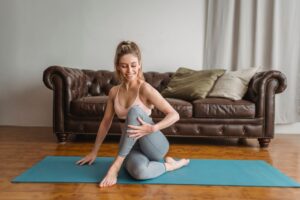
Lie on your back with the knees bent and spend a few breaths letting the back settle. There are two common versions. In the two-knee version, draw both knees toward the chest and lower them to one side, the lower knee resting on the floor and the upper knee on top. In the one-knee version Yoga Journal describes, draw one knee toward the ribs, roll onto the opposite side with the hips stacked, then let the chest and the upper arm open back toward the floor while the hips stay where they are. In both, if the knees float, slide a folded blanket or pillows under them: Yoga Journal stresses that feeling supported matters more than the leg reaching the floor. Do not force the top shoulder down; bend the arm and rest the hand on the ribs if it lifts.
Once you are set, there is nothing to do. Let gravity work, breathe into the upper side of the ribs (the twist compresses the diaphragm a little, so breathing may feel shallower), and stay for one to two minutes or longer. Then bring the knees back through the centre and repeat on the other side. Yoga Journal’s back-care article notes that small, gentle twists like this one can be as helpful as larger ones.
Precautions in plain words
Keep it gentle if you have disc problems, sacroiliac pain or a recent back or hip injury, and ask your doctor or physiotherapist if twisting is suitable for you. Support the knees with pillows if the hip or lower back pulls. In later pregnancy, lying flat on the back is often advised against; a side-lying rest is an alternative. This page is general information, not individual advice.
Preparation and what comes next
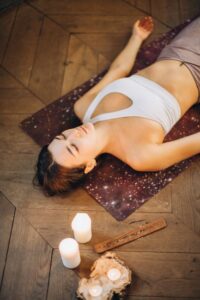
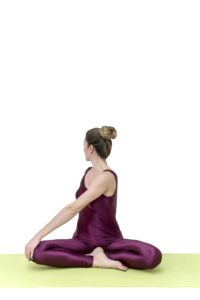
Good partners for this pose are knees-to-chest (wind-relieving pose) before it and corpse pose after it. The seated equivalents are revolved easy seat and half lord of the fishes. The yin yoga version, twisted roots, crosses the legs and is held for several minutes.
When to use it. Because it asks for no effort, the reclining twist is a good way to finish a practice, to unwind after a long day of sitting or travelling, or to rest between stronger poses. It also works in bed. Yoga Journal’s reclining-twist article suggests noticing afterwards how the two sides of the body feel, then repeating on the other side and ending in corpse pose.
You will meet the reclining twist in almost every style: hatha, vinyasa, restorative and yin classes, usually near the end. It pairs naturally with diaphragmatic breathing.