Warrior I (Virabhadrasana I): stance, hips and arms explained

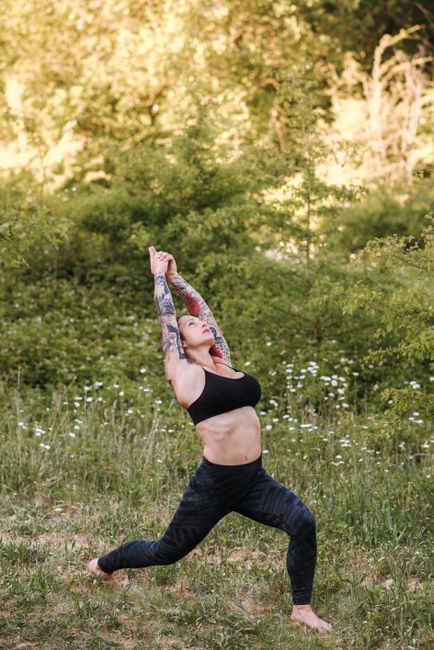
Warrior I (Virabhadrasana I, Ashtanga’s Virabhadrasana A) is a lunge with the back heel down and arms raised. A hip-width stance lets the pelvis face forward without straining the back.

Not yet reviewed by a qualified teacher Names and shape checked against 4 sources

Warrior I yoga pose
Sanskrit name
Vīrabhadrāsana I वीरभद्रासन (source)
Pronunciation
veer-uh-buh-DRAHS-uh-nuh (source)
Also called
Warrior One, Warrior 1, Warrior A
Other spellings
Virabhadrasana I, Virabhadrasana 1, Virabhadrasana A
Pose family
Standing
Starting position
Standing
Movement
Backbend, Strength hold
Taught in
Vinyasa Yoga: Flow, Breath and What to Expect, Hatha Yoga: The Historical Term and the Modern Class
Difficulty
Beginner
Prerequisite skills
Comfortable lunging and raising the arms; enough hip-flexor length to keep the back heel down (or lift it).
Body areas
Core, Feet and ankles, Hips, Legs, Shoulders
Props
Blanket, Chair, None, Wall
Practised
Solo

Names in different traditions

TraditionName usedNote
Iyengar (Light on Yoga)Vīrabhadrāsana IAsana 7, Plate 14: arms up, palms joined; feet 4–4½ ft apart, back foot turned slightly in; front thigh parallel; 20–30 seconds.
Ashtanga vinyasa (AshtangaYoga.info)Vīrabhadrāsana AFeet two fists apart side to side, back foot about 45°; five breaths each side; also in Surya Namaskara B. Ashtanga "B" = warrior II.

Step by step

Coming into the pose

  1. From downward-facing dog, step the right foot forward near the right hand; or from standing, step the left foot back.
  2. Set the stance: feet about hip-width (two fists) apart from side to side, back foot turned out about 45 degrees with the heel down.

In the pose

  1. Bend the front knee toward a right angle, knee over the heel. Straighten the back leg and press the outer edge of the back foot down.
  2. Inhale and raise the torso and arms, arms beside the ears. Turn the chest toward the front; let the hips follow as far as they comfortably can.
  3. Lift the lower belly so the lower back stays long. Join the palms and look up only if comfortable. Hold for five breaths (Ashtanga) or 20 to 30 seconds (Light on Yoga).

Coming out

  1. Lower the hands to the floor and step back to downward dog, or step the feet together; repeat on the other side.

Breathing

Raise the arms on an inhalation; hold with steady breaths through the nose. Ashtanga holds five breaths each side; Light on Yoga 20 to 30 seconds with normal breathing.

Alignment cues

  • Feet hip-width apart side to side, not on one line.
  • Front knee over the heel, not past the ankle, pointing toward the second toe.
  • Back leg straight, outer edge of the back foot pressing down.
  • Lower belly lifting; lower back long.
  • Shoulder blades moving up and out with the arms; shoulders away from the ears.

Common alignment errors

  • Feet on one line, so the pelvis twists and the balance goes.
  • Front knee drifting inward or past the ankle.
  • Forcing the hips square and compressing the lower back.
  • Tucking the tailbone hard.
  • Hunching the shoulders around the ears.

Modifications and easier variations

  • Shorter stance and less bend in the front knee. none
  • Lift the back heel (high-lunge feet) if the back foot, ankle or knee complains. none

Advanced variations

Props and chair adaptations

  • Raise the back heel on a folded blanket or sandbag to help keep it grounded. blanket
  • Hold the back of a sturdy chair for balance; or sit sideways on a chair with the front thigh supported and the back leg extended. chair
  • Press the back heel against a wall for a stable foundation. wall

Precautions

  • Hamstring or groin tear, hip injury or hip replacement: avoid or modify (Yoga Journal).
  • Pain in the back foot, ankle or knee: lift the back heel or shorten the stance.
  • Lower back pain: bend the front knee less and lift the lower belly.
  • Shoulder problems: arms apart or hands on the hips.

Learn it with a teacher: Most people can learn it from clear instructions. A teacher helps with the stance width and how far to square the hips for your body, especially with hip or lower back issues.

General information, not medical advice. Poses do not cure illness. If you are pregnant, injured or have a health condition, check with your doctor and tell your teacher before you practise.

In short: warrior I is a standing lunge with the back foot flat on the floor and the arms raised: the front knee bends over the ankle, the back leg is straight and the chest faces the front of the mat. It strengthens the legs and stretches the front of the back hip. Give yourself a wide enough stance from side to side, and let the hips face forward only as far as they can without straining the lower back.

Warrior I is one of the most taught standing poses and one of the most argued about, mostly over how square the hips should be and how the back foot should turn. The answer depends on the school and on your hips. Below we explain the name, the versions, the cues that matter and the precautions.

The name: Virabhadra, and I versus A

The Sanskrit name is Vīrabhadrāsana, after Vīrabhadra, the fierce warrior that, in the story B.K.S. Iyengar retells in Light on Yoga, the god Śiva created from a lock of his hair. Iyengar numbers the three warrior poses I, II and III. Ashtanga uses letters: in the primary series and in Sun Salutation B, this arms-up lunge is Vīrabhadrāsana A, and the arms-out pose that follows is B (our warrior II). So “warrior A” and “warrior I” are the same shape, but “warrior B” means warrior II, not a different version of warrior I.

Making warrior I work

The stance does most of the work. If the feet are on one line, like a tightrope, the back hip cannot come forward and the pelvis twists. Ashtanga teaching on AshtangaYoga.info places the feet about two fists apart from side to side and turns the back foot out about 45 degrees, which gives the pelvis room to turn toward the front. Yoga Journal describes the same 45-degree back foot and suggests a wider stance if you feel unsteady. In Light on Yoga, the feet start 4 to 4½ feet apart and the back foot turns only slightly in.

Bend the front knee toward a right angle, knee over the heel and never past the ankle, and keep the back leg straight and active, pressing the outer edge of the back foot down. Raise the arms beside the ears; join the palms and look up only if the neck and shoulders are comfortable. The lower back is the place to watch: Yoga Journal’s teachers suggest easing the front-knee bend and lifting the lower belly if the lower back feels compressed. A shorter stance keeps you more upright.

Common mistakes and simple fixes

  • Front knee drifting inward: gently engage the outer side of the bent knee so it points straight ahead.
  • Back knee straining: firm the back thigh as if drawing the kneecap up toward the hip, keeping the leg straight without locking it.
  • Tailbone tucked hard: Yoga Journal warns that an aggressive tuck creates tension and restricts the breath. Lengthen the tailbone down gently instead.
  • Ribs flaring as the arms go up: draw the lower ribs down, especially if you join the palms and look up.
  • Shoulders hunched to the ears: let the arms move apart into a V shape, or bring the palms together at the chest.

Chair and supported versions

Yoga Journal gives two chair options. For balance, stand facing the back of a sturdy chair, hold it lightly, step one foot back into position, and test yourself by letting go with one or both hands for a few moments. For a seated version, sit near the front edge of the chair, turn to one side so the front thigh rests on the seat, and stretch the other leg back as straight as you can, toes tucked under or foot flat. The arms can go up, rest on the hips or hold the seat. If the back heel will not stay down, a sandbag or other lift under it is a fine short-term solution while the calf lengthens.

Yoga Journal also suggests taking your time with hamstring and shoulder stretches before warrior I, and lengthening the back afterward to balance its slight backbend. Pyramid pose and revolved side angle are among its suggested companions.

Precautions in plain words

Yoga Journal advises avoiding or modifying the pose with a hamstring or groin tear, a hip injury or a hip replacement. If the back foot, ankle or knee hurts, lift the back heel (as in high lunge) or shorten the stance. With shoulder problems, keep the arms apart or the hands on the hips. With lower back pain, bend the front knee less. If balance is uncertain, hold a chair or stand near a wall.

Preparation and what comes next

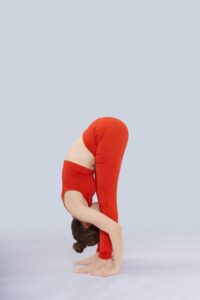
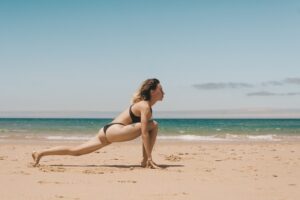
Prepare with mountain pose, downward-facing dog and low lunge. From warrior I you can open into warrior II (as Ashtanga does) or lean forward into warrior III (as Light on Yoga does). A standing forward fold afterwards releases the slight backbend.

Where it is taught

Warrior I is in Iyengar yoga, in Ashtanga (Sun Salutation B and the primary series), and in almost every vinyasa, power and hatha class.
Preparatory poses

Follow-up poses and transitions

Counterposes

Related poses

More standing poses

Frequently asked questions

Should my hips be square in warrior I?

Point them toward the front as far as they comfortably go. A stance that is hip-width from side to side and a back foot turned out about 45 degrees give the pelvis room; forcing them square usually compresses the lower back.

Is Virabhadrasana A the same as warrior I?

Yes. Ashtanga calls this arms-up lunge Virabhadrasana A; its Virabhadrasana B is what other schools call warrior II.

My back heel lifts. Is that wrong?

It means the back calf or hip flexor is tight or the stance is long. Shorten the stance, put a folded blanket under the heel, or practise with the heel lifted.

How long should I hold warrior I?

Ashtanga holds it five breaths a side; Light on Yoga gives 20 to 30 seconds.

Sources

  1. B.K.S. Iyengar, Light on Yoga: asana 7, Virabhadrasana I, Plate 14, Internet Archive (Digital Library of India copy) (accessed October 6, 2026)
  2. Warrior 1 Pose: How to Practice Virabhadrasana I, Yoga Journal (accessed October 6, 2026)
  3. Vīrabhadrāsana A: The powerful warrior pose, AshtangaYoga.info (Dr. Ronald Steiner) (accessed October 6, 2026)
  4. Surya Namaskara B (Virabhadrasana A on both sides), AshtangaYoga.info (Dr. Ronald Steiner) (accessed October 6, 2026)

Facts checked on October 6, 2026